Transforming the Refugee Experience

Next month begins my 16th year as President of the Board of Directors for my community’s Refugee Development Center, so I assigned myself a personal “refresher course” of several readings which together have served to remind me of refugee “waves” during the late 20th and early 21st Centuries that exposed issues which, in many cases, refugees continue to face today. For example…

The Spirit Catches You and You Fall Down – A Hmong Child, Her American Doctors and the Collision of Two Cultures is an insightful work of non-fiction by Anne Fadiman. It is a skillfully presented story which would have been more pleasant reading if the ending had not already been known to me, was not true, and was not so damn heartbreaking. The sad story is presented in chapters that alternate with others that describe the Hmong experience in Laos and for the 100,000 Hmong refugees to the United States during the 1980s…an anthropological and sociology tutorial that doesn’t overlook America’s initially secretive and mostly shameful episode in Southeast Asia, which actually helped to create the situation that necessitated that Hmong escape from Laos.

There’s much to learn here…about the “Quiet War” waged in Laos alongside the notorious Vietnam War…about Hmong history, culture, traditions and beliefs…about the tragedies of refugee camps and the travails inherent during the resettlement process, which were greatly exacerbated in the case of Hmong…about the limitations of Western medicine, and yet its arrogance…about the nature and treatment of epilepsy…about the unlimited compassion of some people and the callous incompetence of others…about the lack of clarity by medical providers, the “dense fog of  misunderstanding” by non-English speaking patients, and the worst of consequences when there is a breakdown of communication. Made evident here are contrasting views of medicine: in Hmong culture there is an unscientific but wholistic approach, while American medicine is said to be a slave to science and “the practice of medicine has fissioned into smaller and smaller sub-specialties, with less and less truck between bailiwicks.” 

This is a story about the 1980s written in the 1990s that I’ve read at the end of 2023; so, I know that much has changed…in fact, the author says as much in an “Afterword” added 15 years later in which she notes that the ill-prepared Merced, California hospital of the 1980s had by 2012 become, with its partnering social service agency, a model for programs across the country. Tragedy can be transformative.

The author describes how nomenclature has evolved over the years, noting that the term of art for what has been in too short supply in refugee service agencies has evolved from “cultural competency” to “cultural humility.”  Just days before I read this book, I attended the monthly staff meeting of our community’s Refugee Development Center, during which it was explained that all of its teams address cultural humility on a regular and on-going basis; and then we all participated in a cultural humility awareness exercise before we talked about the myriad programs and services and the record numbers of youth and adults in the community who are accessing those offerings.

 It is gratifying to know that, both in what it does and how it does it, this home-grown non-profit organization is providing international newcomers to the community with what they need to know about American systems, without having to forsake their native souls. 

JER

The Survey Says….

There’s a national survey question that is asked far too often and to which is given much too much importance. It’s the one that asks survey respondents if they believe the country is headed in the wrong direction.

Well, of course it is! The only thing that surprises me about the most recent survey results of the New York Times/CBS News poll is that only 81% of respondents believe this is so.

The problem is in how the response is being interpreted. When pollsters and pundits say this is bad news for President Biden’s re-election, those so-called experts have wandered wildly.

Heck, I think the country is headed way off in the wrong direction. But Joe Biden has nothing to do with that.

The reason I think we’re headed in the wrong direction is that the Republican Party, which I supported for most of my voting life, is headed in the wrong direction. Way off in the wrong direction. On just about every issue, every day.

GOP Senator Tommy Tuberville, an ex-college football coach, thinks he’s now the head of HR for the United States military?  With wars in Ukraine and the Middle East, tensions over Taiwan, and a variety of hot spots around the world? These life-and-death issues are a bit more complicated than whether to run or pass on third and long from your own 25-yard line. 

GOP Rep. Mike Johnson, who would criminalize homosexuality and most abortions but can only hope and pray about gun violence, thinks he’s God’s choice (even though he was the GOP’s third, fourth or fifth choice) to be Speaker of the House of Representatives? Second in line to the President of the United States… and yet he has no idea what to do to curtail the mass murders occurring every week on his watch across the US? God help us…God save us from those who imagine they are chosen by God. 

A twice-impeached, 4-times indicted narcissitic serial-lying ex-president who is facing 91 felony charges, thinks he ought to be President again? And this vulgar bully already has people planning his vengeance for when he is? And he’s the front-runner for the GOP?  What, the Republicans can’t find someone who has not already been rated the second worst president in the history of the United States? He doesn’t deserve the chance to prove he’s the worst.

These are the threatening trends that tell me the country is headed in the wrong direction. A totally unembarrassed, unashamed, unprincipled, untethered and unhinged Republican Party is the reason I’m worried about this country.

On the economy and education … on the environment and energy…on health care and climate change…on the explosive yet subtle world of foreign affairs…on decency, honesty and common sense…this country is much more often than not headed in the right direction under its current leadership. What worries me is that the other guy and his crazy party might get back in charge. Then this country will really be headed the wrong way…in very dangerous directions at very precarious times. 

JER

The wonder of wander

I just returned from a couple of weeks of “target travel” in the UK. What that means to my wife and me is that we wandered around the countries with purpose. Nothing profound, really, but with a slightly off-the-beaten-path sense of direction for each day. 

In England and Wales we directed our rental car through narrow, hedge-lined backroads to locate some ancient or unusual trees. They were almost always found on the grounds of churches that were many hundreds to a thousand years old; and we almost always visited with no one else around, save a relative who might be tending to an old grave in the surrounding cemetery or a groundskeeper who was pleased to provide us some history and local knowledge. 

For example, we located a yew that has stood for more than 1,000 years outside the doors of St. Bartholomew Church in Much Marcle, England. It has a hollow trunk that is 31 feet in circumference, and there’s a bench which invites visitors to rest and reflect within its shelter.  We found a yew that is argued to be England’s oldest – up to 4,000 years old – in the church yard of St. Mary’s Parish in Linton. A huge taproot has grown within its hollow trunk which might assure another millennium or two of life for this venerable specimen.

In Wales we located “The Bleeding Yews of Nevern,” a collection of seven 750-year-old yews which actually secrete a red sap (which we observed) when wounded or cut, according to the friendly caretaker of St. Brynach Church near the coast along the Cardigan Sea.   And then we found Wales’ oldest tree — some websites rank it as the third oldest tree in the world – the 4,000- to 5,000-year-old yew in the cemetery of St. Digain’s Church in Llangernyw in county Conway on the north shore of Wales. 

In Northern Ireland we had very different targets. We walked through the streets of Derry and Belfast in search of political murals as we struggled to grasp the complicated history – ancient and recent – of “The Troubles,” a label that really understates centuries of extreme violence surrounding the status of Northern Ireland. The huge public paintings assure that events I only heard about on my side of the Atlantic are bored deeply into Northern Ireland’s memory. 

Like the deaths of 14 unarmed men and boys at the hands of British military in Derry on “Bloody Sunday” in 1972, followed swiftly by nine deaths across Belfast due to IRA bombs. And the deaths of ten IRA members during their hunger strike at a prison near Belfast during 1981. And the IRA’s “Good Friday Bombing” that killed 29 people and unborn twins in Omagh in 1998. 

Our final destination was London where there’s little need to carry a printed map or use GPS because, on almost every block, two maps are posted to show walkers where they are standing and what they could find within the radius of 5 and 15-minute walks. Our targets were most of the popular historical sights of London as well as some of its public squares – like Gordon Square, Russell Square, busy but intimate Soho Square with its massive shade trees, Tavistock Square with tributes to its former neighbors, Virginia Wolf and Charles Dickens, and grand Trafalgar Square with its military monuments and fountains.

The targets guided our wandering, goaded our wondering, and left ample opportunity for wrong turns and screw-ups, as well as the occasional serendipity.

JER

Many stories have been passed down over the centuries about “The Devils Pulpit” which has grown out of the rock above the River Wye which separates England from Wales at Tintern Abbey.

Sweet Dreams and Nightmares on the Korean Peninsula

A ghastly pandemic and global politics have combined to deny people the opportunity to reunite with loved ones in China. Previously available and affordable non-stop commercial flights between the US and China have not resumed; and alternative routes are both circuitous and costly. So, having not seen our son and his wife since late in 2019 and having never met in person their now 19-month-old son, we took advantage of slightly relaxed travel policies to rendezvous with them in Seoul, South Korea where, as good fortune would have it, the Korean woman we had hosted for her four college years was delivering her first child. It was a spectacular week for which I will always give thanks.

But enough for now about the Asian branch of our family tree.

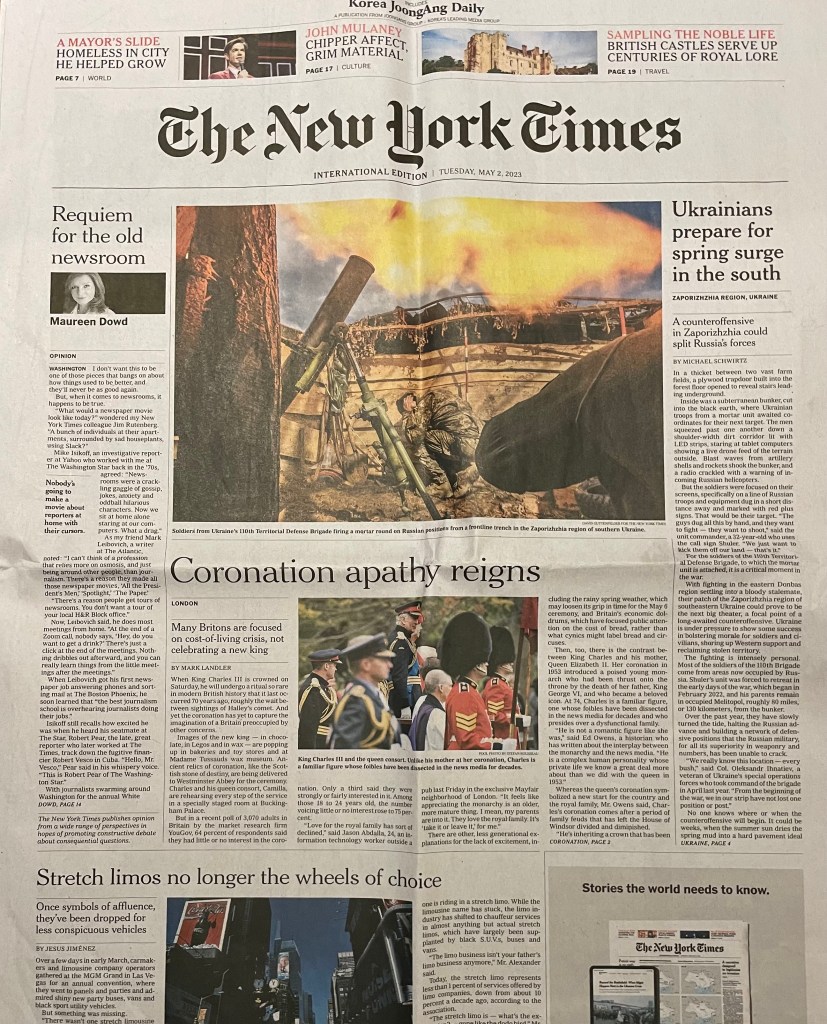
One of the things I savor most about international travel is at least perusing and usually devouring  international editions of newspapers. These print editions are nothing like those sold in the USA; they are much broader in both format and content.  

These international newspapers, which are available in many hotel lobbies and at most public newsstands of major cities around the globe, appear in yester-year’s much more substantial 6-column, 14-inch-wide format. They make the trim, modern national and local newspapers of the USA look like 1960s-era elementary school “Weekly Readers.” When you hold one of these “throw-back” international editions in your hands, it feels like you’re holding something that took time to prepare and was not rushed into circulation to compete with the tyranny of cable television’s 24-hour-a-day “breaking news” cycle and the internet’s unvetted, unedited false rumor factory of social media. 

And as for content, how revealing it is to sample these editions for international reactions to the big stories in the US and to read detailed accounts of foreign news that was abridged or altogether overlooked by local and national print and broadcast news outlets in the US. For example (a small sampling)…

While in Seoul, we read that South Koreans were less impressed with the singing of “American Pie” by South Korean President Yoon Suk Yeol than were people in the US; and some commentators and many citizens believe that just as soon as Yoon is voted out of office, his incessant wardrobe-changing wife – former businesswoman Kim Keon-hee – will land in jail for her stock manipulation schemes and other corrupt business practices prior to her husband’s election. South Koreans are more than a little mystified about how long it takes to jail a certain corrupt businessperson turned politician in the US.

International editions provided circumspect coverage of the failure of a few US banks, and of the crypto-currency collapse, and the fact that Elon Musk has sent Twitter aflutter. But in the same editions one could read of the Chinese crackdown on individuals whom the central government holds responsible for recent failing banks and businesses in China. I couldn’t avoid the suspicion that while many readers in other parts of the world might be critical of some autocracies’ rush to judgements and the crushing consequences, they might also view the US judicial system as at least somewhat slow and sloppy. 

While North Korea’s portly Supreme Leader Kim Jong Un often is the subject of caricature and cartoons in newspapers and the brunt of late-night television jokes in the US, he’s no laughing matter in South Korea which still maintains barbed wire borders along the Han River a mere half-hour drive from the center of Seoul, its capital city of 10 million people.  South Koreans did not fail to take note of former US President Donald Trump’s “friendship” with North Korea’s delusional dictator, like two peas in a pyromaniacal pod. 

I have the sense that South Koreans harbor nearly equal fear that two catastrophic mistakes will be made in the not-too-distant future. One, that a North Korean launched missile will go awry and return to impact the Korean peninsula. And, two, that American voters will return an equally unpredictable and dangerous loose cannon to the White House. 

JER

Where is America going?

Traveling in an unfamiliar place recently — driving on the left side of the road with the steering wheel on the left side of the rental car, using GPS with a ten-second delay and a printed map that was not to scale — my wife and I once again posed the question that confronts wanderers, which is a breed distinct from tourists or travelers: “Is it more important to know where you are or where you’re going?” 

At that moment we laughed, for the question applied to the dead-end into which we had just turned. According to GPS, there was supposed to be a tasty restaurant there; but it was the driveway of a home where a man and his young son volunteered, “Follow us. We’re on the way to the store. We’ll show you the way.” And they did.

At dinner and then the next day, we returned to the question with more seriousness and broader philosophical parameters, wondering during our wanderings how it might apply to life in general and to institutions and societies…how the question might be answered by citizens and their communities and countries.

And then, back in the USA, there was another mass shooting, this one occurring less than two miles from our home of 37 years, killing three Michigan State University students and wounding several others very seriously. 

No longer was there anything humorous about our question. 

On gun violence in America, we know very clearly where we are: just about the most dangerous place on the planet where a declared war is not being waged…where guns possessed per capita is among the highest in the world…where mass shootings of innocent citizens during 2023 are on the pace of more than one per day. 

As for where we are going, the answer is less clear. Frustratingly so. Infuriatingly so. For elected officials at state and federal levels lack the courage to alter our catastrophic course with common sense controls regarding what models of guns may be purchased as well as for the requirements and responsibilities of people who make those purchases. 

Certainly, mental health is an issue here, for who but an emotionally disturbed person would gun down another person. But guns are the foremost issue here, for if these deranged persons had more difficult access to automatic weapons and assault rifles, they would certainly cause less carnage. 

Yes, the first and most important thing to do – focus on the guns – is the greater political challenge. But I’m sick of watching pundits and politicians hide behind the mental health issue while the most dangerous of a deadly product proliferate on both legitimate and black markets and the ranks of gun owners – both sane and sick – grow to unprecedented levels every month.

JER

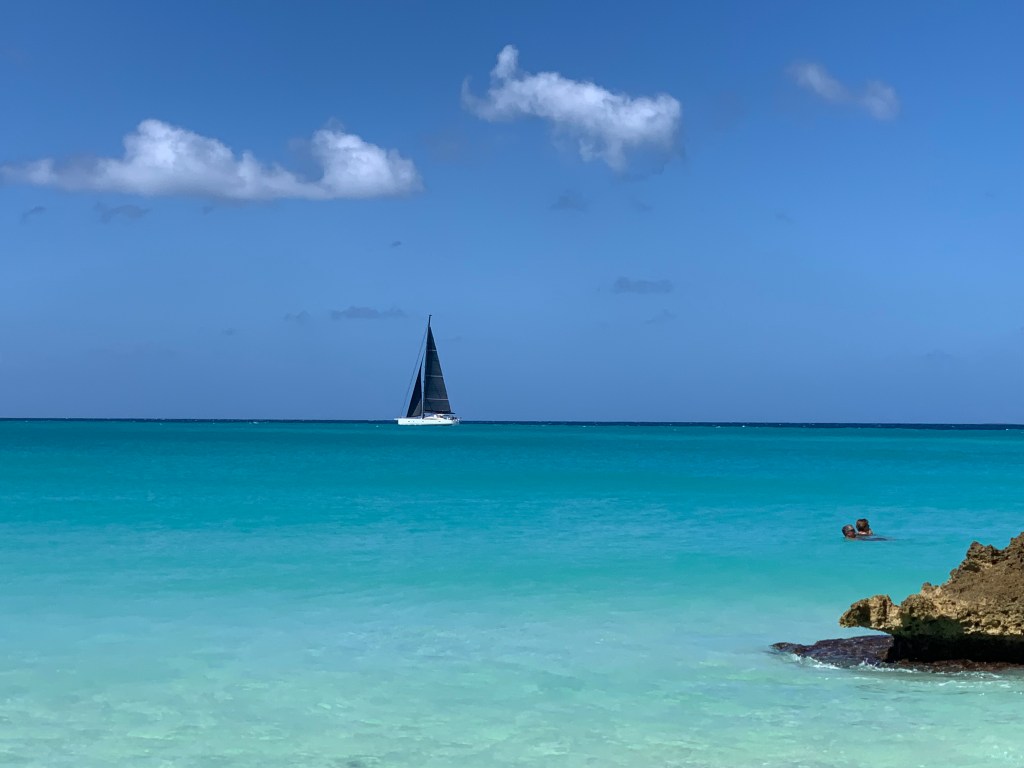
The peaceful scene from Meads Bay, Anguilla.

Color Contrasts

I was born, raised and employed in the Upper Midwest, educated in New England, and had two brief residences in Colorado; so I’ve heard boasts from the best about autumn color.

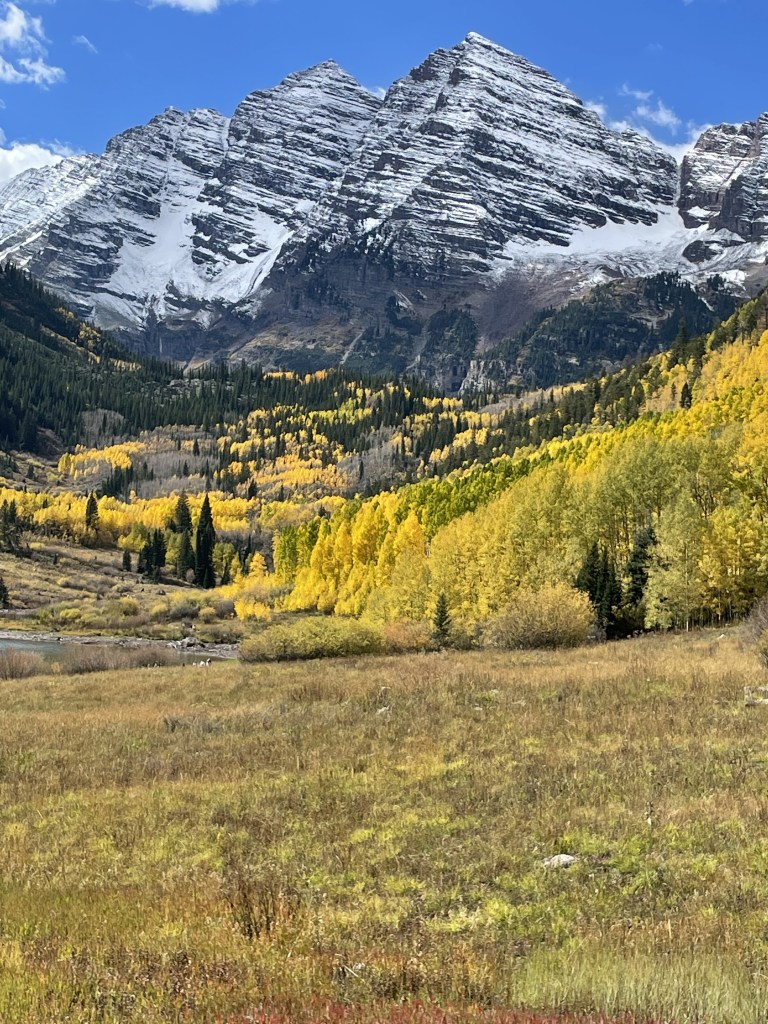
There’s no question that the Upper Midwest provides autumn leaves in greater varieties of color, and New England multiplies that magnificence with greater elevations for viewing, but – for last week at least – Colorado wins the debate.

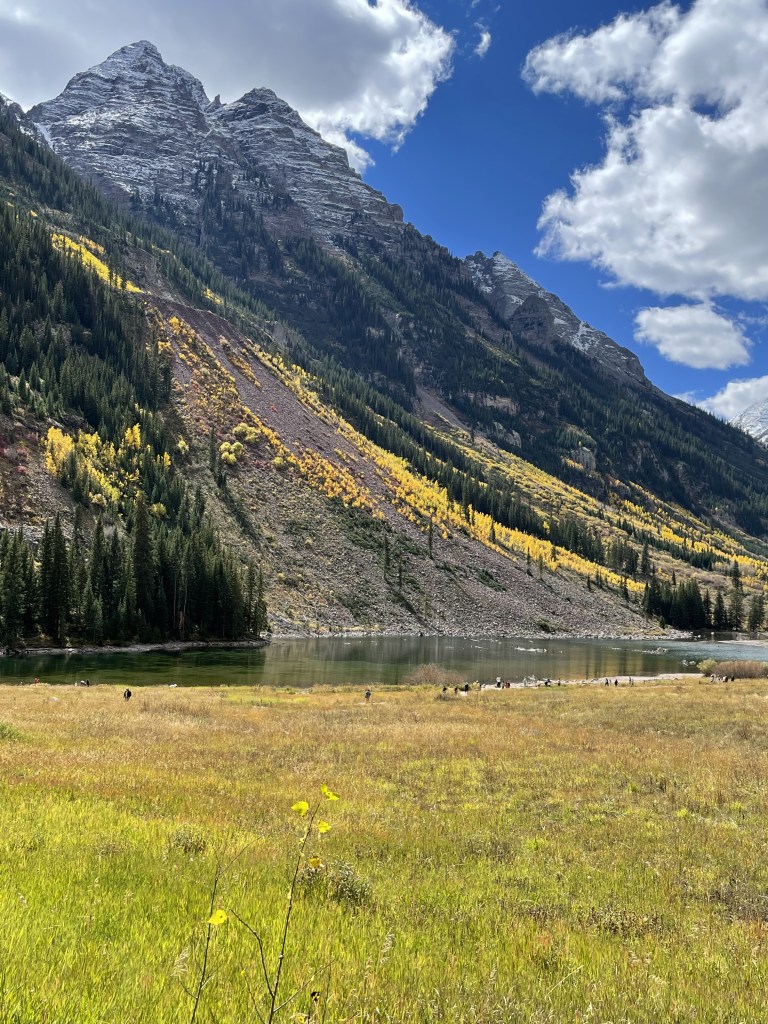
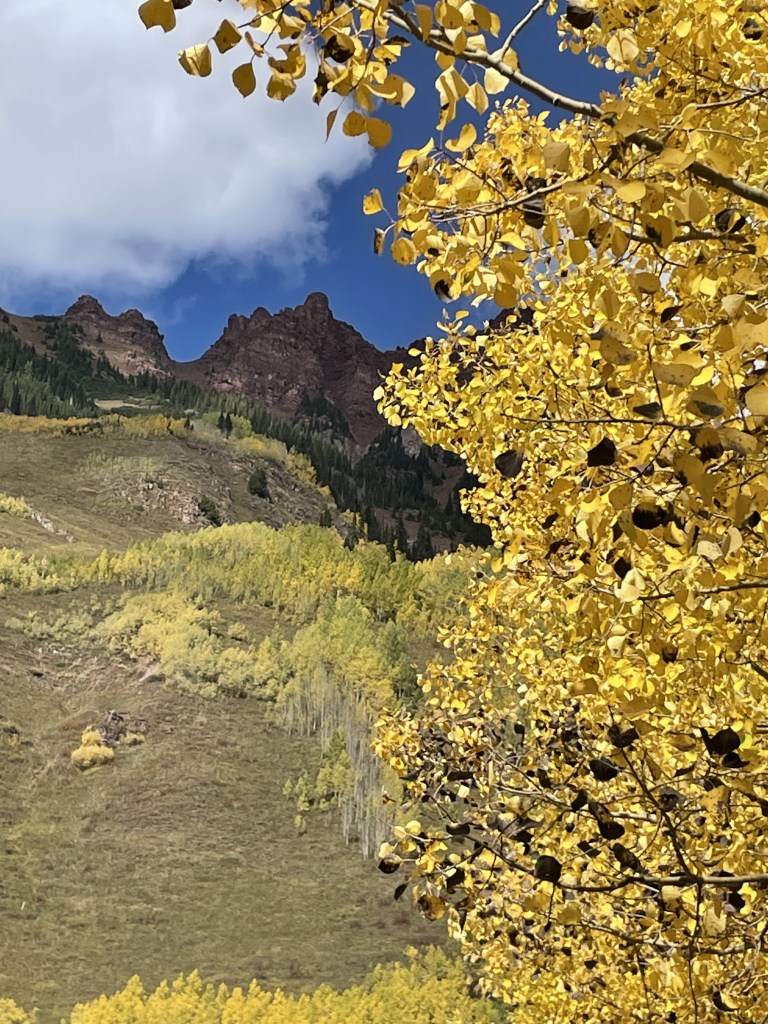
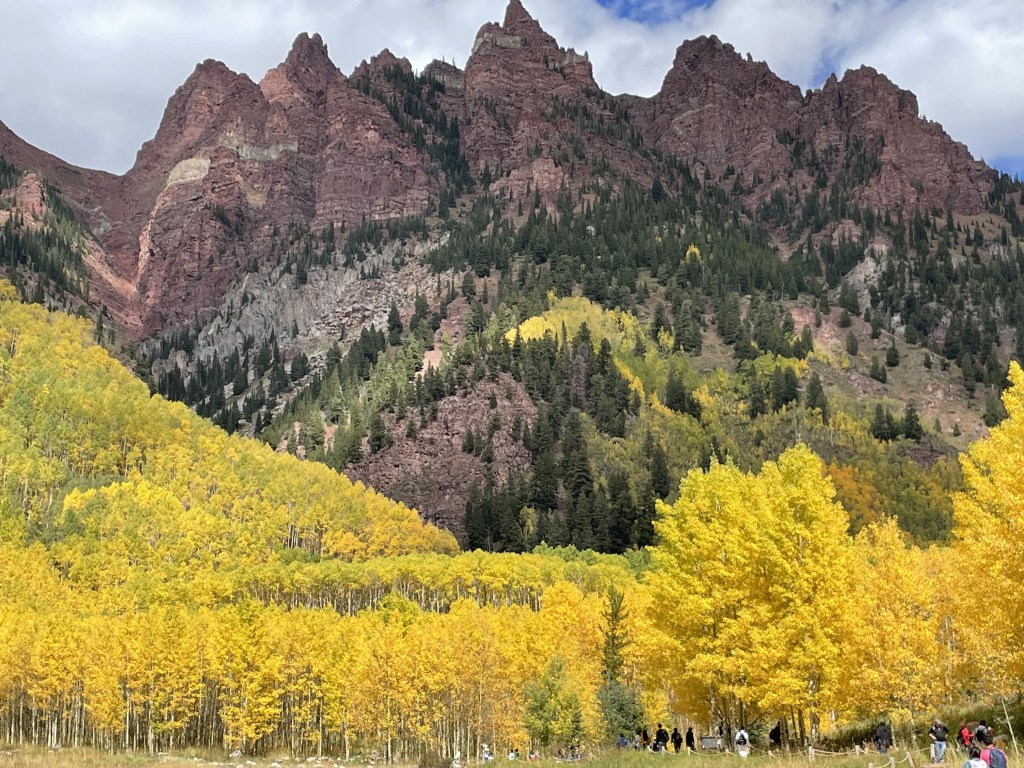
Yes, aspen trees dominate the Colorado landscape, so yellow dominates the fall foliage palette; but do you know how many shades of yellow actually exist? And how aspens glow as they grow among majestic pines? And how awesome it is to see a glorious golden wave of autumn aspen cascading down a rugged, snow-dusted mountain peak of 10- or 12- or 14,000 feet? The whole drama framed by red-rock outcroppings, with a brilliant blue-sky backdrop?

There’s an argument about the grandest stand of aspen in all the world. The Pando Aspen Tree (or Spread) in Fishlake National Forest near Richfield, Utah is claimed to be the largest aspen clone, that is, one stand which radiates from a single seed and has a common root system. This clone extends over more than 100 acres and consists of more than 40,000 trees, some of which are more than 130 years old.

Perhaps it is a distinction without a significant difference, but it is in West Central Colorado where the world’s largest collection of contiguous aspen groves is located. The centerpiece is Kebler Pass, part of the Sawatch Range in Gunnison County. This too is reported to be a single living organism descending from a single seed. Kebler’s “little brother” to the south is The Castles, best viewed from Ohio Pass. Then there’s West Elk Loop, as well as both Brush Creek and Washington Gulch near Crested Butte.  Together this fab-five fall collection is so massive that local guides claim without dispute that satellites can identify this “yellow dot” as they circle the earth in space during North America’s autumn.  

For a moment on Kebler Pass – among the unsurpassable beauty of that place — it was possible to forget that so much of our world is not ablaze in autumn color, but on fire from wars and wildfires. A place where it was actually possible to sense what fresh air feels like and to hear what silence sounds like.

JER

While we were away…

Two weeks in Italy, and…while we were away…two more mass shootings in the USA.

Indescribably tragic for the families and communities involved. Horrifying news even six time-zones away…and humiliating for an American traveler abroad because such gun violence is inexplicable — and inexcusable — to most of the citizens and media in the rest of the developed world.

Photos of the 19 dead elementary school children killed in Texas on May 25th appeared by May 26th atop the front page of a major Italian newspaper under the headline, “e una vergogna.” Which means, “It’s a disgrace.”

So shameful and senseless are these slayings that for several days they seemed to take the wind out of foreign media condemnation of Putin’s atrocities in Ukraine. Instead, media aimed their outrage at America.

It is well documented that a sizable majority of the American masses – from the far left, through the center, and well to the right of the political spectrum – want something significant done about gun violence. We understand that it IS about the guns, and not just about  people and their mental and emotional state, and the nexus with violent video games.    

There are 120 guns in private ownership for every 100 people in the US. No other nation comes close (war-torn Yemen has one-third that rate). Nearly 50 percent of the privately owned guns in the entire world are located in the US where less than 5 percent of the world’s population reside. The result?

During the years 1998 through 2019, the US had 101 mass shootings, nearly three-times the total for the next 17 developed countries combined (France ranked second with eight mass shootings). Clearly — as the New York Times demonstrated again last week – “more guns mean more gun violence.”

It IS about the guns.

To reduce shootings in America, we must reduce the number of guns in America. We must reduce the number of guns manufactured in and imported to the US. We must implement aggressive and highly incentivized buy-back programs to remove many of the guns already over-saturating American society. We must implement much tighter and tougher screening of those who attempt to purchase guns — new and used — and ammunition of any kind. And we must adopt very severe limitations on the sale or transfer of any and all firearms designed for rapid fire.

These and other sensible measures leave plenty of space for hunters and gun collectors and even devout Second Amendment defenders, who must be beaten over the head — metaphorically, at least — with the reminder that their rights to own and carry firearms do not supersede my grandchildren’s rights to attend safe schools. Or others’ rights to go shopping without body armor. Or others’ rights to go to their place of praise and worship without risking their lives.  Or others’ rights to go to a movie or concert without danger of becoming the next American tragedy about which the rest of the world is reading and wondering, “What’s wrong with America?”

I would have liked to have written in this space about the wonders of Florence and the Tuscan hill towns of Lucca, Siena, San Gimignano and Volterra. But it just doesn’t seem very important now.

JER

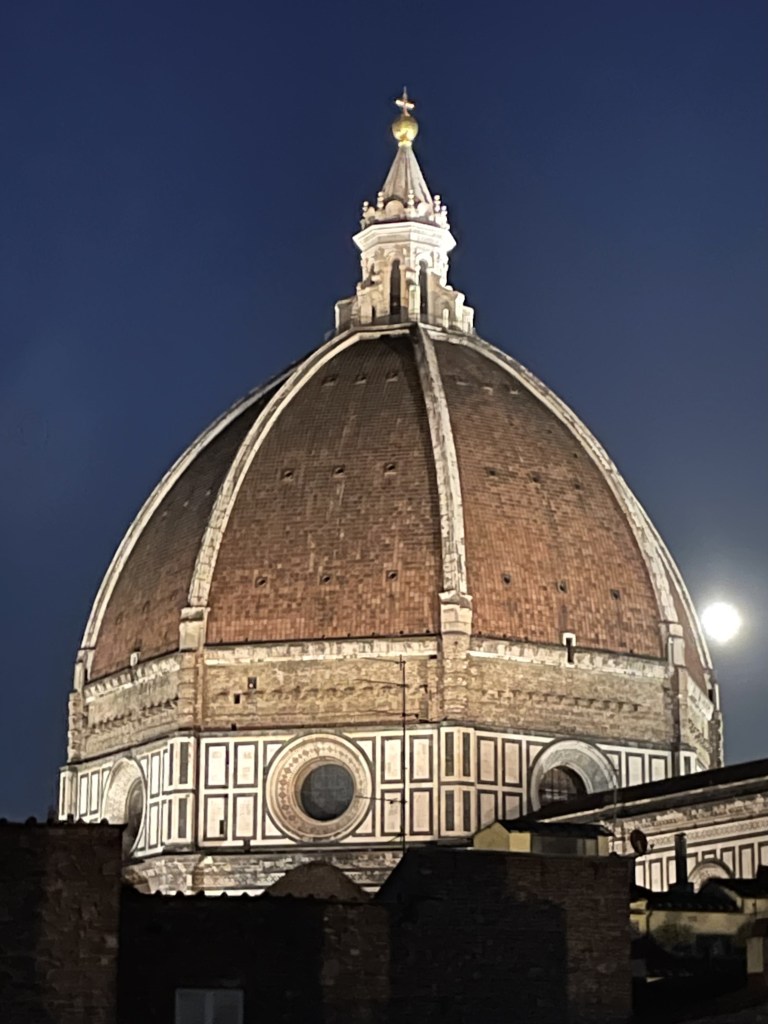
A full moon emerges from behind the “Duomo” in Florence, Italy.

No Where To Go

I’m just back from a visit to the dry, smokey southwest USA. And I’m not very confident about our future.

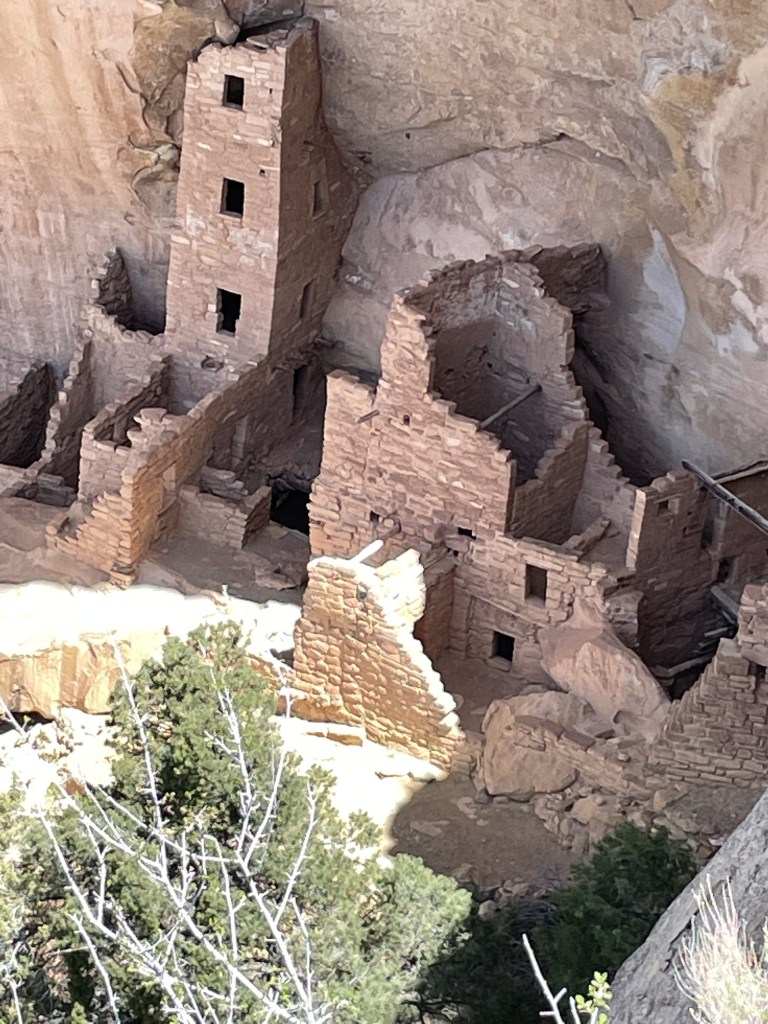
Archeologists’ consensus is that while humans had roamed these parts for a couple thousand years, the “pueblo people” began to settle in the part of North America which is now Mesa Verde National Park about 550 CE. Their communities grew slowly over several centuries, and their dwellings became increasingly complex and crowded. But then in the late 1200s, within the span of two generations, these communities were entirely abandoned, leaving scholars the fascinating pit houses, kivas and cliff dwellings which attract millions of tourists each year.

Among popular explanations for humans’ historically quick exit from this region is that the people of these increasingly dense communities were forced out by drought, depletion of other resources, and social discord. The people took several different migratory paths to the south and southwest in attempts to start over again.

I’ll not belabor the point here, which I’m guessing the reader has already grasped…..the parallel with disintegrating 21st Century society. As populations become increasingly dense, resources become increasingly scarce, followed by disharmony, growing disunity and increasingly wide, bitter and irreconcilable divisions.

The difference here is that the 13th Century occupants of the USA’s “Four Corners” had somewhere to go.…somewhere to start over. That option is not available to us in the 21st Century, notwithstanding a couple of billionaires’ dalliances with sixty-second space travel.

We have to make it work here…on this polluted, over-populated, over-heated, over politicized and hyper-polarized planet.

JER 

Square Tower House at Mesa Verde National Park.

Costa Rica 4.0

The criteria for the destination of our January escape were several. Warmer than our home state. Fewer Covid cases and higher vaccine rate than our home state. Where service staff were required to wear masks. Where we could travel on our own and away from crowds. Located no more than one time zone away from our home state.

Costa Rica checked all the boxes. This was our fourth visit to the Central American nation splitting the Caribbean and the Pacific between Nicaragua and Panama.

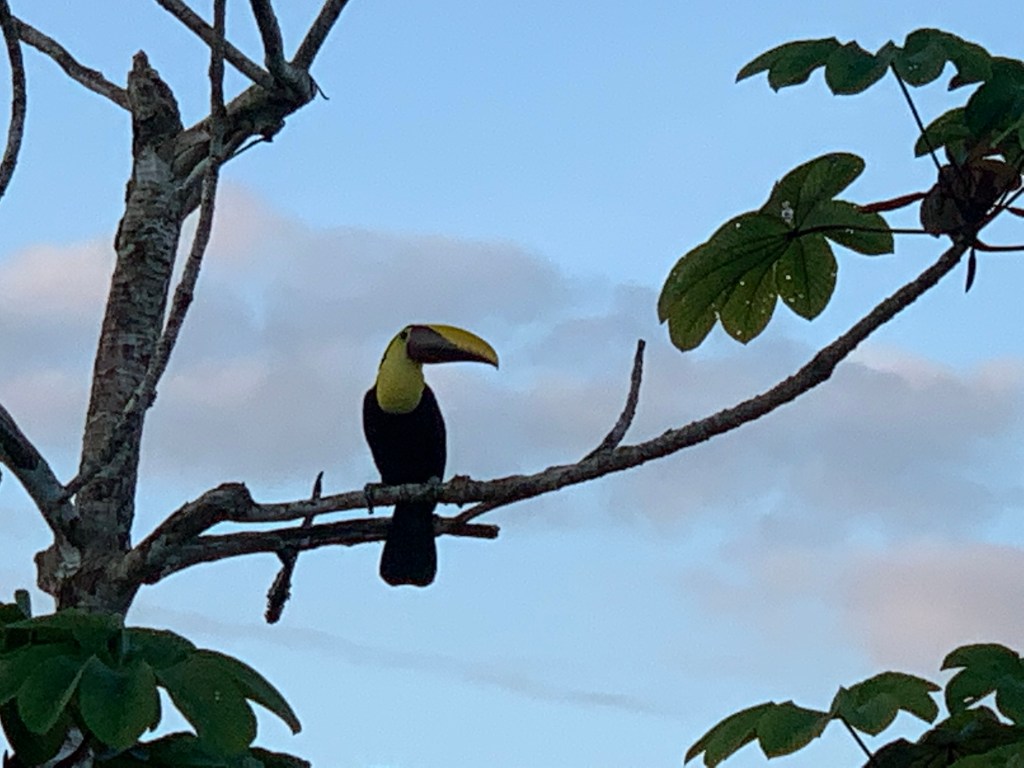
Among countries of the Western Hemisphere, Costa Rica trails only its Central American neighbor Belize in the percentage of land which is at least partially protected from development, and the payoff is rich biodiversity and a birder’s paradise. Even amateurs like us found toucans, trogons and hummingbirds of several colorful varieties…while overhead, flocks of pelicans flew in tight formation…what the locals call the “Costa Rican Air Force,” since the country has no military.

Our driving route took us down the Central Pacific region of Costa Rica to the Osa Peninsula, and then back through the nation’s high spine to San Jose. While the national highways were much smoother than those of our home state, we needed our 4 x 4 rental to reach some of our accommodations, and a 60-minute boat ride to reach a four-unit lodge on the jungle slopes above Drake Bay where we were the only guests, and dined el fresco under a full moon each evening.

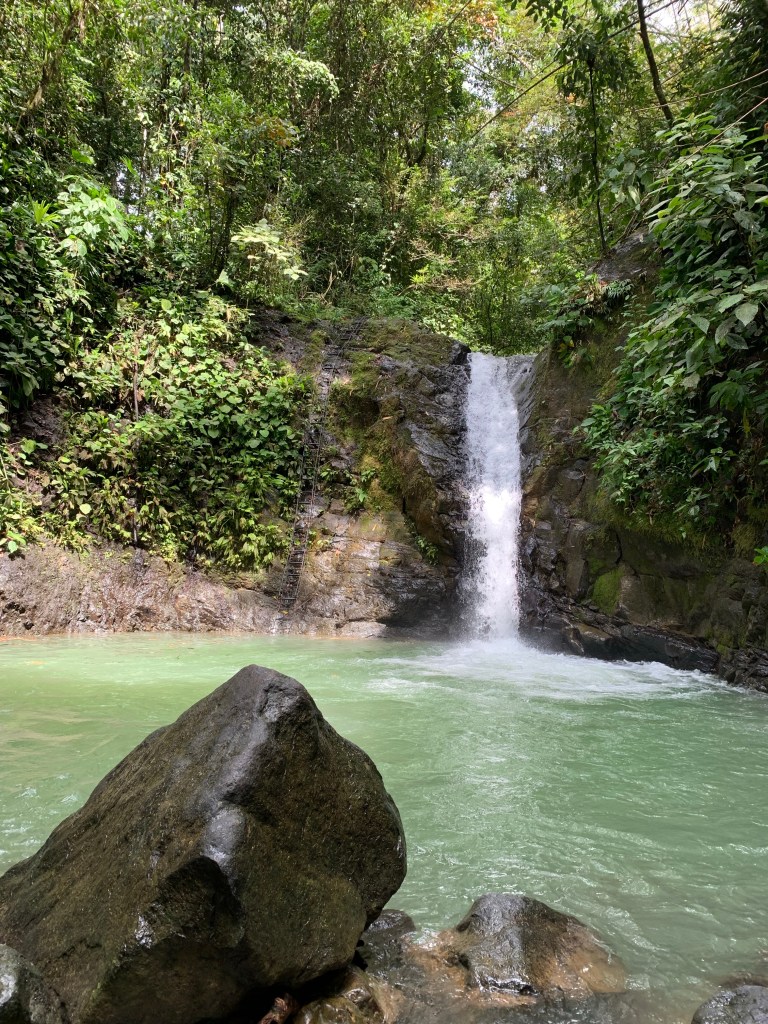
Swimming in mountain waterfalls was magical — they are everywhere — but snorkeling at protected Cano Island was a letdown. Like so many places around the world the coral is crumbling and colorless from warming oceans. But the boat ride from Drake Bay to Cano Island did provide us close looks at humpback whales and dolphins.

We walked among blue morpho butterflies and magnificent owl butterflies which at rest look like tropical fish. We observed squirrel monkeys and spider monkeys, and every morning and evening we listened to howler monkeys. We tracked a tapir until we finally found it, and then stood motionless for many minutes while it rooted through the underbrush for a snack; and then we left it as silently as we approached.

But the most impressive creatures we observed in Costa Rica were the littlest: its famed leaf-cutter ants. They were always at work — always on the march — stripping leaves and transporting pieces that were two or three times the ant’s body weight and delivering them even hundreds of yards away to contribute to a communal structure where millions of ants were housed. We watched this phenomenon at several different locations, always in awe of the organization, industriousness and silent communication. We noticed that the ants never stripped a single plant of so many leaves that it endangered that living organism’s health.

We couldn’t help but wonder what mission might be accomplished on a human level with cooperation like this, and with similar concern for the welfare of the environment.

JER

Big Shoulders, slim hips

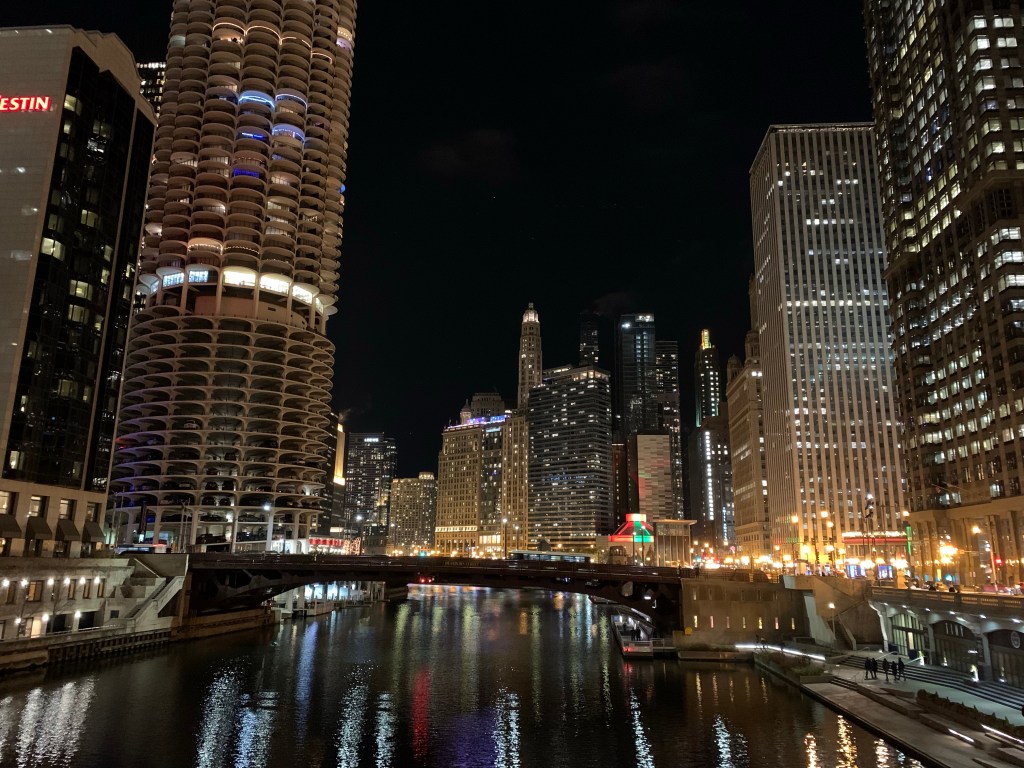
The Chicago River at night.

Traveled by train to Chicago — to what Carl Sandburg called the city with “Big Shoulders” — to see a show, visit with friends and relatives, and shop for stocking stuffers for family members and some new jeans for me.

All went well, except that I discovered that the “Hog Butcher for the World,/ Tool Maker, Stacker of Wheat,/Player with railroads and the Nation’s Freight Handler; Stormy, husky, brawling,/City of the Big Shoulders;” mostly sells pants for those with slim hips and bird legs. The styles today are not my style, nor would they be suitable for hog butchers, tool makers, wheat stackers or freight handlers.

Sandburg was writing 110 years ago, midway between Chicago’s hosting of two world fairs (1893 and 1933). It was an era when Chicago’s streets were muddier and the air was smellier.

It was a time when “supply chain” issues didn’t mean foreign shipments were being delayed at our nation’s ports; it meant there was some congestion in moving America’s goods through the massive rail yards of Chicago. This was the 19th Century’s “Crossroads of America,” long before Indianapolis appropriated that phrase as a marketing and branding scheme to a consumer nation which had become addicted to automobiles and interstate highways.

Empty storefronts are indicators that Chicago’s brick and mortar merchants have been affected by consumers’ long-developing drift toward online shopping, a shift that has gone on steroids during the on-going Covid pandemic. There are signs that the merchants also worry about “smash and grab” mobs that have wreaked havoc in some places.

I awoke one day to early morning television news that informed me that a shooting had occurred the night before just a squib kick away from the corner restaurant where we had been enjoying a pleasant meal. We were unaware at the time, but I estimate the shooting occurred as I was ordering dessert.

Still, nothing dissuades us for naming Chicago as our favorite northern city. It has immense challenges and struggles, as do all big cities; but we love it.

We remain charmed by Chicago’s public green spaces that run the full length of its eastern border — nearly 30 miles — all of it along the fresh water ocean we call Lake Michigan. And by the Chicago River that cuts through a canyon of buildings, with a 3.5 mile public riverwalk.

It seems strange to say, but we’ve walked the neighborhood streets and public paths of Chicago with as intense interest and nearly as much awe as we have felt when we’ve hiked in our country’s national parks and forests.

JER

Standing in the Presence of Giants

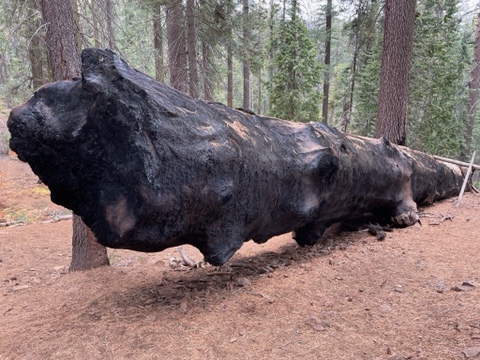
An ancient Giant Sequoia, fallen and scorched, in Tuolumne Grove of Yosemite National Park.

After searing summer heat and stifling drought fueled savage wildfires which, accelerated by Santa Ana winds, scorched large swaths of California’s spectacular terrain and prohibited access to some of its state and national treasures, and after a surprising October snow storm sealed off other parts of the Sierra Nevada mountain range, we finally arrived for a bucket-list experience we almost delayed too long.

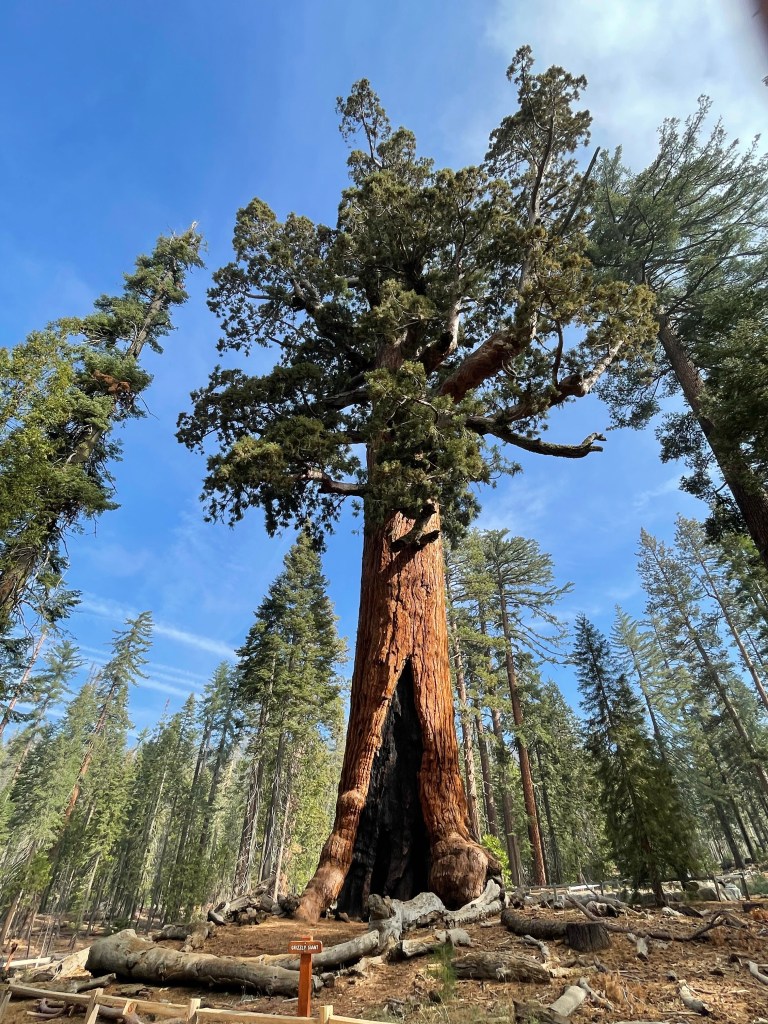
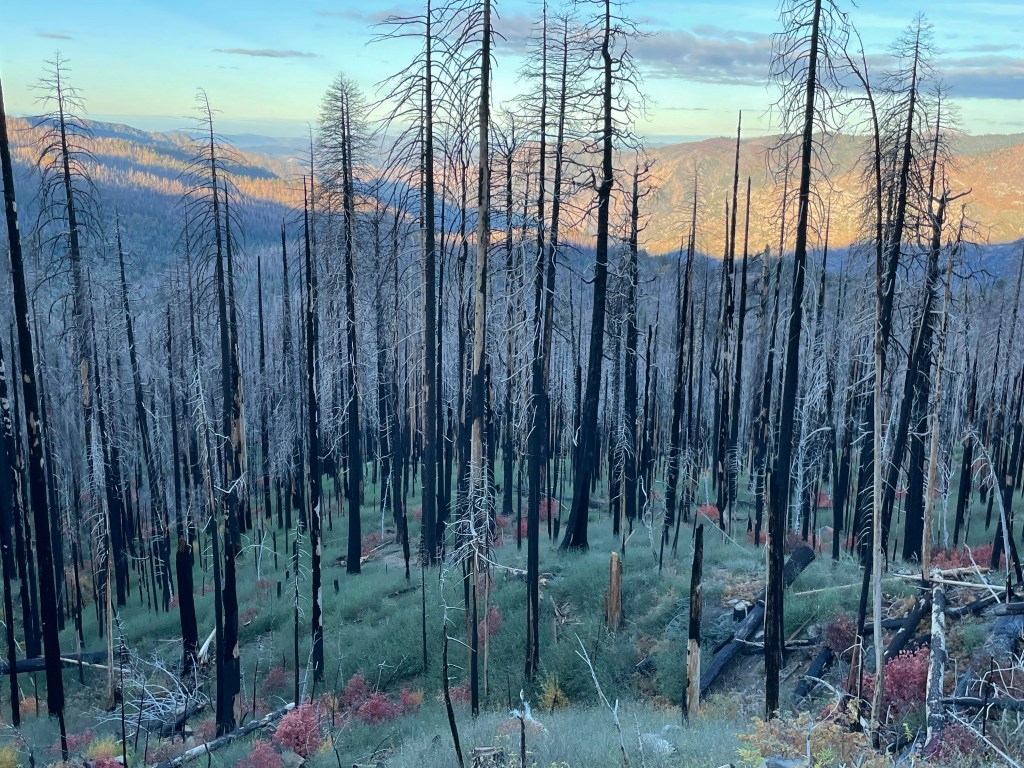
We hiked among — and occasionally hugged — some of largest by volume, and oldest, Giant Sequoia trees on the planet. Fortunate to visit the area on sunny days at the time of peak fall foliage, we saw mountainsides of blackened, branchless tree trunks reaching upward from a palette of brilliant yellow, gold and rust understory.

Evidence of fire was almost everywhere, and we could see by the height of resurgent undergrowth that some of those fires were recent while many occurred years, decades or even centuries ago. Some areas were reminiscent of a graveyard with as many trees on the ground as in the air. Among the horizontal were many victims of old age, many more felled by fires, and others downed by wind storms, including the Mono Wind event of last January 19th which toppled two dozen of the typically shallow-rooted Giant Sequoia trees in Yosemite’s still spectacular Mariposa Grove.

We learned that Giant Sequoias grow rapidly and grow old gracefully, developing the thickest skins of any tree species….bark that is fire resistant and can become more than a foot thick. This species can usually survive the fires to which other trees succumb….fires which are necessary to release the seeds from its thousands of egg-sized cones. We also learned that when a Giant Sequoia falls, it doesn’t decay like other trees; and we witnessed Giant Sequoias which had fallen hundreds of years ago with only slight deterioration to show for it.

Yosemite National Park hosts three Giant Sequoia groves — Mariposa Grove at the park’s southern border and the smaller Tuolumne and Merced Groves at the park’s western border. A two-hour drive away is Grants Grove, the only portion of the Kings Canyon and Sequoia National Parks complex that is open due to dangerous conditions following wildfires sparked by lightning strikes in September or the winter storm of October. Here the hiking is short — more like a short stroll — but the Giant Sequoias are in excellent condition….including the 1650-year-old General Grant Tree which is more than 100 feet in circumference at its base.

It was humbling to stand in the presence of a living creature that was alive in the Fourth Century AD.

A walk in the woods — any woods — can be an almost religious experience; but perhaps no where is it more spiritual than during a walk among the these gentle giants.

JER

Top is “Grizzly Giant” at Mariposa Grove in Yosemite National Park. Below that is a nearby fire-ravaged forest graveyard coming back to life.

Remembering the Alamo

Our recent truncated travels to the Greek island of Crete brought unexpected thoughts of Texas. Let me explain.

As you may recall from the history you were taught in middle school or caught from “The Wonderful World of Disney,” Texas fought a war of independence from Mexico. The most memorable battle was the 13-day siege of the 18th Century Franciscan Mission at San Antonio in 1836. More than 200 severely outnumbered Texans died along with fighters from the American frontier who were sympathetic to the Texans’ cause; but that massacre at what was to be called the Alamo became celebrated for the heroism and self-sacrifice of its defenders and as a turning point of the Texas Revolution.

Well, it seems Greece has an “Alamo” of its own.

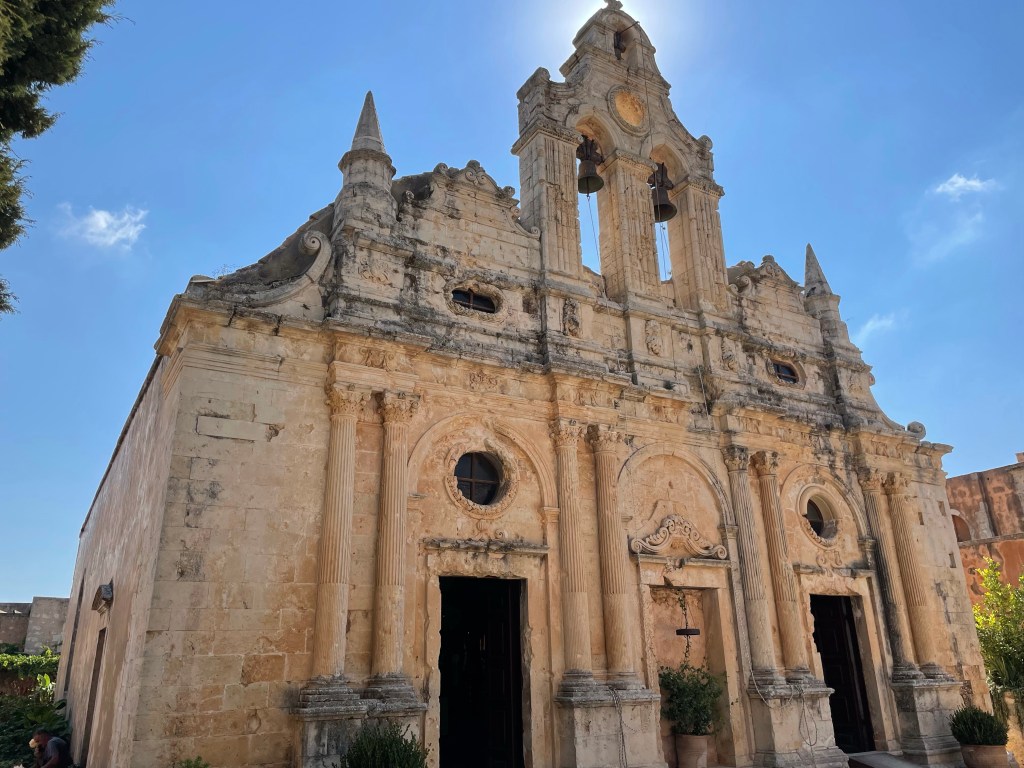
Greece declared its independence from the Ottoman Empire in 1821 but, four decades later, and far from the country’s capital, folks on the island of Crete were still fighting the Turks; and the “Arkadi Tragedy” of 1866 is its most celebrated battle. The 13th Century Arkadi Monastery became a symbol of heroism and self-sacrifice after fewer than 300 Cretan fighters and resident monks battled more than 15,000 invading Turks. When the outcome became certain, the Cretan fighters purposefully blew up their wine cellar which held its remaining weapons, as well as its martyrs: most of the decimated number of defenders and hundreds of the monastery’s remaining residents. The explosion also killed 1,500 Ottoman soldiers. Those Cretans who had not died or escaped were soon executed by the later arriving enemy forces.

By many accounts, this “holocaust,” as it was later termed by historians, had the effect of becoming the turning point in this nearly final of several Cretan revolts under Ottoman rule, although another but less bloody conflict in 1878 was required to allow Crete to savor the independence that the rest of the Greek nation enjoyed.

The Monastery at Arkadi is now both a holy and historical site, important to both the Greek church and Greek nation. As we toured this well preserved site it was not lost on me that the battle on Crete occurred within just 30 years of the battle at the Alamo in Texas and that both Crete and Texas became late additions to their respective nations as we know them now.

We think of Greece as an ancient and the US as a mere adolescent, when actually the nations were going through similar growing pains at almost the same time. In fact, America’s most traumatic growing pain — its Civil War — ended just months before the tragic siege at Arkadi.

JER

The Historic and Holy Monastery of Arkadi on the Greek Island of Crete.

Gods laugh at mans’ plans

A descendant of the Greek island of Crete once shared with me this bit of pithy Greek philosophy: “If you want to make the gods laugh, just tell them your plans.

As a planning addict and eternal optimist, I hadn’t put much stock in that ancient aphorism; but a trip to Greece may have confirmed its validity.

This was a trip that commenced with a commitment in August of 2019 for an itinerary that would play out in September of 2020; but the world-wide Covid pandemic demanded a 52-week delay in our plans.

And then, when we set sail this September in a classic 50-foot wooden motor-yacht, strong winds kicked up from the north and sent us seeking safe harbor along the Peloponnese Peninsula. Four days later we were still within a two-hour drive from our departure marina in Athens, with plans scuttled to see much of the Greek islands.

We substituted land excursions for island exploration. Rather than submerging in the wine hued waters of the Aegean Sea, we took deep dives into the Peloponnese region’s history dating back to the 13th Century B.C.: Minoans, Myceneans and Phoenicians; later Persians, Romans and Byzantines. And others.

We learned that while Greece is an old culture, it is a young country. Its hard-fought independence from the Ottoman Empire was formalized with a new constitution in the village of Nea Epidauros, just up the hill from where our boat was safely docked for five nights.

The display in the village museum emphasizes that the constitution of Greece is patterned after the constitutions of France and the United States. It was adopted by the country’s first National Assembly in December of 1821…..just 200 years ago this year…..and 34 years later than the United States of America formalized its principles for democratic government.

Looking at the US Constitution on display in the tiny neoclassical museum of Nea Epidauros made me proud of the USA. But then I began to wonder if the gods are laughing at those plans too…..the plans we had for this new nation in 1787.

JER

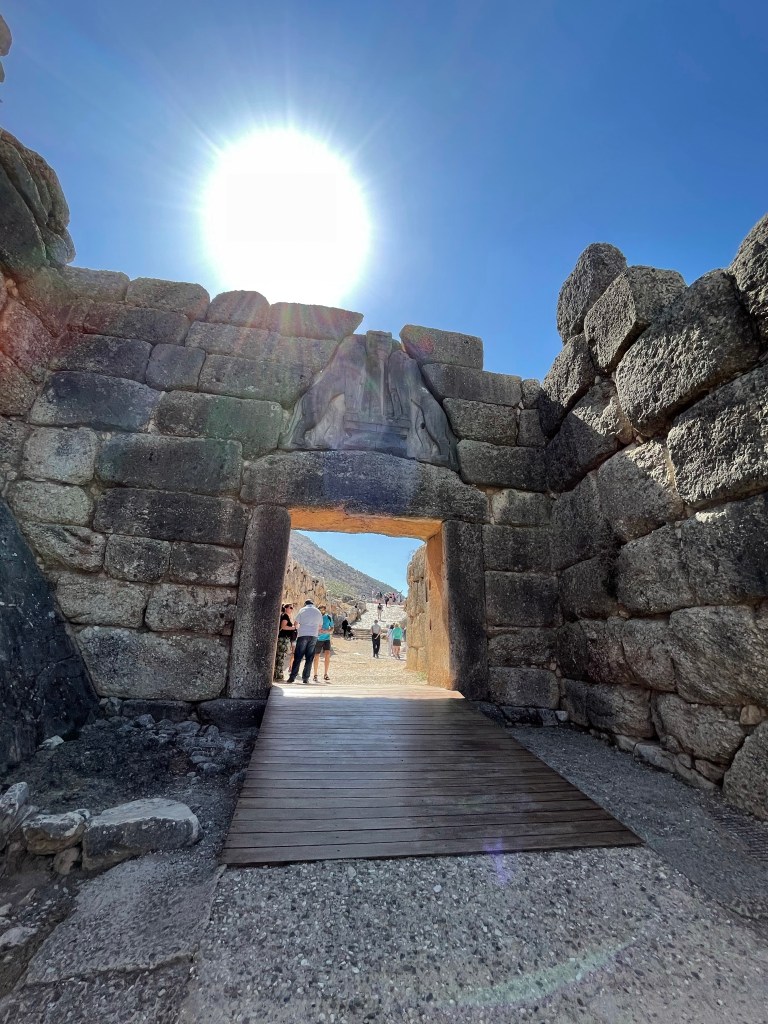
The Lion Gate of the ancient citadel near the modern village of Mykines on Greece’s Peloponnese Peninsula.

Plans for a river trip change

Much is written in travel blogs and in longer form commentary about responsible travel, for example, about avoiding air planes, choosing eco-friendly lodging, and eating locally sourced food. About avoiding tourism in nations with poor records on human rights.

It’s a tricky business, and hypocrisy comes easily because what matters to one person may not matter to the next. What’s a big deal to one conscience may be trivial to another.

From time to time we read of corporations which announce that they will not do business in this nation or that. Sometimes sports organizations announce they will not conduct championships or all-star contests in this state or that because its legislature has adopted a law with which the organization takes issue. Every bold pronouncement brings a chorus of criticism of selective morality.

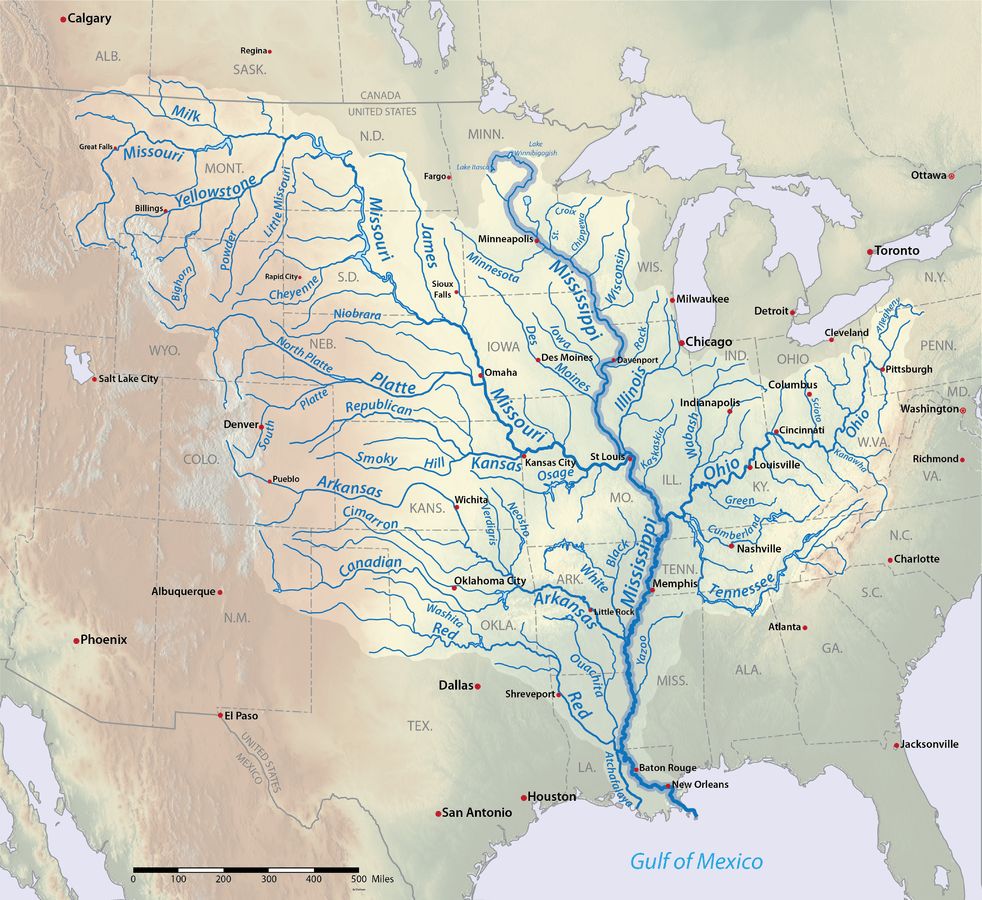
All of this was on my mind as I planned — and then cancelled plans — for a road trip my wife and I have talked about for years: a slow drive down the Mississippi River, seeing the sights, sampling the culture and reviewing the historical events of Middle America’s long, broad river basin. Reading Mark Twain, I suppose.

But then a mean reality became apparent: some of the states along this mighty river have made meager efforts to protect their citizens from COVID. They have some of the nation’s lowest vaccination rates and fastest growing rates of COVID cases.

So, it’s for our safety — and not to make any political statement — that we will fly over the middle of America to a see our family. That’s right, fly.

And of all places, we will land in Texas. Texas! A state with as many flaws as it has flautas.

As I said, responsible travel is a thorny proposition.

JER, July 2021

Picking up the post-pandemic pen

tempImageEacvPt
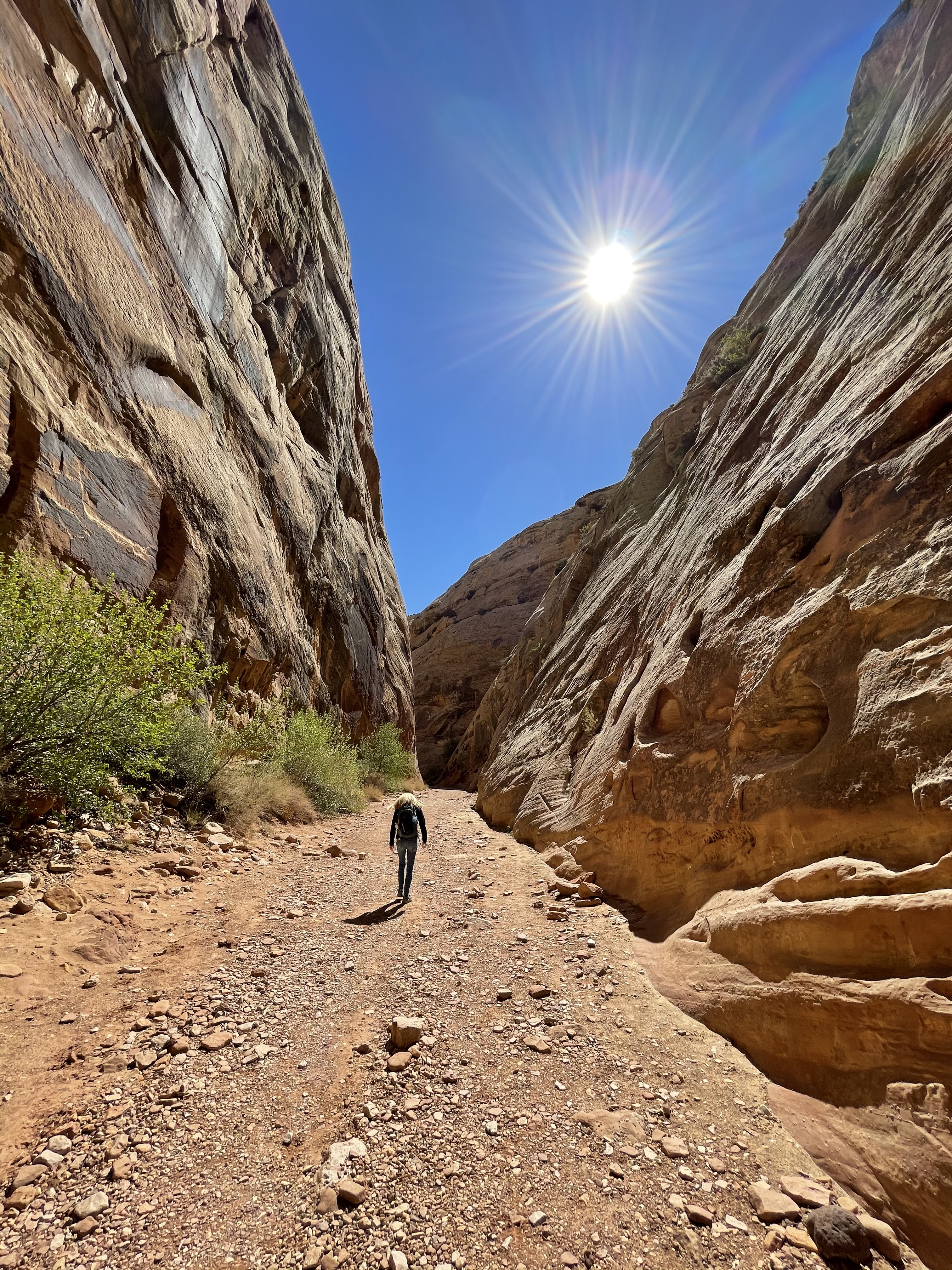
A solitary morning hike in Capitol Reef National Park.

Before the crushing crowds of people who had been pent up by the pandemic…..before the horrid heat dome settled in……before the torrential rains that did little to remedy the area’s decade of drought but ruined some of its river-side roads and trails……my wife and I spent 17 days in southern Utah, hiking in its five national parks as well as in several national monuments, state parks and lesser known slot canyons.

We flew west via an airline that was blocking every other seat in its boarding gate areas and keeping center seats vacant on its planes. Still, we looked like beekeepers in hazmat suits, wearing two face masks snuggly over our noses and mouths as well as face shields to cover from above our eyes to below our chins, and with 99.9% effective disinfecting wipes between our hands and anything we touched.

But on the trails, except when we passed other hikers, we unveiled our faces, breathed in fresh air and looked upon some of the most marvelous vistas in all of Creation.

The pandemic is not over — in fact, it’s never been worse in some places around the planet. But much of the world now has the knowledge and the tools it didn’t have a year ago to fight back. And even though some parts of the world lack access to those tools and other places refuse to utilize readily available tools, it’s time for me to get back to writing about the sliver of the world that is our experience…..about the good, the bad, the quirky and the metaphoric of it.

My purpose is no grander than to collect my memories and clarify my thoughts. But you are welcome to listen in.

JER, July 2021

What does a dog feel?

SAMSUNG CAMERA PICTURES

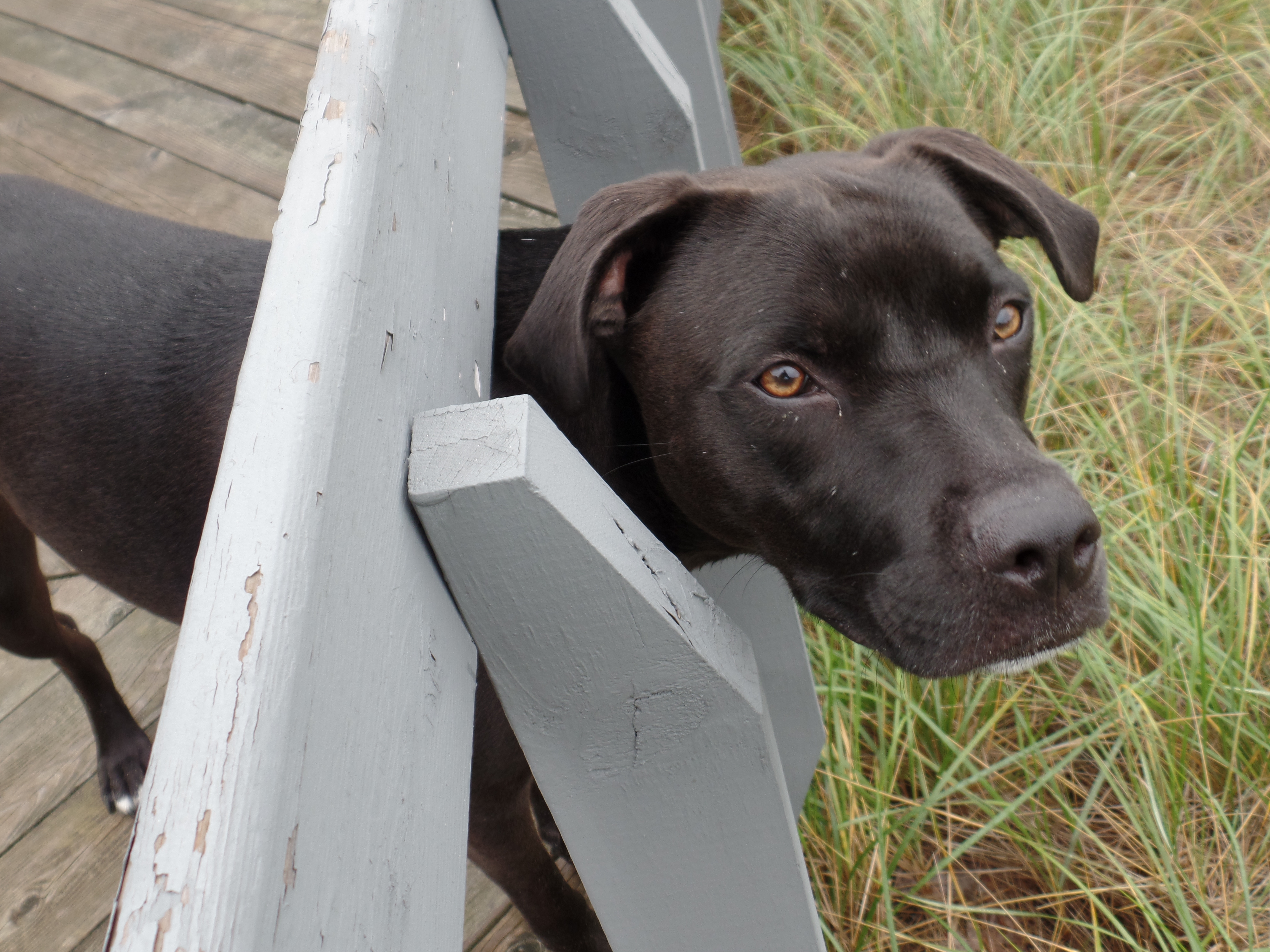
My heart has a soft spot for many breeds of dogs, and for one particular mixed-breed black rescue dog who now resides in Texas. He blends the speed and power of a Pit Bull Terrier with the sweetness and patience of a Labrador Retriever. He demonstrates intuition that exceeds his excellent training. He dreams.

For a half-dozen years he was the center of his household, basking in the attention of two adults who were attentive to his every need, and he to theirs it seemed. But a year ago, when they brought a newborn baby home, things began to change.

For awhile, he continued to tune into us during our video chats; but he gradually surmised that he was getting in the way of the main attraction, that little being of strange smells and sounds. A helpless little thing who couldn’t even crawl on all fours had effectively turned everything upside down. Now my favorite dog hardly notices when we video chat…..barely raises his head from the floor under the kitchen counter.

Life has changed for him. Fewer walks, almost no “rough-housing” and no rides to the creek to swim.  And I’ve been wondering about his feelings. How’s his emotional health these days?

And then I read this from Brian Doyle’s novel Martin Marten:

“We don’t have good words yet for what animals feel; we hardly have more than wholly inadequate labels for our own tumultuous and complex emotions and senses. It’s wrong to say that animals do not feel  what we feel; indeed, they may feel far more than we feel and in far different emotional shades. Given their senses are often a hundred times more perceptive than ours, could not their emotional equipment be similarly vast?”

JER

The Light at the End of the Tunnel?


811124BD-563C-4796-8517-582471CAE695
(Image from 123RF.com)


As we near the end of 2020 and harken the heralding of effective COVID vaccines for all by mid-2021, the pundits proclaim the end is near…..that there’s a light at the end of the tunnel.

Well, I can’t help but think of the line in Colum McCann’s 2013 novel TransAtlantic: “…..the light at the end of the tunnel generally belongs to the pharmaceutical companies.”

Never was that truer than it is now.

Millions of people will have been sickened and hundreds of thousands will have perished.  People will have lost pay checks or their jobs or their entire businesses. Students will have lost extracurricular opportunities and more than an entire year of classroom instruction. Health care systems will have been overworked to the point of collapse.

But the drug companies will deliver.  In record time, in record doses, with record efficacy.  And, one must suppose, with record profits.

JER

We’re Getting What We Deserve


DD02A326-751C-4F91-BA35-972886F91573
(Image from Britannica)


Beginning in 1989, Hank Williams Jr. became the musical mouth of the NFL’s Monday Night Football telecasts, asking Americans: Are you ready for some football?”  And then Hank sang a variation of his hit, “All My Rowdy Friends are Coming Over Tonight.”

Hank and his entourage were suppressed for awhile (2011 through 2016) for his  comments linking President Obama to Hitler; but he made a comeback in 2017 which lasted until this fall, when his raucous theme song was finally benched…..removed from ESPN’s mostly empty stadium telecasts. It must have dawned on someone that it wouldn’t be right during a pandemic to be singing “All My Rowdy Friends are Here on Monday Night.”

For most of two decades, football fanatics had come to expect hearing Hank’s question at the start of every Monday night telecast. And they felt some excitement. But this year, fans should probably be asking, “Are you ready for some COVID?” And they ought to feel some dread.

Even with their unlimited resources, NFL teams have proven incapable of keeping the virus out of their locker rooms: more positive COVID tests than final scores for Week #4 of the NFL season; before the next week’s games, five NFL teams were reporting positive COVID tests; by Week #6, a sixth team…..and so on to the absurd.

The NFL has upped its fines and doubled down on its protocols. It has rescheduled games, and then rescheduled them again, and still again. And yet the Denver Broncos embarrassed themselves and undermined any integrity that remains in this NFL season by playing without a quarterback last Sunday.

And everywhere outside those inadequately insulated NFL locker rooms, the signs are sure: the predictions of the pandemic’s nationwide autumn surge were right on schedule; the predictions of post-holiday spikes in the already surging rates of positive tests, hospitalizations and deaths appear to have been, if anything, too conservative. Now it is projected that there will be nearly a half million American deaths due to COVID by February’s Super Bowl Sunday! 

Nevertheless, as if exhibiting the impaired brain function football critics alleged during the sport’s most previous public relations disaster, the major college football establishment stumbles along like sheep to slaughter…..first three conferences, then five, then more…..like lemmings over the ledge. Never mind the health risks…..let’s do it…..and in so doing, let’s lavish on privileged athletes endless and expensive precautions that are denied to regular tuition-paying students, many of whom have been hustled away from their contracted campus housing and have no other place to live. Nothing  can be allowed to corral this cash cow…..the college football juggernaut.

There already have been 108 COVID-related cancellations or postponements of games in major college football during this truncated 2020 season. Telecasts reveal that in almost every case where crowds of any size have been allowed, hundreds of spectators have been ignoring both social distancing and effective face coverings, assuring campus contagion. COVID already has been so bad on and around some college campuses  — including the BIG 10’s Michigan State University and University of Michigan — that their administrators are already suggesting that the 2021-22 academic year will begin without in-person academic classes for most students. But football? Well, full speed ahead.

Can’t play contact sports in Santa Clara County, California? No problem: the NFL’s Forty Niners have relocated to Phoenix, Arizona for two weeks (where the COVID rate is higher than in Santa Clara County); and Stanford’s football team is practicing in Seattle, Washington this week and Corvallis, Oregon the next week.

If you’ve wondered why Americans have lost confidence in leadership, it’s because responsible leadership is so hard to find and so briefly lasts. On the other hand, after observing selfish, tone-deaf antics of football zealots on all levels, and the irresponsible actions on college campuses (from the student body to the board room), and the futility of the NFL’s prevention efforts, football fanatics may be getting precisely the lightweight leadership they deserve.

However, other people — those who believe that pre-mature action to return to life-as-we-knew-it before COVID has been the most certain way to prolong the pandemic, deepen the damage and delay life-as-we-want-it — are NOT getting the leadership WE deserve.

JER

CCFA9F31-F1F2-47CC-AB15-A3CFA1FFF0CE_4_5005_c
(From memegenerator.com)

“The price of information is falling to zero.”


5EF3B794-2624-45C4-95A7-4F4A547BDE58
(Image from English Language Learners Stack Exchange)

Among the dozens of deep discussion-worthy passages in Richard Powers’ provocative 2009 novel Generosity is this truth for our times:  “The price of information is falling to zero. You can now have almost all of it, anytime, for next to nothing. The great majority of data can’t even be given away.”

Spin by commercial advertisers and political candidates, incessant and often inaccurate polling, and the clutter of suspect information on social media are among the forces which combine to cheapen legitimate efforts to market vital information. This has caused the quick collapse of countless internet-based information businesses, which had themselves abetted the demise of long established and well respected publications.

Is it really necessary that there be 170-plus Google postings for the Texas State Capitol Building, or 190-plus for the City of Bismarck, North Dakota? Democracy and universal access are important, of course; but is there somewhere a point of diminishing returns to the helpfulness of information? Might there even be some obstruction to the pursuit of knowledge in all of this?

In my own past, I oversaw a hapless effort to monetize the dissemination of accurate, civil and official information on an athletic association website that was swamped by the speculation, rumors and lies of other sources. And I served as chairman of the board for a more hopeful enterprise that is now in its eighth year of streaming school sports events. . . an authentic niche in the glitzy and often phony world of sports broadcasting; but it has still not climbed out of debt. Accuracy of information and authenticity of programing overwhelmed by unvetted audacity.

What I learned then and confirm now is that information is overrated. More important, but in far less abundance, is meaning.  That’s where the value is, or should be. Powers adds “. . . meaning is like land: no one is making any more of it.

JER

31D93B8F-3EE4-4522-8513-79B8A702DF50
(Image from Conversation Agent)

The Potential for a Mail-in Mess


8525731E-2EAC-4C2E-8013-1004EBEE70F0_4_5005_c
(outsidethebeltway.com)


The last thing I want to do is fertilize the insidious seeds of suspicion which the current president is sowing; but I do hope that we will make some changes in US election procedures relative to “mail-in” ballots before 2024. I am not worried about “fraud”. . .that’s a straw man. My worries are much more mundane, and likely.

Mail-in voting is an essential option for citizens of diverse circumstances in a democratic society, but there are many downsides to a system in which ballots are mailed to voters several months before “Election Day” and are being counted up to two weeks after (which just now is the subject of a fast-track Court of Appeals case in Michigan).

Even with President Trump’s recent self-immolating behavior, it is possible that, this time around, we will go to bed on election night with one presidential candidate having the lead, only to be declared the loser during the next day or week when all the mail-in ballots have been counted. Even without the lawsuits that will flow for many weeks following, this would not be healthy for our democracy.

With so much time between our votes and election day, compounded by so much time between election day and the start of new terms, too much can happen to make  voters second-guess their choices. Under the current system, people are voting before one or more of the scheduled candidate debates. They may be voting before significant changes are revealed in a candidate’s background, or positions on issues, or health status.

In addition to such political nightmares, there are practical reasons to tighten some things up.

Dozens of election fliers for local, state and national offices have reached my front door or mail box after I had voted this year, and they keep coming. Candidates are spending millions of dollars on radio and television buys after millions of voters like me have already made our choices and either mailed in or personally delivered our ballots. Unless changes are made, campaigning — and campaign spending — will have to start many months earlier in the future than in the past in order to influence these earlier voters about races up and down the full length of the ballot.

If an excessively flexible voting calendar is allowed to continue, it will add to the cost of campaigns and reinforce a system which favors wealthy candidates, who will be the only candidates able to start their costly media buys much earlier and maintain that high level of spending much longer.

In addition, expenses at the local level must increase as offices of local elections authorities are required to ramp up much sooner, deliver millions more ballots much earlier, receive completed ballots much longer, and then handle and store those ballots before they are finally counted on election day, or after.

Reducing both — the length of time before elections during which ballots may be mailed out and also the period after elections that ballots are eligible to be counted — will reduce the possibilities for problems as we perform our patriotic duty.

JER. . .October, 2020