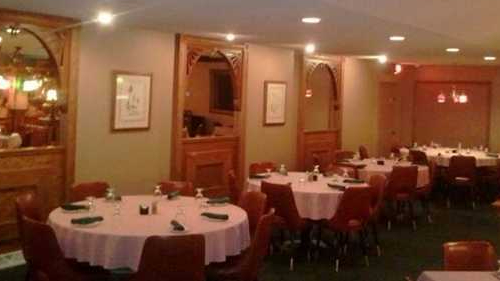
The Sky Club in Plover, Wisconsin has hosted high school prom dates for decades.
The names tell you where they’re located, or what they’re near, or who they are: 3 Mile House…..Club 66…..The Bayview…..Riverside Inn…..Two Lakes…..Jake’s…..Rocky’s…..Roxy’s.
They’re supper clubs. A Wisconsin invention and a Midwest institution.
Many owe their origin to Prohibition — like The Duck Inn near Delavan on the Wisconsin side of the border with Illinois, and The Edgewater on the Rock River near Jefferson, Wisconsin — a place away from more populated areas to have drinks when alcoholic beverages were banned. Many owe their staying power to Catholicism….. a place for all-you-can eat fish fries on Friday’s when eating red meat was prohibited by Rome.
Patrons owe their loyalty to generous portions – with limitless trips to the salad bar – at modest prices.
Supper clubs provide more than dinner. There must be drinks, usually house wine and brand-name beer – nothing boutique – as well as the “Old Fashioned” cocktail…..often made with brandy in Wisconsin.
There must be conversation, usually without regard to social class and rarely in confidential tones. Conversations are intended to be over-heard. That’s the point. It’s a mixer…..social media without mobile devices.
Years ago, many supper clubs provided entertainment, and sometimes dancing; but wall-mounted monitors showing sporting events is the modern substitute. And speaking of sports, supper clubs are establishments where sports talk is as much about local high school squads as the state’s university teams and professional franchises.
And with all politics being local, supper clubs are where most of our problems are solved. If you doubt this, just listen to what’s being said at the next table over.
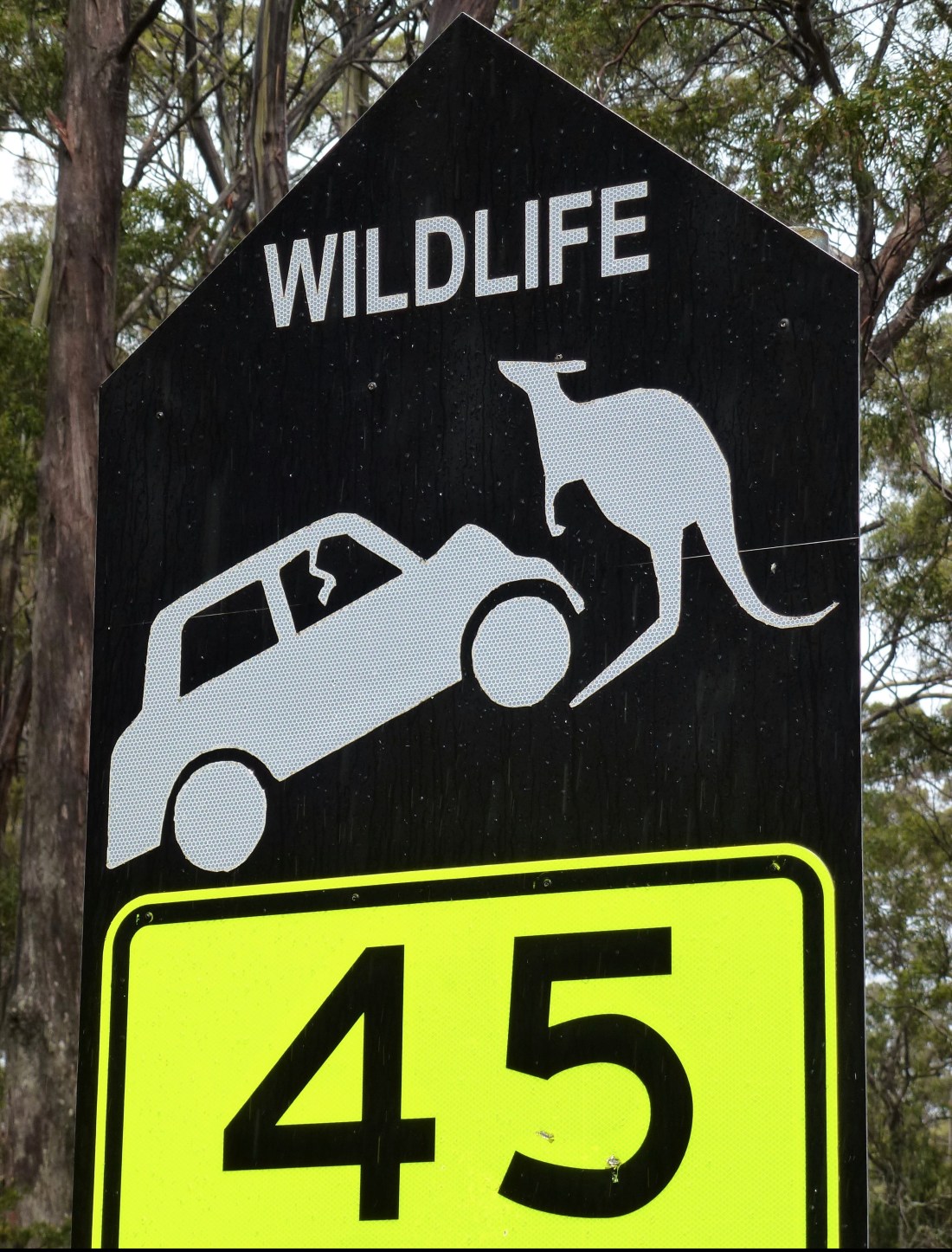
Road signs can be a constant source of entertainment, even for veteran travelers.
The more one travels, the less she gushes and the more he evaluates.
It’s a shame — but apparently inevitable — that the veteran traveler trades amazement and awe for comparison and contrast.
The air is cleaner than…..the sky bluer than…..the buildings taller than…..the river wider or longer than…..the restaurants more or less inventive than…..the roads more or less crowded than…..the drivers less courteous than…..the wineries more sophisticated than…..the mountains less majestic than…..
Nothing seems to stand on its own for the veteran traveler. Nothing is incomparable. And the veteran traveler must go farther, higher, wider, weirder, deeper or more dangerous for an experience that is novel.
The wanderer who can still wonder – who can be fascinated by the commonplace and the customs of ordinary people – who can experience without rating…..the innocent traveler of first impression….. is the more fortunate, I think.
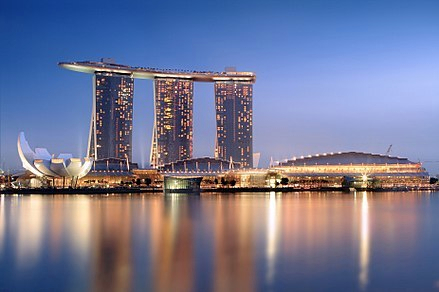
Singapore is expanding both up and out. Here the Marina Bay Sands Hotel rises above gardens, shopping complex and convention center — all on newly created land that has contributed to a 25% increase in Singapore’s footprint.
Or pollution that clouds the sky. Or slums that crowd within two blocks of the most prominent commercial districts. Or overt censorship of news and expression, which people joke about but which is no laughing matter.
While Shanghai is a metaphorical island — one of four municipalities which report directly to China’s central government and not through a provincial capital — Singapore is literally an island; and it’s also, in fact, a self-governing city and country. And at one-sixth the population of Shanghai, Singapore seems more intimate…..yet Singaporeans are much less likely to violate each other’s personal space.
So actually, Singapore is not at all like Shanghai. It was a first impression that didn’t survive two visits over three weeks.
When a small island contains an entire world-class city and nation, every inch of land is accounted for…..and in Singapore, much of that space is consumed with symbols not just of economic success but of ostentatious commercial excess.
Almost everything found elsewhere in the world is enlarged in Singapore. The Ferris wheel — called the Singapore Flyer — is two football fields tall and takes 45 minutes for a single revolution. Shopping zones are missing no prestige brand found anywhere on earth, and one — a complex of shops, theaters, casino, restaurants, gardens, hotel, museums, spa, event venue and convention/expedition center at Marina Bay, with dueling music, light and water shows — is four times larger than the four largest shopping malls in the USA combined.
Mexican and Italian restaurants, so common in every other major city we’ve visited, are rarer here…..in fact the Open Table app has no listings for Mexican restaurants; but otherwise, the sky is the limit — literally — for where restaurants can be found in Singapore, and for the fare they offer. Dining costs in Singapore are also sky-high…..a glass of a good New Zealand sauvignon blanc is a dollar a sip.
We enjoyed escaping high-rise buildings and traffic-filled avenues to walk Little India, the Arab district and Chinatown, all with narrower passages and lower structures — many buildings echoing Singapore’s colonial past. We noted that the Indian and Arab sections seem to have further subdivided into separate areas for their different ethnic groups as well as for different trades…..jewelry in one block, carpets in another, hardware and home supplies in another and in yet another, silks (interspersed with imitations, my wife observed).
There is no apparent homelessness or panhandling in Singapore, and no obvious attempts to scam tourists. There is little litter, no graffiti, and both spitting and gum chewing are against the law. In most sections of Singapore, smokers are restricted to small posted areas. Singapore’s public transportation — which is both extensive and efficient — prohibits food and drink, and cell phone conversations are rare.
However, younger Singaporeans of wide ethnic diversity seem so consumed with their smart phones that they are prone to risk their safety or that of other pedestrians by failing to lift their eyes from their screens while moving through crowded sidewalks, shopping centers and subway passages. It appears as if they expect the rest of the world to move aside for them.
I wonder if that is an appropriate metaphor for modern Singapore, or just another inaccurate first impression.
Man-made in 1807, Kandy Lake — also known as Kira Muhuda (“Sea of Milk”) — dominates the hill city of Kandy, the ancient capital of Sri Lanka.
Ocean currents have a lot to do with why intrepid or displaced humans arrived at the low, skinny and scattered spits of sand now named Maldives many years before they landed on the single, larger and more elevated island now known as Sri Lanka. But somehow, Maldives has been spared pain that has so repeatedly and savagely visited Sri Lanka (known as Ceylon for most of the 19th and 20th Centuries).
Somehow, far-flung and low-lying Maldives has never experienced a damaging hurricane or tsunami while, in 2004, the entire 360-degrees of Sri Lanka’s shoreline was devastated and more than 35,000 people died in a late December tsunami. Only Indonesia suffered more casualties. It’s a sore point among Sri Lankans today that so much attention went to the tsunami’s effects upon Thailand but the world still knows so little about the greater suffering in Sri Lanka.
Maldives came under protection of the British in 1887 and was a dependency of the Crown Colony of Ceylon until 1948. All rather peaceful. However, the land that is now Sri Lanka has been contested by the Portuguese, Dutch and British, was a part of and then parted painfully from the British colonial empire, and ended the last and began the current century with savage civil war which claimed more than 100,000 lives over 25 years.
Maldives is almost entirely a one-religion nation (Islam by its 1997 Constitution), but Ceylon — and Sri Lanka since 1972 — has a volatile ethnic and religious mix. Efforts to establish a single national language further inflamed violent passions. The troubles sent many expats home and delayed the economic benefit of tourism by more than a quarter century.
While exploring Sri Lanka recently I was reading Mosquito, a novel whose story begins in the 1990’s but whose setting included places we were visiting. Author Roma Tearne describes the pull and power of writing, painting, homeland and love, even in the midst of senseless and gruesome violence which characters on both sides of the conflict note is not being widely reported around the world. As with the tsunami, news of Sri Lanka’s civil strife did not travel well.
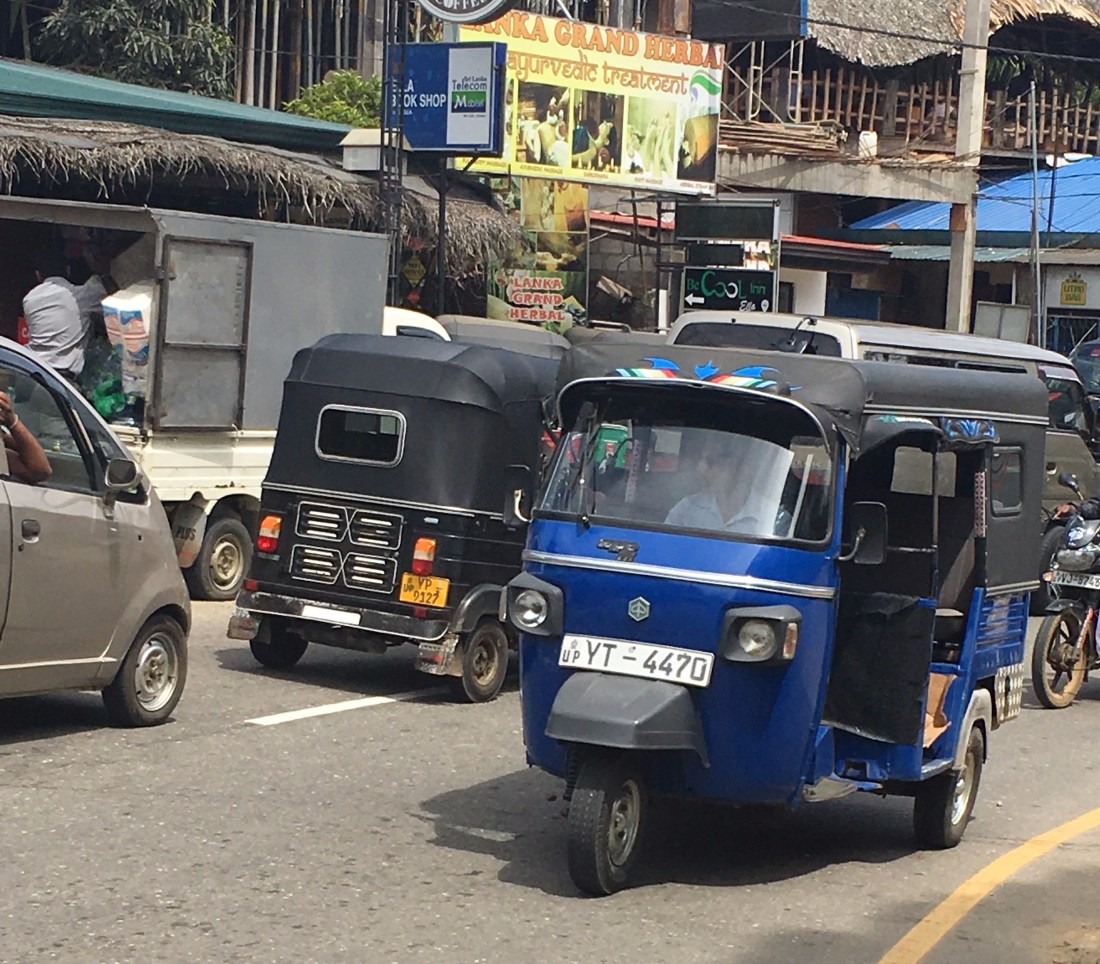
Tuk-tuks are the favored all-purpose vehicles of Sri Lanka’s congested roads.
Calmed by two Dramamine and a large bottle of local Lion lager, I took to the left lane of Highway A2 to commence the circle tour of the southwest quadrant of the small, pear-shaped nation of Sri Lanka, just off the southeast coast of India.
Our plans to do this without a guide and driver had caused raised brows and widened eyes among everyone in the capital city of Colombo who had inquired about our itinerary, and it didn’t take long to understand why. But it’s not a decision we regretted for even one moment.
It is true that traffic lanes are merely suggestions — that two lanes of highway often translates into four or five vehicles across the road…..bicycles, motor cycles, three-wheel tuk-tuks, cars, trucks and – most menacing of all – buses – all swerving around nonchalant pedestrians (many women elaborately draped), oblivious live stock and ubiquitous dogs (often lame), all claiming the right-of-way with a honking cacophony of drivers’ thoughts and threats.
Road-side stands selling everything from robust fruits and vegetables to local crafts, used tires, household necessities and tacky inflatable toys, crowd to the edges of busy streets; and shoppers think nothing of parking on the pavement, further restricting passage. People conduct conversations on the roadway pavement without regard to traffic, as if they care more about personal relationships than vehicular progress. Imagine that.
Small traffic information signs compete with myriad commercial signs and huge billboards for drivers’ attention. English is absent from at least half the signs. As it should be.
The roads themselves are smooth as can be, missing the minefields of cracks and potholes we are accustomed to in the USA. Our air-conditioned Suzuki brand car gave us relief from Sri Lanka’s sweltering February and March mid-day heat when outdoor excursions are otherwise out of the question. And we found places that were well out of the way for most US tourists.
At the southern tip of Sri Lanka, just beyond Tangalle, where the beach road turns from pavement to dirt, just after the spot where the washed-out road is being replaced with a new bridge, we found our accommodations at a five-year old concrete and brick hacienda that stands on property where the 2004 tsunami had washed away a private residence of less sturdy construction. We were just the second guests from the USA to visit here in the five years of this establishment’s operation.
Above the country’s ancient capital of Kandy, at the end of a twisting road set at a 60-degree incline that nearly fought our car to a draw, we found a villa constructed by a gracious German who converted his residence and office to a tourist inn when the brutal civil disturbances of Sri Lanka began to subside a dozen years ago. I have the feeling our host has a story, and I fantasize about recording it.
Young men pull sand from the shallows of the sea to support the building boom in Maldives.
Every evening and more so every morning, low-riding boats anchor in the flourescent blue shallows which punctuate the thousand-island nation of Maldives which straddles the equator in the Indian Ocean. These boats arrive with piles of empty white bags. Several hours later they depart — gunwales of the boats precariously close to the ocean’s surface, overloaded with stacks of bags full of sand, the residue of coral.
Young men drop beneath the water’s surface time after time and day after day to fill bags with the raw material of plaster to be used in construction of high-rise hotels and condominiums near the capital city of Malé and at resorts throughout the nation’s 26 atolls.
People say that Maldives — where the average elevation is just four feet above sea level — will be the first of this planet’s nations to be entirely submerged by rising sea levels. As I observed the morning and evening sand-transfer ritual, I had this thought: It appears Maldives’ response to global warming is to scoop up sand from the ocean and deposit it on parcels of land riding almost as low in the sea as the nearly swamped boats which deliver that sand.
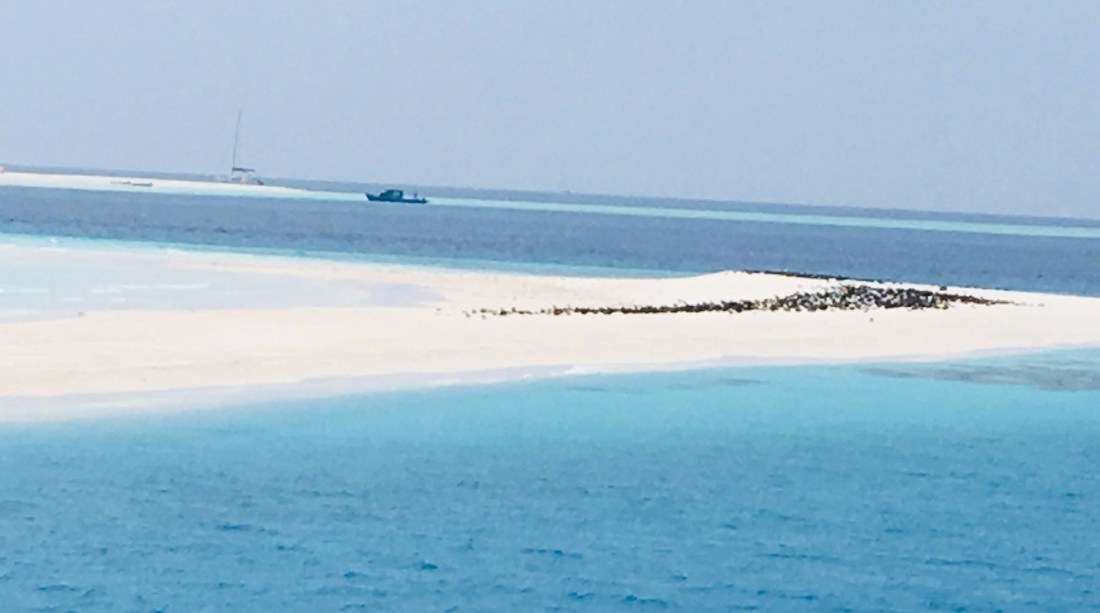
One of countless “sandbanks” which beautify Maldives — “the world’s largest swimming pool.”
I will always cherish Maldives for providing my first open-water scuba diving experience. The master diver who acompanied me on three hour-long dives made me feel comfortable and free as we explored more than 65 feet beneath the ocean surface.
But Maldives brought home to me (again) how terribly our planet is being harmed and changed.
Maldives is an independent island nation in the Indian Ocean whose maximum elevation is just eight feet above sea level. It’s comprised of 26 atolls, consisting of more than 1,000 islands and countless coral-rimmed shallow turquoise pools which appear to be lighted from beneath. Here is where the snorkeling and diving is best, and here is where the picture is most disheartening.
The coral here is damaged, or already dead and distintegrating. It’s not 10 or 20 percent dead or dying, but well over 90 percent light-brown skeletons of deceased coral, covered with white powder. What seems to be an endless array of gloriously decorated fish stands out starkly against a background on which tan and dirty white dominate the palette, with dusty olive accents.
The cause is warming sea water. The Indian Ocean is the most rapidly warming ocean on the planet. I’m not smart enough to explain why this is so, but it is. Weather patterns affected by global warming have changed world-wide ocean currents that have resulted in the Indian Ocean actually “stealing” heat from the Pacific Ocean and some of the earth’s land masses. While this has slowed the rise of temperatures on land and sea elsewhere around the world, it is raising havoc in the Indian Ocean.
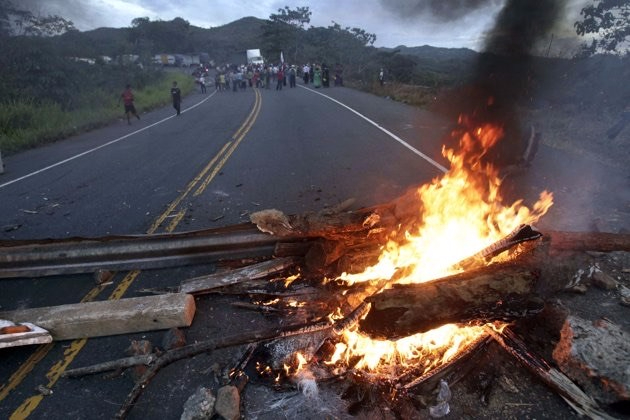
Protests on the Pan-American Highway, February 2012 (mrs-ca.blogspot.com)
For more than 100 years ending early in the current century, private and public interests sought to unite the Western Hemisphere through an overland route — first by rail, and then by roadway. Rarely were all the key players in both government and business in all the involved nations of North, Central and South America of one mind and purpose; and as a result, never was either of these “Pan-American” projects fully completed. The story of vision and vice is chronicled in Eric Rutkow’s new book, The Longest Line on the Map — The United States, the Pan-American Highway, and the Quest to Link the America’s.
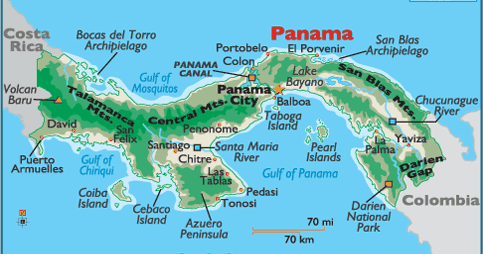
Ultimately it was daunting natural barriers, a justifiably suspicious and stubborn indigenous population in the region and a government in the capital city of Panama which was fearful of problems that traffic from more southern nations could bring to Panama, that combined to obstruct completion of the highway at what is called the Darien Gap in southeasternmost Panama.
It was a completed portion of the highway in northwestern Panama that provided one of our most unusual and unscripted travel adventures…..in the winter of 2012.
We were attempting to return to Panama City by rental car from a peaceful and pampered stay at a small island resort. When we joined the Pan-American Highway we found it barricaded by trucks whose drivers were sympathetic to the plight of the indigenous people who were blocking the highway with their bodies and brush fires to protest the taking of mineral rights of their land by the federal government. They chose strategic spots where there were no alternative routes accessible for cars, and they signaled intentions to continue the blockade for many days or weeks.
The short version of the story is that we spent the night arranging for an outboard motor boat with the help of a close knit local expat community and, at dawn the next day, abandoned our rental car and traveled among the mangroves for 90 minutes in the opposite direction of Panama City. We docked just west of the airport at David in northwest Panama, arranged a taxi for a short and un-barricaded back-roads route to the overcrowded local airport, and secured two seats on a flight over the continuing chaos on the higway below, arriving in Panama City in time to connect with our scheduled flights back to the USA.
For several weeks after our return we followed the limited news coverage US media devoted to these events in Panama. There was some destruction and three deaths attributed to the protests during those weeks, but there were no fundamental changes in government policy. More recently, the number of issues over which Panamanians are protesting has expanded, protest events have spread across the country and into Panama’s towns and cities, and the toll of property damage and deaths has gradually increased.
Most people think of the country of Panama as having a north/south orientation, dangling like a ruptured appendix from the belly of the rest of Central America. Actually, Panama stretches west to east. Which partially explains why it was possible to observe a sunrise over the Pacific Ocean, not the Atlantic, from the balcony of our top-floor room of a restored structure in El Casco Antiguo, the old quarter of Panama City.
Panama is a foreign country where the US dollar is its national currency, and its time zone corresponds to that of the mid-section of the USA. So neither body clock nor pocket book need adjustment for travelers arriving from the USA. And it is the USA that is mostly responsible for the location and construction of Panama’s major tourist attraction.
The Panama Canal is where it is and what it is because of the USA’s force and influence. The land was secured through less than honorable and peaceful means, and canal construction costs far exceeded any previous capital investment by the US government in a foreign country.
From my reading of David McCullough’s ThePath Between the Seas, which recounts all the decades and dollars and deaths expended to complete the canal, I was expecting to see a grander gash in the landscape. In fact, berms and folliage disguise the depth and breadth of this century-old engineering feat, and we were able to stand within 20 yards of the motorized “mules” helping to guide the ships through the two-stage, two-lane Miraflores Locks……while off in the distance we could observe progress being made on a second canal — wider, deeper and more dominating than the first — capable of accommodating the modern super-tankers and super-sized cargo ships that are constantly circumnavigating the earth to quench the thirst of nations for fuel, food and material goods from far-away places.
If Istanbul was the crossroads of the ancient world, then this place — Panama City, with its expanding shipping and banking influence — is the crossroads of the modern world. Only time will tell if it will become the cultural melting pot that Istanbul has been and struggles to remain.
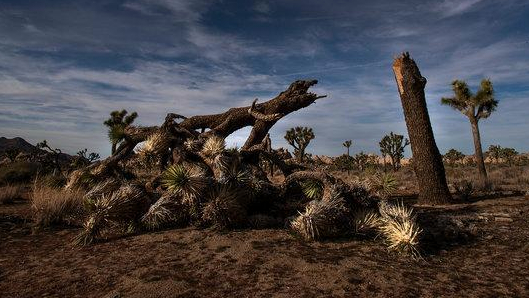
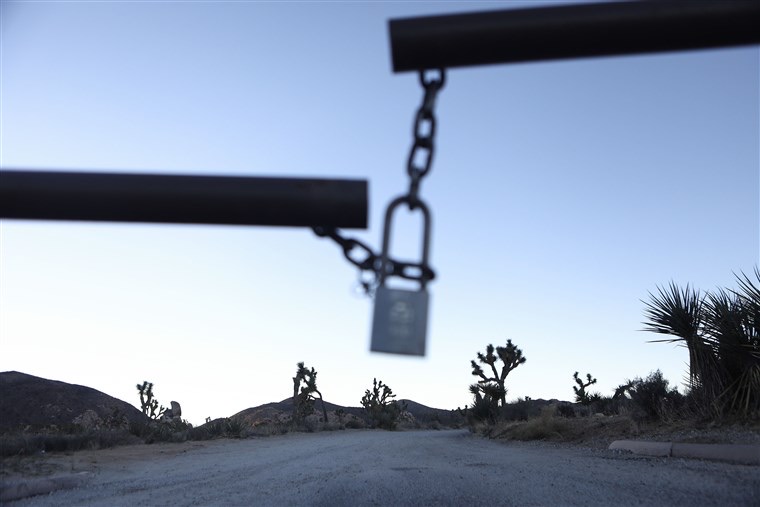
Damage at Joshua Tree National Park will take centuries to overcome. (Photo by New York Times)
Here are mostly dispiriting updates regarding two earlier blogs:
My January 10th posting (“Trash Talking”) reported that Joshua Tree National Park was being trashed by park visitors during the partial shutdown of the Federal government which lead to a lack of supervision by park authorities and a lot of stupid human tricks by hikers and campers.
It is now being reported that it will take 300 years or more for some portions of the park to recover from a mere 35 days of under-supervision. Garbage and human waste are being quickly removed, but scarred and fallen trees will take centuries to be redeemed.
The ONLY encouraging news here is that both public and private efforts have launched to protect Joshu Tree National Park and help nurse it back to its more pristine state.
My December 9th blog (“Plastic in Paradise”) described an effort to remove within five years at least half a gigantic garbage vortex in the Pacific Ocean through means of “The Ocean Clean-up” — a vessel with expansive outreaching mechanical arms which skim the top ten feet of the ocean to gather up large pieces of plastic before they are weathered into smaller and more environmentally threatening particles.
That admittedly quixotic but still inspiring effort apparently is not working, at least not in its current form — its beta test. Officially called System 001 but nicknamed “Wilson,” it is having trouble holding onto the garbage it collects, and a 60-foot section of arm has broken.
Founder Boyan Slat admits to problems — not unexpected with a test of technology that has never been tried before — but it is encouraging to read that he is not yet giving up.
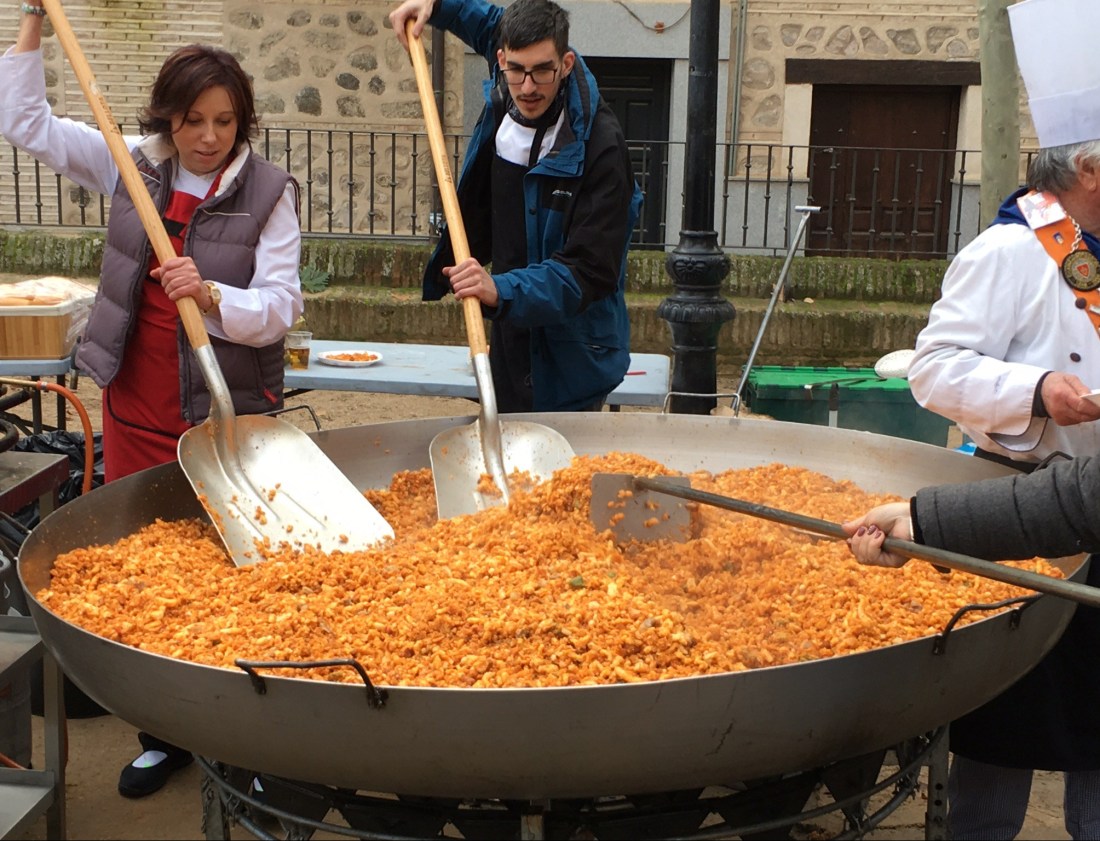
A traveler can expand both mind and waistline in Toledo, Spain.
Travel can be inspiring and expanding, and maintaining written or photographic records of the experiences are worthwhile in the short term and may become one’s greatest treasures. But in the following passages, the veteran of road, rail and travel log, Paul Theroux, in his Ghost Train to the Eastern Star, provides self- and genre-deprecating perspectives about travelers, travel writing and travel:
“You think of travelers as bold, but our guilty secret is that travel is one of the laziest ways on earth of passing the time. Travel is not merely the business of being bone-idle, but also an elaborate bumming evasion, allowing us to call attention to ourselves with our conspicuous absence while we intrude upon other people’s privacy — being actively offensive as fugitive freeloaders. The traveler is the greediest kind of romantic voyeur, and in some well-hidden part of the traveler’s personality is an unpickable knot of vanity, presumption, and mythomania bordering on the pathological. This is why a traveler’s worst nightmare is not the secret police or the witch doctors or malaria, but rather the prospect of meeting another traveler.
“Most writing about travel takes the form of jumping to conclusions, and so most travel books are superfluous, the thinnest, most transparent monologuing. Little better than a license to bore, travel writing is the lowest form of literary self-indulgence: dishonest complaining, creative mendacity, pointless heroics, and chronic posturing, much of it distorted with Munchausen syndrome.
“Of course, it’s much harder to stay at home and be polite to people and face things, but where’s the book in that? Better the boastful charade of pretending to be an adventurer….
“The best travel seems to exist outside of time, as though the years of travel are not deducted from your life. Travel also holds the magical possibility of reinvention: that you might find a place you love, to begin a new life and never go home. In a distant place no one knows you — nearly always a plus. And you can pretend, in travel, to be different from the person you are, unattached, enigmatic, younger, richer or poorer, anyone you choose to be, the rebirth that many travelers experience if they go far enough.”
For many years I’ve maintained on my mobile devices the current time and upcoming weather projections for destinations around the world where I was planning to travel or someday hoping to visit. I believed it helped assure that travel dreams would become realities…..and many did.
There have been times, however, when I have deleted a destination’s details, dashing dreams for a visit. This has occurred when the explicit dangers of a destination made a visit there seem like an unnecessary risk when the world features so many fabulous and safe travel possibilities — more than I will ever have time to experience.
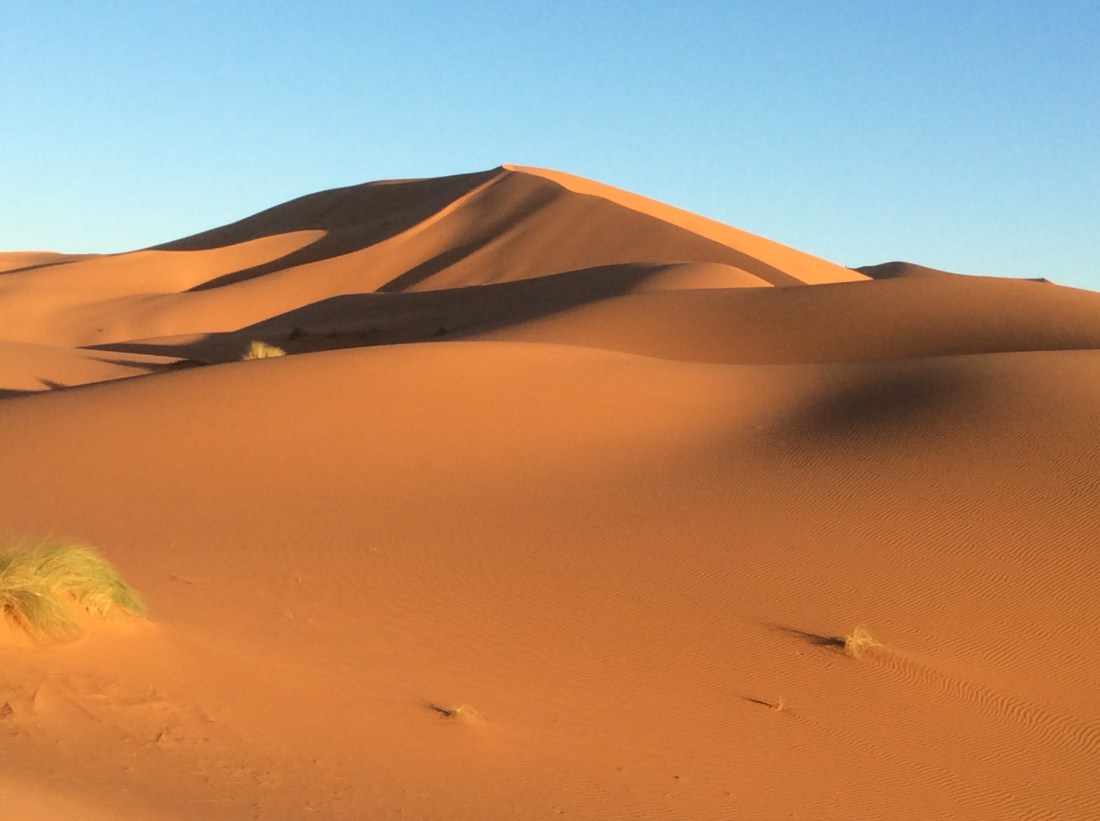
For years I’ve wanted to see the pyramids of Egypt and travel the Nile River valley in one direction by train and the other direction by boat, and do it on my own terms. No group….just my wife and I. In 2015, after a series of violent occurrences in public places of that country, we shifted our travel destination from Egypt to Morocco, and we had a great time exploring Morocco’s ancient cities and vast desert mostly on our own. That was well before this past December’s brutal murder of two women who had been training to become tour guides in Morocco which has resulted in the arrest of at least 20 suspects……making it doubtful we would be visiting Morocco now if we hadn’t done so already. The time and weather for both Egypt and Morocco are no longer found on my mobile devices.
Istanbul had been on my bucket list, and its time and weather on my mobile apps, for many years before being deleted, due to Turkey’s increasingly unstable environment. No city intrigues me more than Istanbul, the crossroads of world trade for centuries and a mix of culture that is second to none on this planet. Because of many incidents during the past few years and proximity to other unstable nations and regimes, I now feel I have waited too long to experience this on my terms, in this lifetime. So the time and weather for Istanbul have been deleted.
Meanwhile, some nations which once were off-limits are now on my radar, and on my mobile apps. Sri Lanka, for example, the island nation formerly known as Ceylon which is nearly connected to the tip of India, has become almost entirely available to international travelers following many years of imperialism and internal unrest. We will begin a road trip there later this month…..so that country’s current time and weather forecast can now be found on my mobile devices.
Like the USA, Sri Lanka has much to savor but still has some blind spots that civil war has not solved. We have a lot to observe and absorb there.
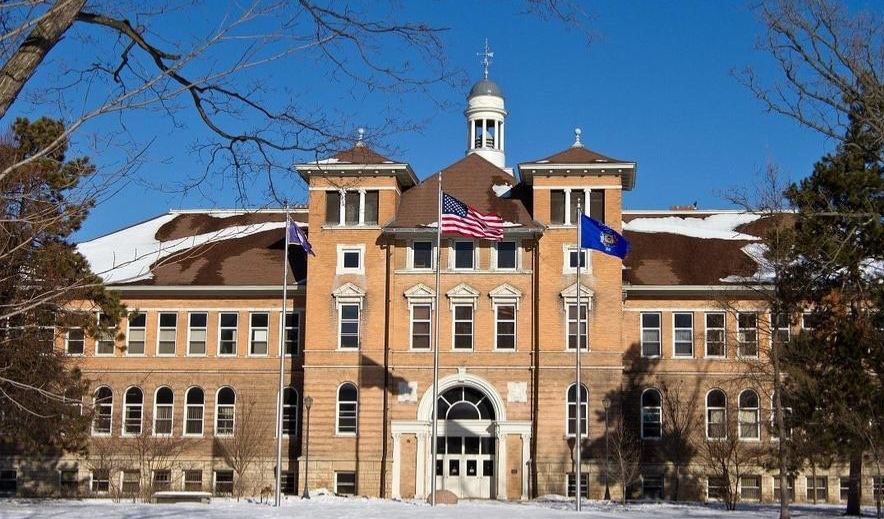
Historic “Old Main” at UW-Stevens Point, opened in 1894.
The university in my home town — Stevens Point, Wisconsin — made the front page of a recent Sunday New York Times. The title of the article is unfortunate: “At Struggling Rural Colleges, No Future for History Degrees.” Several problems with this headline.
First, this university is by no measure a “rural” college. It is part of the prestigious and progressive University of Wisconsin, which is a collection of 26 campuses and extensions with a total enrollment of 173,000 students, making it one of the largest systems of public higher education in the USA. Nearly 8,000 students attend on campus at the University of Wisconsin, Stevens Point — one of the largest campuses in the UW system outside of the Madison campus where more than 40,000 students attend classes.
Second, although it is located in the heart of expansive agri-business, the city of Stevens Point is by no means rural. The population within its borders is nearly 27,000, and the population more than doubles when residents of adjacent communities are counted. The local public high school has the largest 9th through 12th grade enrollment of any high school in the entire state of Wisconsin. Stevens Point is the world headquarters for Sentry Insurance, and its location smack-dab in the center of the state has made “Point” the home of several of Wisconsin’s most important corporate entities and non-profit organizations.
What also makes the Times headline unfortunate is the dire prediction for degrees in history, which is the featured discipline of programs now being threatened by budget shortfalls in a state where citizens are now discovering that the path of right-wing conservative politicians has not been paved with silver and gold…..in fact, it hasn’t been paved at all, and the potholes in public services are expanding.
Any institution of higher education that is not grounded and steeped in history is as useless to its students’ preparation for work and life as a college or university that would fail to infuse technology throughout its curriculum.
Never has it been more important than in today’s complex and contentious world that the unvarnished lessons of US and World history accompany the delivery of all other information imparted in the name of higher education.
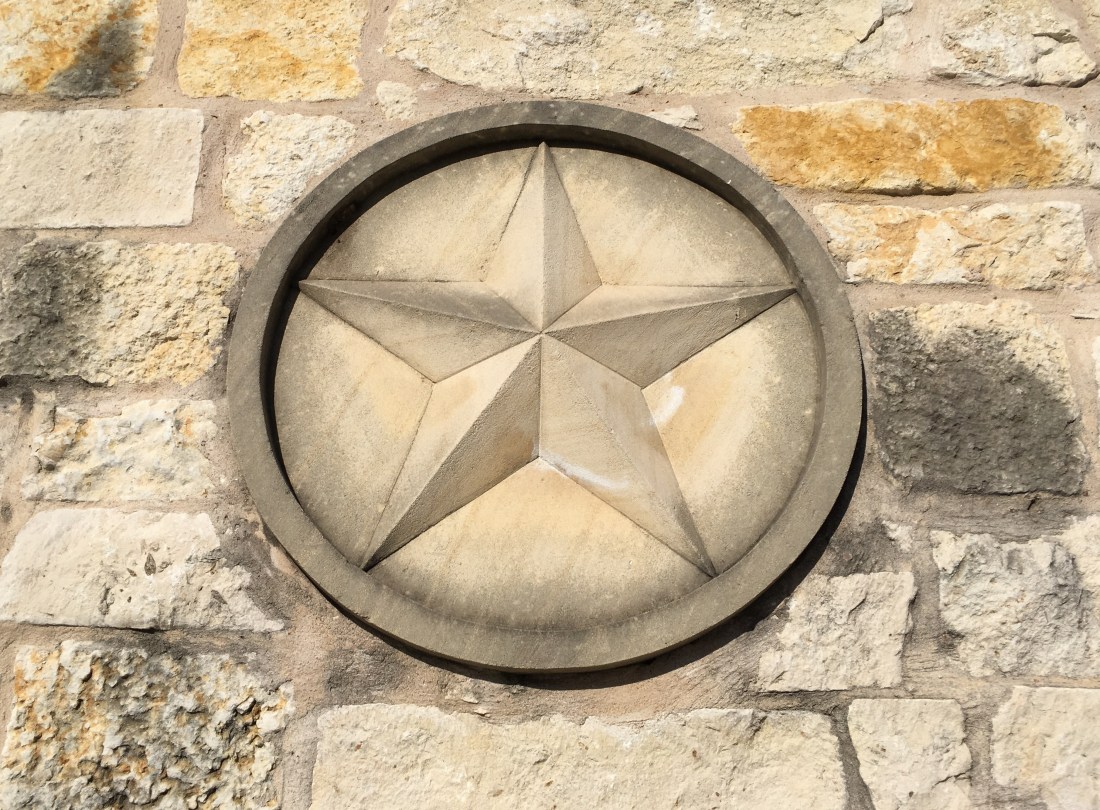
The “lone star,” found throughout Texas’ culture and its enlightened capital of Austin.
According to family lore and not entirely persuasive paperwork, my mother’s father was the seventh cousin of Sam Houston, the first and third president of the Republic of Texas. I’m more certain that it’s true that my sister’s husband was born, raised and educated in West Texas. My son now lives in Texas, although in Austin, which is hardly Texas at all.
But still, Texas seems to be creeping closer.
Texas is huge, the largest by far of the 48 contiguous states…..100,000 square miles larger than what’s left of scorched California; more than 100 times the size of Delaware, the first state of the USA; and more than 200 times the size of Rhode Island.
Texans have promoted and relished the notion that everything in Lone Star State is supersized. Ranches, steak and Bar-B-Q, for example. Egos and hats. The Dallas Cowboys. The Dallas Cowboys Cheerleaders.
When a state refers to one of its cities as “The Big D,” not much more needs to be said about its citizens’ frame of mind.
But there’s another point of view.
Long-time Texas resident, Lawrence Wright, author of “God Save Texas — A Journey into the Soul of the Lone Star State,” offers this bit of humility. He writes:
“Texas is where everything peters out — the South, the Great Plains, Mexico, the Mountain West — all dribbling to an anticlimactic end, stripped of whatever glory they manifest elsewhere.”
In a land of moose and polar bear, Newfoundland’s icebergs may still provide the best memories.
Several summers ago my wife and I chose the Canadian province of Newfoundland — more accurately the Province of Newfoundland and Labrador, which was still a part of Great Britain until 1949 — as the place for our almost annual summer season journey to a cold weather destination. And that particular summer — 2015 — winter was very grudgingly giving up its grip on this most easterly of Canadian provinces. Everything about summer was slow in coming, and the thousand-year-in-the-making icebergs, which had drifted down the Labrador Sea from Greenland, were several weeks later than usual to disappear off Newfoundland’s coast.
It was a trip that once again reminded me of the limits of planning.
Understand, I’m an ardent advocate of planning. My mother was fond of saying, “Happiness is having a plan,” and I tend to believe that. I often followed a bad day at the office with a good night of planning vacations. I’ve spent countless hours conjuring our travel routes and studying destinations, and I’ve been rewarded by learning not only the basics of a nation’s transportation, currency and accommodations, but also something of the country’s culture and the political, geographical, religious and artistic influences that have shaped it or now challenge it.
But once again, in Newfoundland, all my planning for a vacation did not produce its best moments and memories. Our favorite overnight accommodation was not one I had researched and booked in advance, but one I had not heard of before we arrived in Newfoundland. The best meal was an off-the-tourist-grid surprise.
The best iceberg adventure was not the commercial tour we booked, but the discoveries we made on our own after taking a wrong turn, getting lost and arriving at a deserted ocean inlet just moments before a magnificent fluorescent-blue iceberg “calved,” that is, broke apart with the sound of a gunshot preceding the spectacular fall of huge chunks into the sea. We were first stunned and then turned giddy over what we had just experienced…..free of charge, with no other witnesses, and totally unplanned.
Planning is a necessary part of life and essential for the success of almost any worthwhile enterprise. But so is staying open to hunches, going with one’s gut and learning from mistakes. This often makes for the most memorable vacations as well as for the most meaningful vocations.
I write to remember. Not to boast about places I’ve been, not to lecture about things I’ve seen; but to help me remember. Blogging, like keeping photo albums, helps me remember when it was we went where.
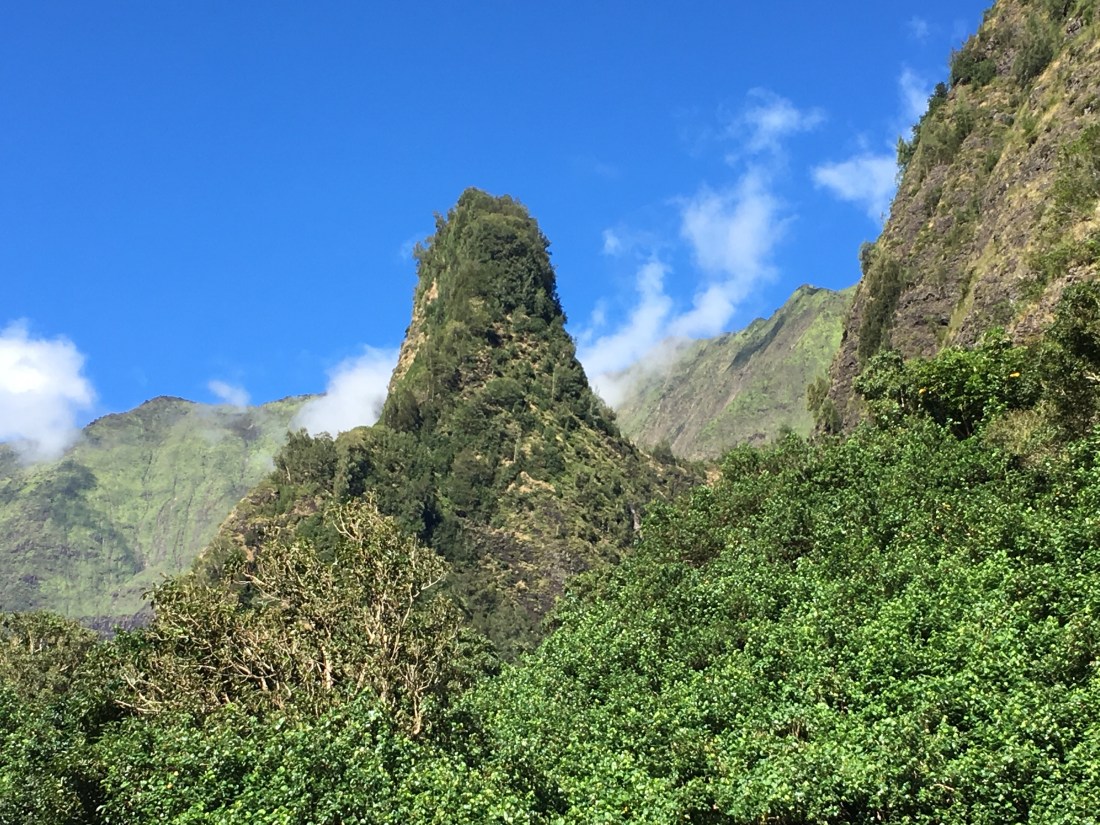
This past December, driving on the Hawaiian Island of Maui, we “discovered” the lovely Iao Valley. We remarked that we had missed it on previous visits to the island. But a few weeks after returning home, while paging through albums of old photographs taken at a time before digital photography was at everyone’s finger tips, when rolls of film were actually placed inside cameras, I found a picture of the iconic “Iao Needle” that I had taken in 2001 which is almost identical to the picture taken with my phone in December.
It was a RE-discovery of what I had seen 18 years before but had failed to remember.
Like year-end holiday letters to friends and family, photo albums — whether hard copy or electronic — as well as diaries — the old fashion kind or modern-day blogs — provide a memory boost. And at the end of the day, it’s memories that matter much more than anything material.
“Well, here’s another nice mess you’ve gotten me into.” (Oliver Hardy to Stan Laurel in “Another Fine Mess” — 1930)
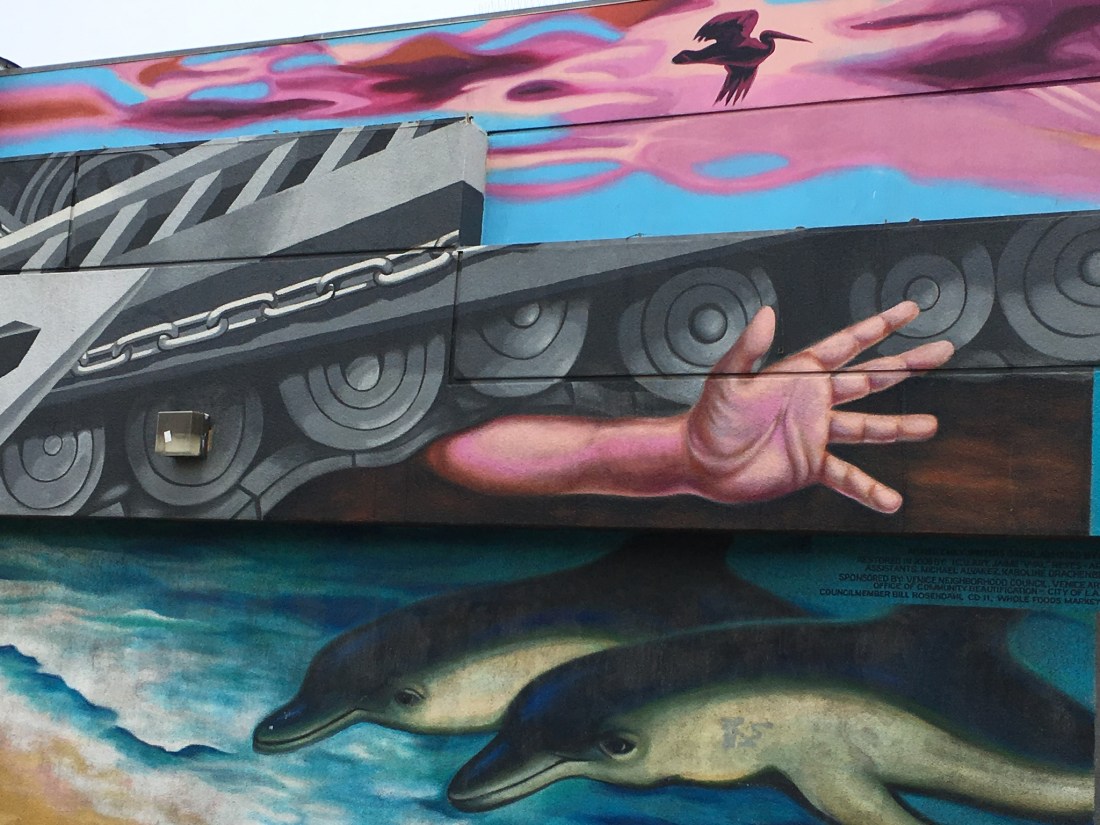
One of many murals on buildings adjacent to Venice Beach, California
I suppose I should have known better than to book a room in a 100-year old building…..a “3-Star” hotel that has earned only mixed reviews on several travel sites…..a place without on-site parking in a crunched coastal city crowded with holiday visitors…..a property once owned by comedians Laurel and Hardy…..a hotel whose website promotes “toilet paper” among its featured amenities.
In all, this relatively cheap room in Venice, California cost me an additional 25% in off-site parking and another 35% for a ticket assessed by the Los Angeles Police Department for being illegally parked during the brief moments I was away from the car to register and deliver luggage to the room.
But I assure you it will happen again…..I will frequently and unrepentantly ignore conventional travel advice and book accommodations for myself that I would never recommend for others.
I wanted to feel a bit of the Venice Beach vibe. The old buildings, many of which have external walls painted with imaginative and colorful murals. Near the place where the fitness craze began (Muscle Beach) and US Route 66 ended (Santa Monica Pier). I didn’t want manufactured air conditioning to conflict with the ocean beezes or cover the night-time sounds from the boardwalk.
I booked a two-room corner “suite.” It came with a musty smell, a one-inch gap between door and floor, drapes that were not quite as wide as the dirty windows they were to cover, and lamps with cords too short to reach the few electrical outlets. But the room had a kitchen and a second bed, full size, which pulls our smoothly from a drawer.
And, indeed; the room was equipped with toilet paper.
JER
PS…….Every two months or so, the seamless connectivity between LinkedIn and WordPress fails, requiring a second sending of a blog posting. Apologies to those who receive this posting more than once.
“Well, here’s another nice mess you’ve gotten me into.” (Oliver Hardy to Stan Laurel in “Another Fine Mess” — 1930)
One of many murals on buildings adjacent to Venice Beach, California.
I suppose I should have known better than to book a room in a 100-year old building…..a “3-Star” hotel that has earned only mixed reviews on several travel sites…..a place without on-site parking in a crunched coastal city crowded with holiday visitors…..a property once owned by comedians Laurel and Hardy…..a hotel whose websites promotes “toilet paper” among its featured amenities.
In all, this relatively cheap room in Venice, California cost me an additional 25% in off-site parking and another 35% for a ticket assessed by the Los Angeles Police Department for being illegally parked during the brief moments I was away from the car to register and deliver luggage to the room.
But I assure you it will happen again…..I will frequently and unrepentantly ignore conventional travel advice and book accommodations for myself that I would never recommend for others.
I wanted to feel a bit of the Venice Beach vibe. The old buildings, many of which have external walls painted with imaginative and colorful murals. Near the place where the fitness craze began (Muscle Beach) and US Route 66 ended (Santa Monica Piet). I didn’t want manufactured air condition to conflict with the ocean breezes or cover the night-time sounds of the boardwalk.
I booked a two-room corner “suite.” It came with a musty smell, a one-inch gap between door and floor, drapes that were not quite as wide as the dirty windows they were to cover, and lamps with cords too short to reach the few electrical outlets. But the room also came with a kitchen and a second bed, full size, that pulls smoothly out of a drawer.
And, indeed; the room was equipped with toilet paper.
Damage by some visitors to Joshua Tree National Park has limited access for others. (nbcnews.com)
Our recent return to the USA mainland from Hawaii was intended to include a stopover in Southern California for several days of desert hiking among the iconic gifts of nature that give name to Joshua Tree National Park. However, the park was a victim of the partial shutdown of the Federal government and then vandalized by visitors to the park during this period of reduced oversight and service.
I have come to expect errors of omission by national leaders who are supposed to be responsible stewards of our Nation, including its national park system; but I have been stunned to read and hear about the errors of commission by national park visitors who I had assumed would care about the outdoors and consider themselves good stewards of our environment. Who would ever believe they would leave trash and waste in a national park? Who could ever conceive they would string holiday lights among the arms of a miraculously preserved 100 or 200 year old Joshua Tree?
But that is what happened. Our elected officials acted dishonorably in our Nation’s capital, and some of those who elected them have behaved horribly in the desert, as well as at national parks across the USA, forcing the closing of at least portions of some of these precious parks.
I don’t feel nearly as sad for the disruption of my personal plans as I do for the lasting destruction of our planet. We were able to adapt quickly and took a three-day detour to California’s broad beaches of Venice, Santa Monica and Malibu where we got nearly as much exercise on the extensive coastal board walk system as we planned to have on the desert trails. And sadly, just now, the picture of trash, tarps and tents I observed and excuse from the chronic homeless population on the coast is strikingly similar to what has been inexcusably created in recent days by hooligans in the desert.
It seems the planet’s splendid physical nature is imperiled almost everywhere by sordid human nature.
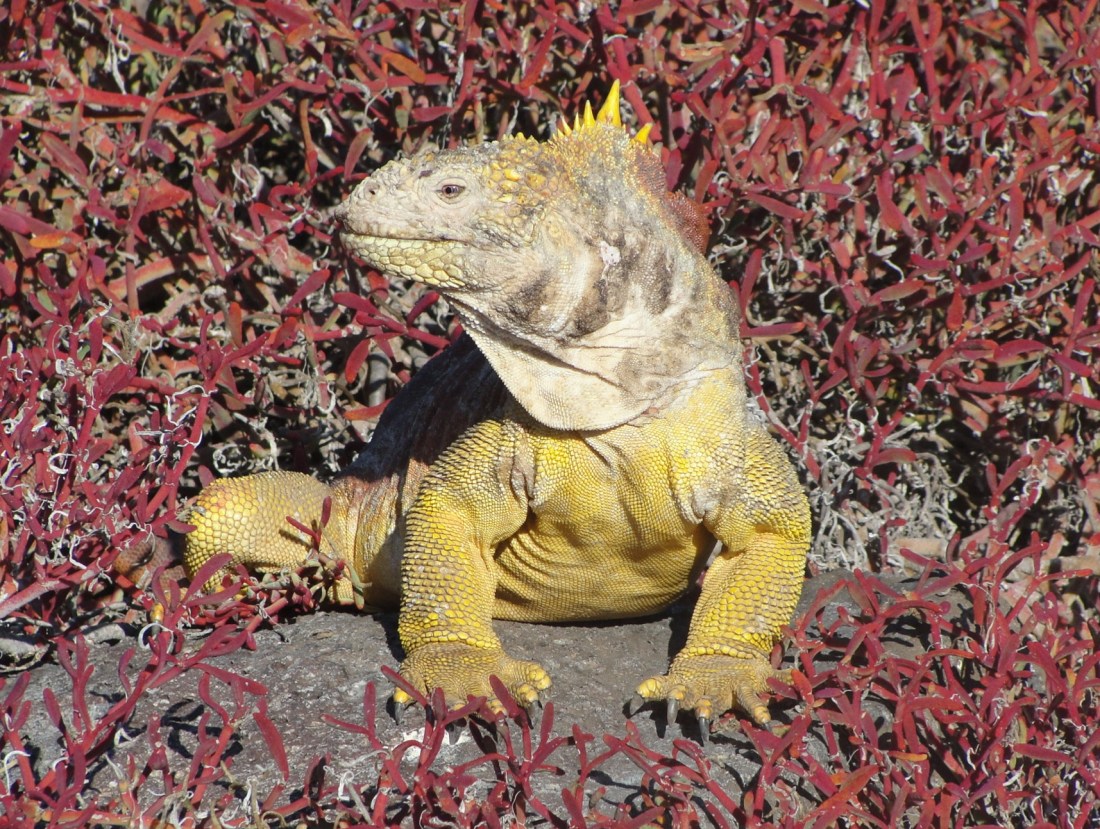
The Galápagos Islands is home to a species of giant tortoise, the iconic Blue-footed Booby, various marine iguanas and, as pictured here, gloriously colored land iguanas.
The most frequent ice-breaking question of new acquaintences we make is, “What is your favorite place you’ve ever traveled?” My answer never varies. Nor my wife’s. It’s the Galapagos Islands on the equator about 600 miles from the mainland of Equador.
This doesn’t mean I think it would be everyone’s favorite travel destination. How one chooses to experience the land that Charles Darwin helped make famous matters greatly. Conversations with other travelers to the Galapagos archipelago informs me that not every visitor there has had the pleasurable experience that we did.
From an array of options we chose a small (eight cabin) catamaran on which a crew of 12 catered to the comfort of 16 passengers. This relatively small, nimble craft allowed us to enter small bays and explore less visited islands. There were nights when we could see no other boats anchored. During the day, with such a small group, all passengers could disembark in a matter of minutes for ocean and island excursions; and we would be immersing ourselves in the adventure long before passengers from other vessels arrived and long after they had to return to their bigger boats with their larger groups.
It was the combination of sea and land adventures that appealed to us. If one wished to take advantage, there was at least one adventure on or in the sea and another on land every day. We swam with turtles, sea lions and sharks. We hiked among birds and reptiles found nowhere else in the world. Everyday for a week.
My favorite travel experiences involve sun, water, physical exercise and animals…..and scarce humans. And nowhere have we traveled where it is more apparent than in the Galapagos that it is all about the animals. Certainly the human presence — even ours for that brief time in 2011 — has an effect. But nowhere have we found greater awareness that what the animals need is paramount. The number of visitors is controlled. Where those visitors may wander is restricted.



 The “lone star,” found throughout Texas’ culture and its enlightened capital of Austin.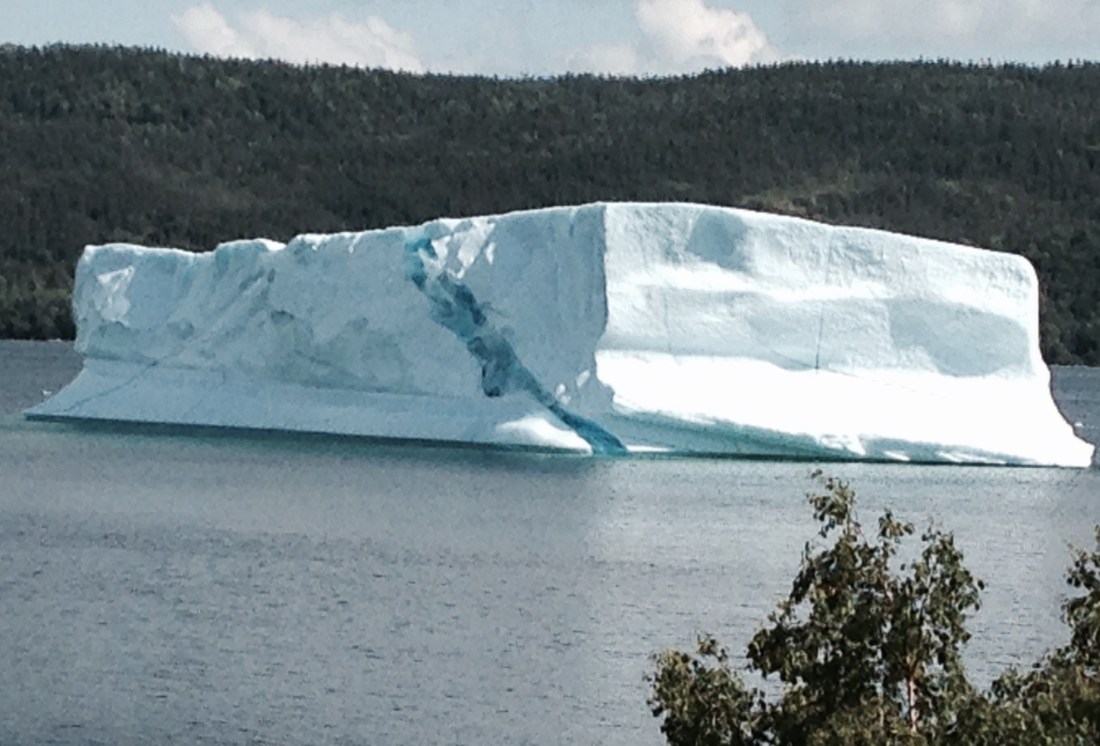
 ALL OVER THE MAP