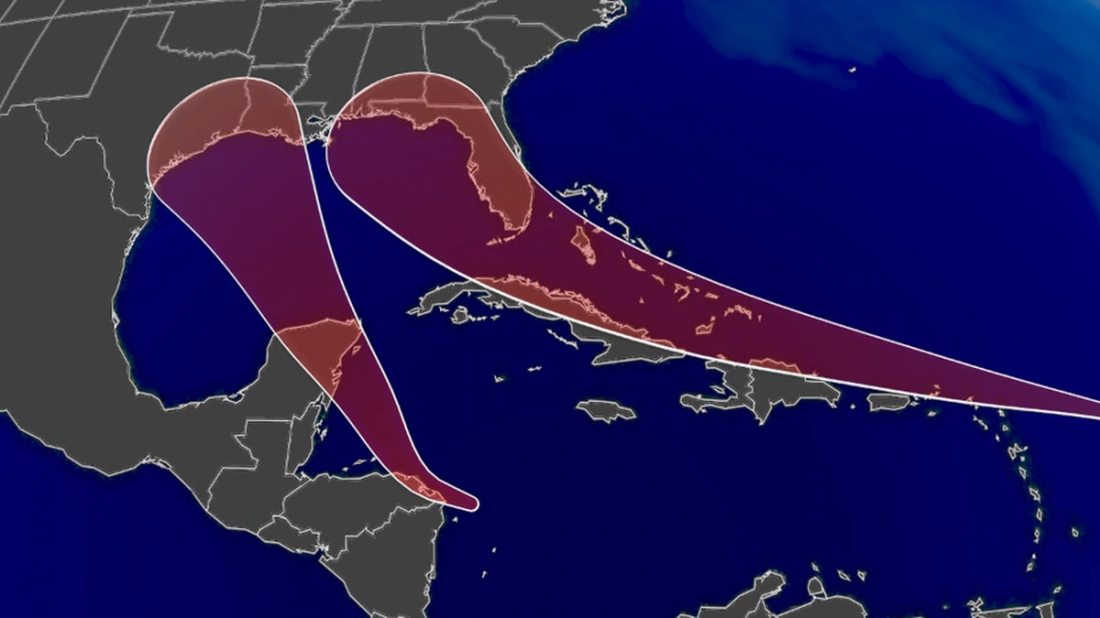
Half Measures and Hope: How’s that working for you?


ED1DCC36-534A-4BA5-9BC4-44051DF4FC07
(Image from wdbj7.com)


Tropical storms soak up warmed Atlantic and Caribbean ocean moisture, then heat-up above recorded history’s hottest Gulf waters, and finally line up one after another to slam the Southeast; and one of the world’s most innovative nations can do nothing to mitigate the mayhem.

As a result of raging wildfires, the world’s worst air quality was  located for awhile in what had been pristine Oregon. Known previously as one of the nation’s most progressive states with respect to environmental issues, Oregon (like other western states) has been powerless to stop its poison from spewing eastward, visible overhead nearly 1,000 miles beyond the Mississippi River.

Meanwhile, the COVID calamity continues. One of the world’s worst COVID outbreaks on a per capita basis is here in the USA, formerly one of the planet’s most prestigious societies with respect to scientific and medical research and development, now humbled by this health crisis.

Hurricanes arriving in waves across the Southeast, in a record-setting season for named storms. Fires torching and smoke choking the West and beyond at double the previous record for burned acreage in a single season of western wildfires. And COVID everywhere, adding rapidly everyday to its record as the worst health epidemic in a century.

With respect to climate catastrophes, even with raised awareness, everything is certain to get worse.

With respect to COVID, because we did so very little so very late and claimed victory months before there is a vaccine and years before the virus has been vanquished, we will suffer consequences much longer: more infections, more deaths, more economic hardship. Because of our incomplete bow-to-pressure measures so far, at least intermittent social distancing and face covering will need to be mandated through 2022, according to scientific modeling in Europe and the US (including Harvard University) and the opinions of a growing number of medical authorities worldwide.

On October 1st, according to the New York Times, the 14-day change in COVID cases was up 11% nationwide; and the increases were horrendous across the Midwest: up 78% in Minnesota, 71% in Wisconsin, 60% in South Dakota, 33% in Kansas, 31% in Nebraska, 29% in North Dakota, 24% in in Iowa, 16% in both Pennsylvania and Michigan, and 15% in Illinois. The 7-day moving average on October 1st was the highest ever in Minnesota, Wisconsin,  Kansas, Nebraska, North Dakota and Indiana. The 7-day moving average on that date was 8 times higher than the rate of mid-June in Wisconsin, 7 times the mid-June date in Missouri, 4.5 times the mid-June rate in Michigan, and 2.5 times the mid June rate in Ohio and Pennsylvania. There was absolutely no evidence that the worst health epidemic in 100 years was or is under control.

Half measures and hope have not worked so far, and they will not be sufficient for our future.

JER

The Miraculous Monarch Migration


490C999E-0A15-4E1E-9E9B-56E4B8E7F67C
(usgs.gov)


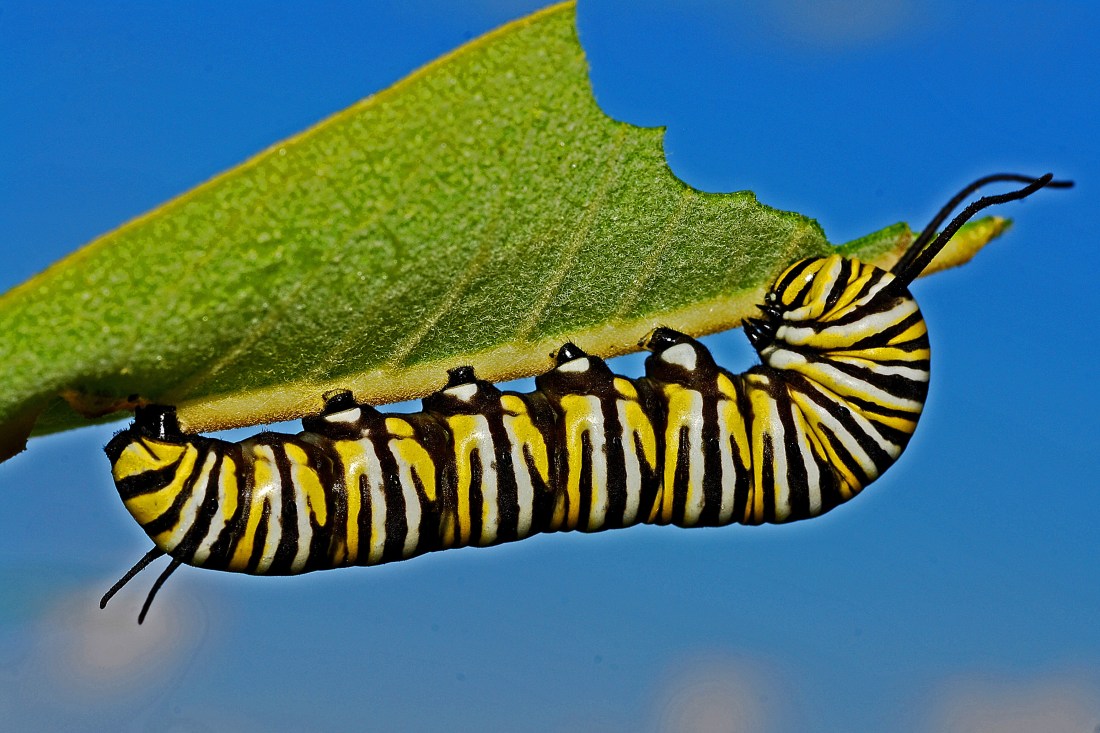
During an early September evening, the annual migration of Monarch butterflies paid us a personal visit. For 90 minutes, frequently at the rate of at least 50 per minute,  Monarchs  zigged and zagged like birds above the pine trees, skimmed close to the sand dunes and skittered low along the shallow shore of Lake Michigan. Some passed almost within arm’s reach.

This was the first leg of a 3,000 mile roundtrip relay race to a mountain region of moderate temperatures in central Mexico, where Monarch butterflies from all across North America huddle up in clusters and “rest” for the winter on the branches of the native oyamel fir trees, which are sacred to locals.

While it is a “super-generation” of Monarchs which makes the southern trip in the autumn, several generations team up for the return trip to Michigan and other summer destinations in the US and Canada. They stop every few days to mate and lay eggs. In a few days the black, gold and white larvae hatch and feed on milkweed, then form chrysalises, and finally transform into adult butterflies which fly the next leg of the epic northern migration.

The Monarch — apparently named by early American settlers to honor King William, Prince of Orange (acknowledging the butterfly’s dominant color) — is the only butterfly known to make a two-way migration like birds do. Departure from the north is triggered by diminishing daylight, declining temperature and the quality of milkweed plants, the Monarch caterpillar’s sole source of food.

Declining milkweed growth due to disease, as well as poisoning from human efforts to eradicate weeds and insects, is linked to declining Monarch butterfly population of the past several decades. . .which is why last month’s show along the shore of Lake Michigan was more than special. It was almost a miracle.

To monitor our annual Monarch migration along this “central flyway” — there are also Monarch migrations along an “eastern flyway” to and from the Carolinas and beyond as well as a “western flyway” along the Pacific coast — visit journeynorth.org.

JER

FC5BCB04-FDF4-4359-BA4E-28AFC653ACBB
(Image from newcityagenda.co.uk)


More Innocent Times?


BE684C5C-44B9-415C-AA06-4F7EF53BE4E8


America is not more broken now than it’s ever been. There has always been hunger and homelessness, corruption and crime, pollution and prejudice, and gross disparity in access to both basic human rights and the more lofty pursuit of happiness.

The big difference today is communications: we hear about almost everything, almost everywhere, almost immediately. Inescapably. Repeatedly.

Sometimes that’s good, because this constant drumbeat might motivate us to address problems. But at other times we get so swamped by the tsunami of bad news and so suspicious of mis-information that we become paralyzed and drown in despair. If things seemed more innocent years ago, it’s only because we didn’t know what was going on then.

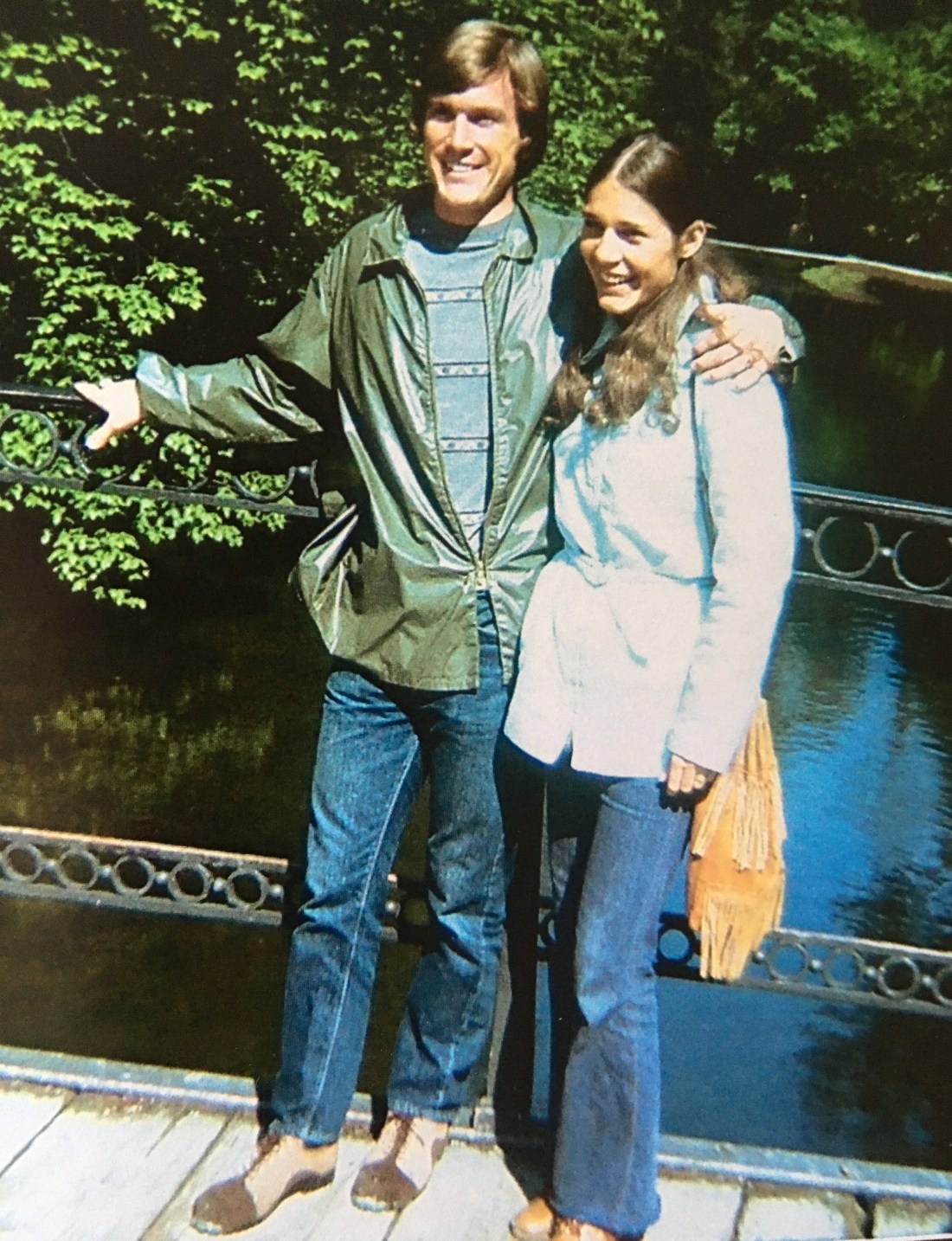
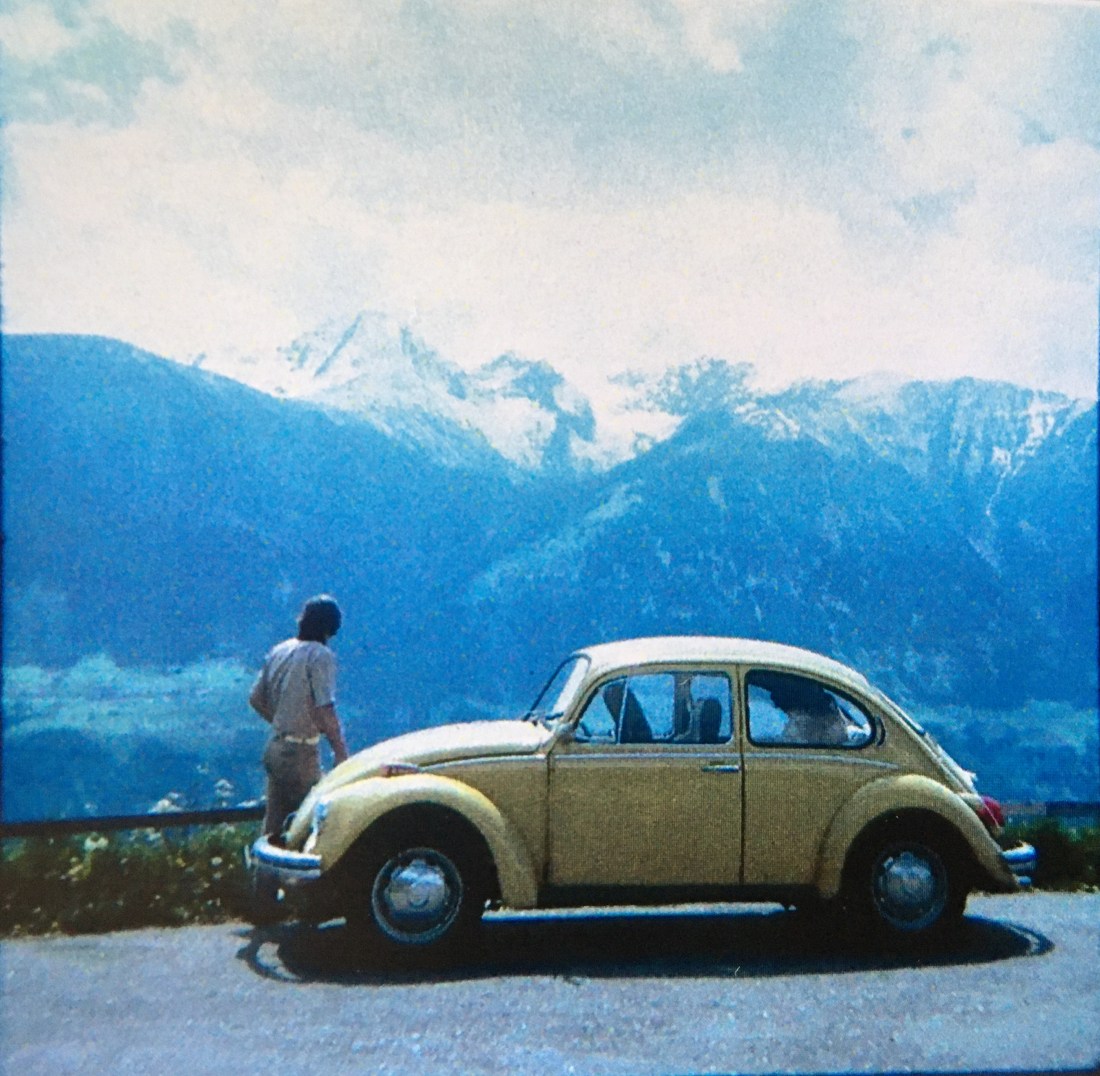
Examining a few years ago some photographs of our honeymoon in Europe in 1972, I said: “How innocent those times were.”  But truthfully, those times were terrible.

The Vietnam War was raging and ripping apart an America where, two years earlier, college campuses had been in chaos following the US invasion of eastern Cambodia and the killing of four and injuring of nine protesting Kent State University students by Ohio National Guard troops. . . two years after the assassinations of Martin Luther King and Robert Kennedy. . .amidst two years of “race riots” in American cities. If ever there was a time when America lost its innocence, it had to have been then.

If ever there was a time that puts our county’s current mess in perspective, it was 1967 to 1972.

The “innocence” of the 1972 photographs was not in the times, but in our selves. We were innocent of the future. We had no idea what was in store for us as individuals, as a couple or as a country.

We had no idea when we were traveling 48 years ago that America’s world-wide reputation in which we basked then would be so battered now. We had no idea that the what was known as a nation of immigrants then would be closed to the world’s refugees today.

Worst of all, we had no idea then that many streets of many American cities would still be scenes of frightening demonstrations over the treatment of our country’s citizens of color. . .our most obvious evidence that the more things have changed in America, the more they have stayed the same. . .proof that we were not innocent then, or now.

JER

7C5AE71D-5C2C-4B41-915D-C6993CE14203


The Big 10’s Decisions Don’t Add Up


Big Ten Schedule Football
(National Public Radio file photo)


“If you torture the data long enough, it will confess to anything.” —              British economist Ronald Coase

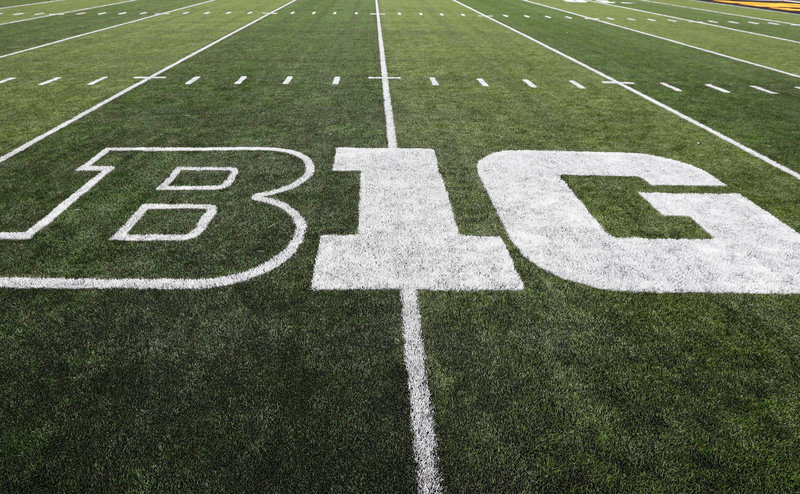
 I suppose we should have anticipated that the BIG 10 Conference — having 14 member institutions — might have trouble adding things up.

Some close observers have commented that the BIG 10’s leadership only got serious about  saving the 2020 football season after watching two weekends of televised games involving other schools, notwithstanding that more than a dozen scheduled games had been postponed due to COVID. For BIG 10 leaders, this added concern for the loss of reputation to their existing concern for loss of revenue; and they calculated that — by hook or by crook — the 2020 season had to be salvaged.

It’s hard to justify this about-face for breathe-in-your-face football. . .at least by any other rationale than the over-riding concerns for reputation and revenue. Remember, some call the BIG 10’s brand of football “smash mouth.”

One week ago –Sunday, September 13th — marked the worst day for COVID cases worldwide since the pandemic began, according to the World Health Organization: 308,000 new cases, with India, the US and Brazil leading the way. It bogles the mind that on that same day — and the following three days — the prestigious presidents and distinguished deans of the Big 10 Conference would consider for one minute — much less for many hours — reversing their earlier decision and voting to expose players to some semblance of a football season this fall. The reversal defied the data on which the league’s leaders claimed to depend.

Management of COVID had NOT gotten better. The seven-day moving average for new COVID cases was two to five times greater than it was last June in the states within the BIG 10’s footprint. Nationwide, more than 196,000 people had died from COVID; and current CDC models projected US death totals would nearly double by the date in January when we’re supposed to celebrate the devil-may-care commercialism of college football’s national championship game. 

Across the BIG 10, most students had been banished from campuses by their institutions, and most non-football athletic activities had been suspended, and half the league’s football teams had paused workouts at one time or another because of athlete or campus-wide COVID outbreaks. The resumption of Big 10 football is supposed to be dependent on daily rapid testing of players, a benefit NOT available to the regular tuition-paying students who had been kicked off campuses to make it safe for football. At what are supposed to be educational institutions, none of this adds up.

The BIG 10 likes to believe it is better than the rest of big-time college sports, operating on a higher ethical and academic plane than the other leagues. But here the BIG 10 has only proven that it might not be any worse than the others.

JER


The Air We Share


6E6F4359-EF60-4C25-A12E-440AFBCD401E
(Image by Unsplash)


It’s now known that — by far — the No. 1 cause of COVID transmission is the air we share.

So it makes perverted sense in this country of misplaced priorities that untested and “un-bubbled” athletes are being sent into close encounters with one another. . . breathing, shouting, heaving and grunting in each other’s faces.

The mantra of medical experts for avoiding the spread of COVID is: “avoid large gatherings and wear masks.”  What are sports competitions but large gatherings. . . of athletes, coaches and supporting staff. And, in many sports in many places, they are gathering and competing without face coverings.

These actions are NOT “data driven.” They defy the data and shun the science. They make the air we breathe laughing gas. . . or it would be if these matters weren’t so damn serious.

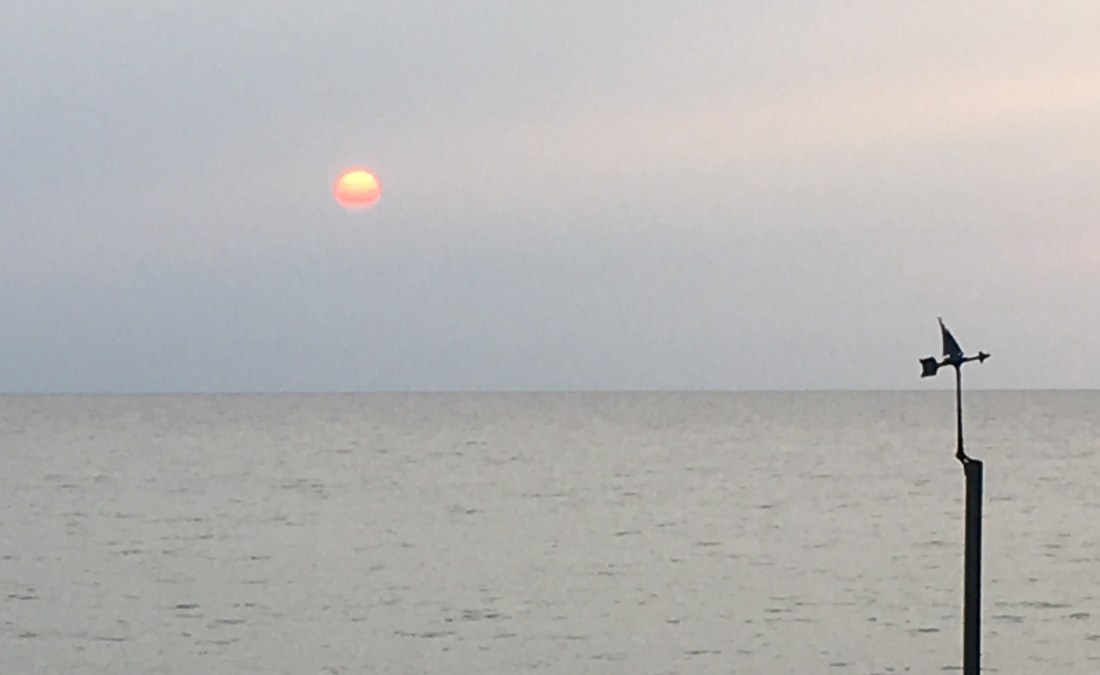
Meanwhile, the sky above my Midwest head turns from blue to silver to brown as smoke from western US wildfires drifts east. The sun — recently a tarnished burnt orange — disappears in a haze an hour before it reaches the horizon, as the West’s disaster becomes the Midwest’s discomfort.

And still, the not-so-distant cousins of COVID deniers — climate change deniers — blame the blazes on everything but the obvious, as if hallucinogens lace their smoke filled air.

JER

C4F14814-CE84-44AF-B490-150288F19522
A Mars-like sun disappears in a gray gauze of smoke on a recent “sunny” afternoon in West Michigan.


Protecting College Football


7C53D165-36CC-4081-B682-747CE62DB213
(Image from VectorStock.)


Some members of college sports’ three “Power 5” conferences which persist with plans for a September start for their football seasons this fall — the ACC,  Big 12 and SEC —  have done their damnedest to protect their football programs from COVID: they’ve sent most of their students home.

The Commissioner of one of those conferences said his league has established thresholds for cancelling games. If a school cannot field a roster of at least 53 available players, with minimum numbers at specific positions, then that team isn’t required to play. Just 53 players. . .which means about half of a team’s typical roster would be out of action because of injury or illness.

Good grief! This league actually thinks that’s OK. . .50% attrition? They think this is responsible policy making. . .Really?

Is this merely stupidity, or is it greed. . .or is it fear that the monster of major college sports will fall into financial ruin if — regardless of risks — those universities don’t force football players onto the field for revenue-producing televised games this fall?

The National Collegiate Athletic Association has cancelled all the fall championships it controls: for all sports in Divisions 3 and 2, and all but football in Division 1. In 1984, as the the result of a lawsuit brought by what was then called the College Football Association, consisting of the major money-driven programs, the NCAA lost much of its authority — including television rights — to the universities and their leagues for  Division 1 football programs, about half of which are moving ahead with games this month. . .motivated mostly by money. . .as they were during their litigation against the NCAA four decades ago.

Right now — since the virus has about completed its vanquishing of prisons, nursing homes and food processing plants — colleges are the COVID hotspots in the USA, with more than 100 college towns or campuses reporting recent spikes in COVID cases. Which means still-operating football programs persist in COVID petrie dishes where many restless students, who have been banished from on-campus classes and housing, are partying without face coverings in over-packed private student ghettos. My residence is within several blocks of such a neighborhood, through which I regularly walk — wearing a mask — when my heart rate rises less from exercise than from anger for the reckless behavior I observe.

JER


It’s As If I Turned 80


3C52D9A8-E278-4416-BB6A-6F0A922FA1DA


When I was preparing for retirement, my investment advisor told me to front load my retirement budget. . .that is, to plan on spending a lot more money each year during my 70s than during my 80s. His approximate words were: “No matter how fit, active and adventuresome my clients have been, every one of them seems to hit a wall around 80 years of age. They stop going places and doing things with anything like the frequency and zeal of earlier years. Could be impaired eyesight, diminished hearing, or aching joints; but something always seems to take away their wandering spirit and willful spending.”

My wife and I visited 12 countries and 12 states during the first 18 months of my retirement before the COVID-19 pandemic shut us down this past March.  Now, we not only won’t visit other nations and states, we worry about traveling a few blocks to shop for groceries. . .when we wear masks and gloves and swab our way around the store with disinfecting wipes. We don’t dine out. We rarely entertain; and when we do, it’s outside, sitting across the deck from a party of one or two which arrives with its own beverages and bites.

Because of COVID, we couldn’t attend the adoption of our grand daughter in Texas or the marriage of our son in China.

It’s as if there’s been a tuck taken in the fabric of time. The necessary precautions I must make for my own and others’ health make me act like an octogenarian. Like I’ve aged more than eight years in less than eight months.

But while I hate it, I hesitate to whine.

Those who have lost their jobs or businesses, and struggle to pay their bills. . .those parents who struggle with child care because schools are closed to in-person instruction. . .those special needs children who must have individualized in-person instruction. . .those health care employees who have been over worked during this crisis. . .those people who have been under-served and are falling through the many gaping holes of an inadequate health care system. . .those who have become very sick. . .those who have lost loved ones to COVID. . .these are the folks for whom we should worry and on whose behalf we should work together to whip this virus.

None of us will get the bounce back in our step until everyone of us does what is required to make it safe for all of us to move about.

JER

Seeing the Future for What It Is

C70CABB2-61D0-4346-8419-09456401587B
(Photo by Buffalo News.)


My most intense sports passion is school-based sports, which I served most of my professional life, and mostly in Michigan. My pessimism that these programs will return any time soon looking anything like they’ve looked before has never been because I thought government, school and sports administrators couldn’t figure out how to operate safely in Michigan. My pessimism has been planted in the impression that too many people refuse to take even the simplest precautions the pandemic requires as well as the understanding that boundaries don’t mean anything to this virus.

As people ponder the status of sports in the era of a pandemic, they would do well to look far beyond any particular sport or level of competition — and well beyond sports — and far beyond the borders of any particular state or nation. If you wonder what’s going to happen to your favorite sports team — school, college or professional —  take a look that’s not only larger than a single sport, state or level of play, and take a look that’s larger than sports.

What happens in other endeavors — every kind of profit and nonprofit enterprise  —  forecasts what will happen in sports. If a bar or bistro or beach has a COVID outbreak, it’s bad news for when and how sports programs operate in the future. If outbreaks cease permanently in college towns, factories, prisons and nursing homes, it’s better news that predicts at least some sports will return to complete normalcy at some time.

What happens in one state — good and bad — affects people profoundly in every other state. As long as viral infections are still rising in one or two dozen other states, we are vulnerable in Michigan. Every effective precaution taken in other states, is part of the ultimate solution in Michigan.

The seven-day average for new COVID cases has never been higher than now in Indiana, Iowa, Kansas, Minnesota and both North and South Dakota. This predicts problems for us.

What happens in other countries — for better or worse — affects us. The virus started on the other side of the planet; their problem couldn’t be stopped from becoming our problem. The pandemic was slowed and stopped more effectively in some countries; let us hope that pride and prejudice will not stop their successes from being part of our solutions.

India just established a new world record for the number of new COVID cases in a single day — more than 77,000 — and new cases are re-surging in several Asian countries which thought they had the virus under control. This trumpets trouble for us.

No matter what the smartest, most creative and conscientious people do here, there won’t be a safe return to the kind of school sports programs we remember in Michigan until all enterprises everywhere are operating safely. We really are all in this together. . .beyond sports. . .and beyond our borders.

JER

COVID is not at all like the flu.


37FD9D16-3B39-4738-A211-69653789C8A6
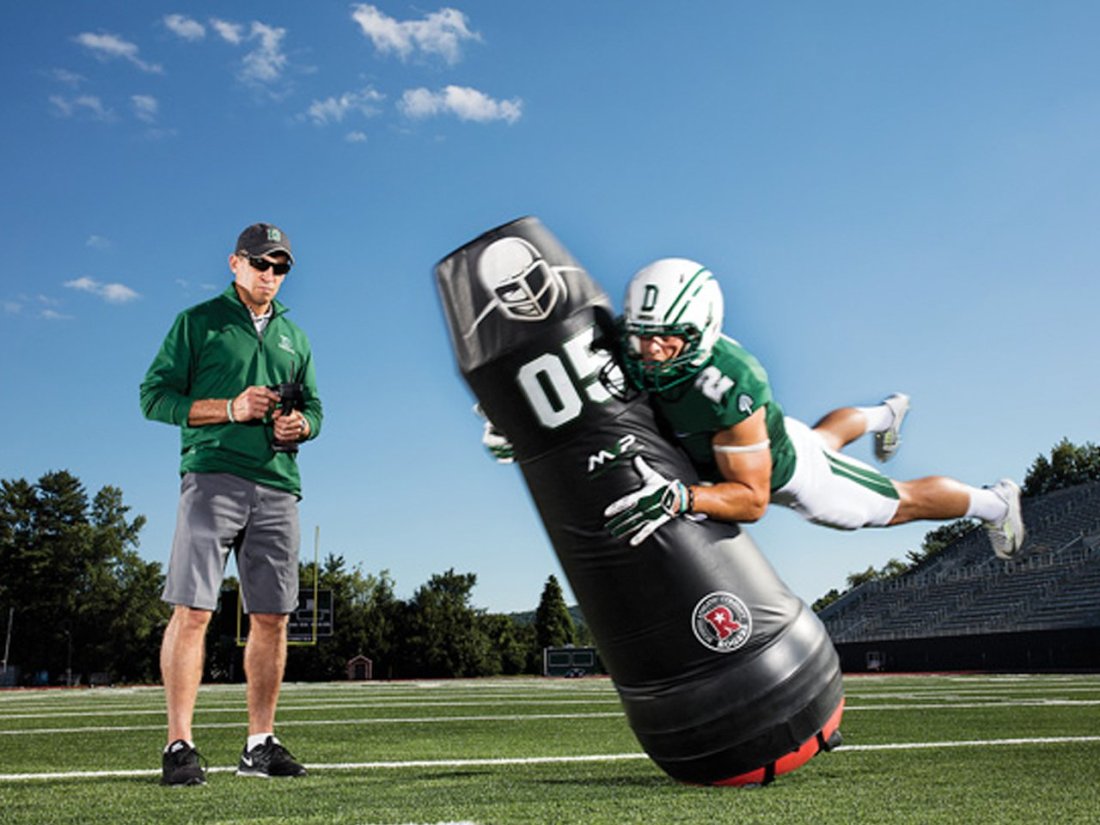
( “MVP Dummy” in use at Dartmouth College.)


I’m sick. . .sick of hearing people say that too much is being made of “this COVID thing”. . .that it’s no worse than the seasonal flu. . .that we should listen to coaches and players. . .that we should wait until people get sick before we cancel school and college sports seasons. I feel like a mosquito in a nudist colony: I hardly know where to begin.

First. The reason that so much is being made of this COVID thing is that it has infected more people around the world faster than any other virus in more than 100 years. That’s a fact, reported and accepted by medical authorities and media sources of all but the most extreme persuasions.

Second. This COVID thing has killed in less than a half year more people than die of the flu in two years. Daily death rates, new COVID cases, and the percentage of positive results from testing are all on the rise. And, unlike the flu, there is no COVID vaccine. And without an effective and widely available vaccine, we may still be closer to the start of this pandemic than the end.

Third. Participants are being heard. Dozens of professional football players have spoken, and are refusing to play. Dozens of college players have spoken, and are refusing to play. Hundreds of “power five” college conference football players have signed public statements expressing concerns that there have been inadequate precautions made for the upcoming football season.

Fourth. In the face of a threat as easily demonstrated as this one, leaders who expose students to this COVID thing expose themselves to being fired, sued and disgraced if they wait until someone gets sick. Their legal and moral responsibility is to keep people from getting sick, and they will be found responsible for resulting sickness and death if they recklessly return students to risky settings.

This COVID thing is not at all like the flu.

JER


Pass/Fail


7E7B3C2E-19BA-4CA1-A6C3-A4AACFCDFF0D_4_5005_c
(Image by iconsbd.)

As schools consider operations for the school year ahead, the question that should be before us is not if students pass or fail; it’s more about. . .

  1. If schools pass or fail in keeping their students healthy: are school districts really capable of doing so? And. . .
  2. Whether society passes or fails in assuring all students everywhere have at-home access to high speed internet and the tools to use it: does our country have the will to deliver what in a fair and first-rate nation of the modern world must be a universally available utility?

As to #1, the experience of schools in states with early opening dates — Georgia and Indiana, for example — suggests that an affirmative response is doubtful. COVID outbreaks are almost certain.

As to #2, high speed internet as a basic service of a civilized society has been considered for many years as a nice notion. . .maybe something we should do when we can get around to it.  But in the panic of the current pandemic, we now know high speed internet access is necessary for equal opportunity to both learning and earning.

The United States ranks an embarrassing 70th in the world in terms of internet access, with just under three-quarters of the nation’s population having internet access, however very slow it may be in many places. For perspective, our nation trails far behind our northern neighbor Canada, which ranks only 24th in the world but has nearly 93% of its population with internet access.

This pandemic has exposed many weaknesses in America, perhaps none more than testing, tracing and technology. . .as well as the lack of a health care safety net for people who lose their employment. . .and, of course, a lack of coherent leadership.

JER


Bursting Bubbles


572BA009-1F39-4A14-BB0B-B69FFE45ADBD
(Photo by Bloomberg)


At the same time that people are breaking out the bubbly to toast the return of  truncated professional baseball, basketball, ice hockey and soccer seasons as well as the start of practice for professional football teams, bubbles are bursting on hopes for a quick return for traditional school and college programs.

Yes, some non-school organizations are rushing in to fill the void with vanity-oriented youth sports programs.  These are the groups which have never worried themselves too much about the health and safety of young people: those club and travel teams which offer lots of games with little preparation or practice. . .which have kids playing two and three games in a day, even on consecutive days.

But more responsible youth sports organizations — and certainly most values-oriented, education-based, school-sponsored programs — have hesitated. They may see a need to delay the resumption of sports programs and, when they do resume, to operate those programs much differently than before: for example, without team busses, huddles, pre-and post-event handshakes, spitting and spectators; and with spacing requirements for practice drills and team benches, mask requirements, frequent breaks for sanitizing equipment and surfaces, and severe limits on the number of teams allowed to assemble for invitational meets in cross country, golf, tennis and other sports.

What schools can not do — as a practical matter — is put student-athletes in protective bubbles the way professional sports organizations and major college football have been trying to do. Interscholastic athletes won’t be sequestered in hotels for the duration of their seasons. They won’t all be fed and housed apart from the general public. They won’t all be tested each day or two for the COVID virus. What they will do is mix and mingle with families and friends, and carry the virus back and forth.

Even where there have been attempts to shelter athletes away from any risk of infection, bubbles have been bursting. On dozens of professional sports teams and college football teams, many players and coaches have been testing positive for COVID-19. . .including 13 players and coaches on Major League Baseball’s Miami Marlins alone during just the first four days of the new season. Even with all the lavish precautions by their teams, several prominent professional athletes — concerned for their health and their families — have refused to participate for their teams this season. Colleges have already agreed to provide another year of eligibility for student-athletes who refuse to play or are sidelined by the virus.

Hopes for business as usual are losing air everywhere. Major League Soccer lost two of its teams for the “MLS is Back” Tournament that was substituted for this year’s mens professional soccer season. Major League Baseball’s brief season is on life support (pun intended). Many college and junior college athletic conferences across the country have cancelled, or postponed to 2021, all or some fall sports. A half-dozen major college football programs, which had been preparing to play delayed and abbreviated schedules this fall, have since experienced COVID cases and shut down pre-season workouts. Already half the nation’s state high school athletic associations have at least altered their fall schedules for at least some sports.

In spite of concerns, traditional summer baseball and softball programs were conducted by Iowa high schools this year. Out of a membership of 365 schools, 338  participated in the baseball program: 21 were impacted directly by a COVID case and 12 schools ended their seasons early. In softball, of 391 members, there were 335 participating schools: 26 were impacted directly and 11 ended their seasons early. The experience is being characterized as “mostly successful” and offered as evidence that resuming high school sports this fall will not be especially dangerous. But others warn that it took but a single visiting Englishman to ignite the COVID catastrophe visited upon hundreds of thousands of people in South America’s Amazon River basin.

Who really knows? Who could have predicted that a single reported case in China last December would lead to more than 4.3 million COVID cases — including more than 148,00 deaths — in the US alone within the next seven months.

While school sports participation is generally very beneficial for young people — I devoted my professional life to that proposition — there is much less wisdom and efficacy in resuming school sports very soon than in resuming sports very safely. During “normal” times — which means any time before now — an outbreak of seasonal flu — for which there was a vaccine — would cause school superintendents to pressure me to postpone MHSAA tournament contests. It defies logic that school superintendents would want programs to proceed in the face of the COVID-19 pandemic for which there is no vaccine and no sign of subsiding.

State governors across America bowed to pressure and rescinded executive orders much too early and widely, and the virus roared back, setting us all back. Sports programs on all levels — professional, intercollegiate and interscholastic — face the same pressure. . .to bring back programs too soon. Bursting bubbles suggests some caution.

JER


Midwest Flyover Misses Troubles

It’s not a novel observation that national news sources often fly over Midwest states and focus on the USA’s east and west coasts. So it’s not surprising to see that national media’s Covid coverage has been dominated by events in New York, California and Florida. The terrible numbers in Texas have elbowed their way into daily reports as well, and deserve this attention.

What happens in these four states matters to the rest of the nation, of course; but I can’t help but think that a person in Michigan should be even more concerned about what’s happening in “The Great Lakes State” and its Midwest neighbors.

It’s not pretty.

Since mid-June, new Covid cases in Michigan have increased more than 250%. New cases in neighboring Ohio also have increased more than 250%, and Wisconsin has seen a new case increase of just under 250% during the same period. Indiana’s new cases have increased more than 150%; in Illinois just over 100%; and in Minnesota just under 100% since mid-June.

In no Midwest state is the virus under control.

Testing has increased in these states, but the percentage of positive tests remains stubborn: from a low of 3% in Michigan and Illinois to a high of 8% in Indiana. Some say that 3% is an acceptable rate, and that it’s OK to open up public and commercial venues. But I wonder: if you were having surgery to eradicate cancer and the doctor tells you that all but 3% of the cancerous cells were removed, would you be satisfied that the deadly disease was under control?

I think not.

Until the positive rate for Covid tests is less than 1% and a vaccine is readily available for first responders and at least the more vulnerable populations in this nation and around the world, we remain at war against a deadly adversary; and we should continue to use all means to defeat the virus. A prestigious group of more than 150 medical experts, scientists, nurses and teachers announced July 23rd that anything less than a prompt and total lockdown prolongs sickness, death and the long-term damage to America’s social and commercial structures.

Based on the evidence so far, the efforts of the Midwest states have proven to be both too little and too late. . . like our national efforts.

JER

“The Sheer Heroism of Being Young”

70340486-A22F-4E2D-81FA-7C435EB3E7CD
(National Communications Association)


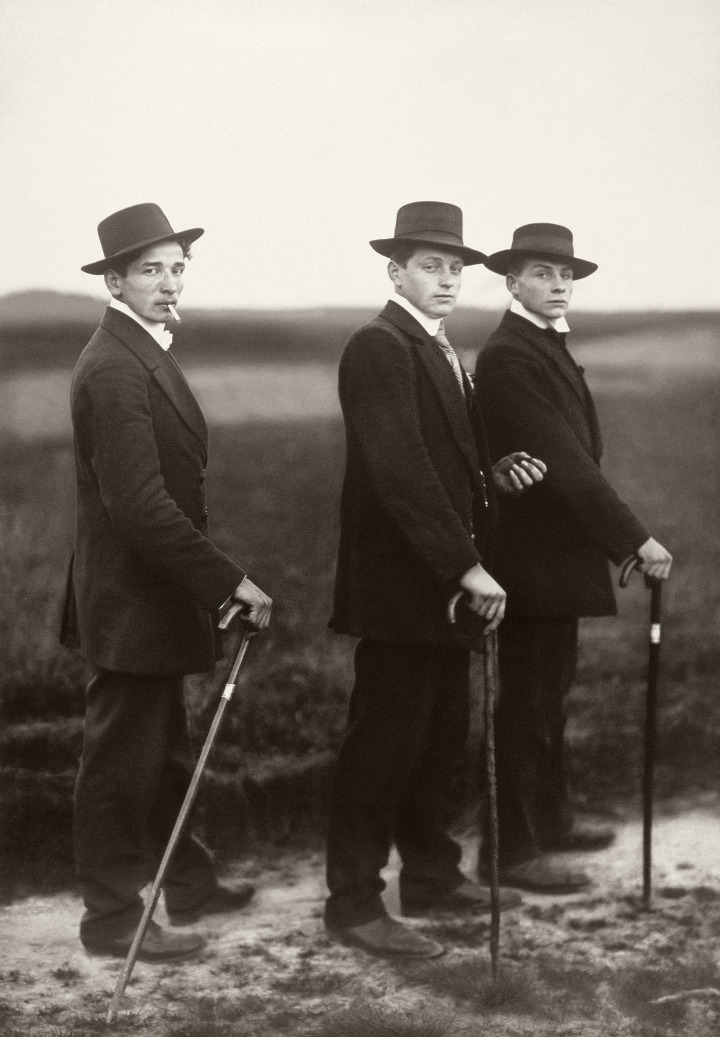
The inspiration for and centerpiece of Richard Powers’ 1985 novel Three Farmers on Their Way to a Dance is a 1914 photograph by August Sander. Powers conjures that one of these young European farmers, who were dressed in their finest suits, was organizing a pose with swagger, with youthful optimism, bordering on arrogance, undiminished by the worries of the world, including the prelude to World War I.

He was looking for a pose that would reflect “the sheer heroism of being young,” writes Powers.  That’s a heroism without history. Without an understanding of consequences for foolishness.

The scene smacks of today’s social media pose: “Look at me”……..See where I’m going……’Like’ what I’m doing.”  This would be tolerable, I suppose, if this attitude didn’t reflect excessive self-absorption which, in these times, endangers lives and livelihood.

Concerned for real and severe but short-term suffering during declining economies, state leaders all across America relaxed commercial and social restrictions before Covid-19 cases had subsided sufficiently and stabilized at levels low-enough to assure long-term success against this vicious virus that has demonstrated it cannot easily be vanquished.

Bars and beaches filled; and careless patrons posed cheek-to-cheek for selfies.  Stores became crowded with unmasked customers who were violating the law but nevertheless scowled at those of us who persisted with face coverings and continued to give wide berth to those who would not do so.

Record-setting new Covid cases followed, assuring that stricter social, school and commercial limitations would return and economic recovery long delayed.

JER

Jungbauern, 1914
The August Sander photo that inspired a novel. (Time.com)


This Thing is Not Over

Across the land, new Covid-19 cases are rising as restrictions on social interaction and commerce are relaxing. Some of the increase in new cases is due to increased testing. Some of it the result of stupidity, greed and disregard for one’s fellow human beings.

Evidence of the unflattering causes for the rebooting pandemic is found in our nation’s air transportation system, which I have been forced to utilize on three occasions during the past two months: five flights, four different airports, two different airlines.

My observation is that at least a third of the passengers who move through airport terminals do not wear face protection or they position the mask uselessly beneath their nose or even below their chin.

My observation is that airports and airlines have closed large sections of terminals and then funneled all planes and passengers into smaller areas where all gates are in use, and passengers are as packed together in standing-room-only lobbies and hallways, as congested as on a busy holiday weekend.

My observation is that airlines have abandoned the practice of providing empty seats next to passengers. Most center seats are now being booked.  Passengers are shoulder-to-shoulder during boarding, when seated and while deplaning.

This thing is not over. . .this health and economic threat we face is still alive and well. Take a look at the trends in Texas, Florida, Georgia, Louisiana, North and South Carolina, Arizona, Tennessee and Alabama. In these states, as well as others, the people are not so alive and well as their relaxing restrictions on socializing and commerce would make us believe.

The reluctance of the United States to recognize this health crisis seven months ago, and the rush to judge that the worst of it is behind us now, has already secured the US response among the four or five worst of all nations in the world.

JER

A Good Day

3F42D95D-1740-4B97-8B53-FAA83336FE9A
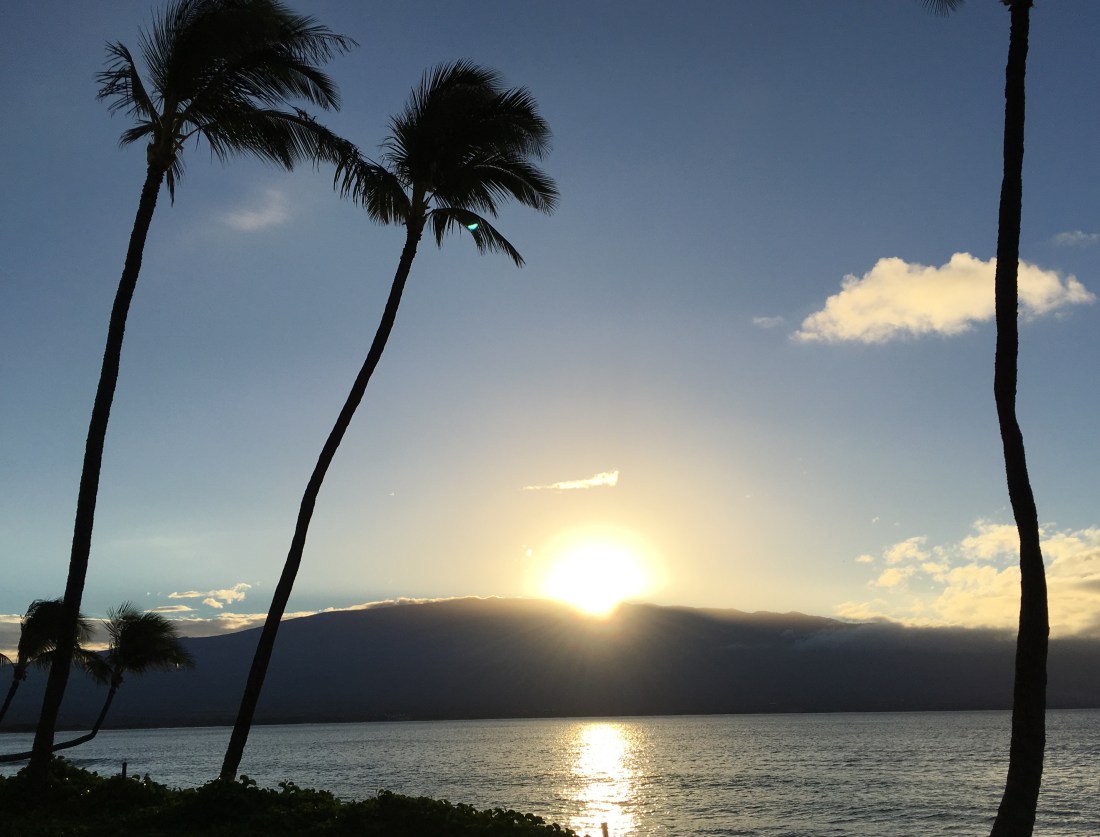
Catching a sunrise on Maui can provide a boost to any day.


Before Covid-19 created a new normal for everyone, I had often been asked what a day is like for me since I retired.

Well, if  not traveling, a good day was one that included a workout, and time for writing, reading and planning a future trip.

A bad day was when none of that happened, my computer malfunctioned, its operator had a meltdown, and the plumber/electrician/painter (or whoever was scheduled) failed to show.

Many days ended up to be between those extremes and included mundane house or yard work, shopping and cooking, appointments and errands, and a little time with local nonprofits. “Nothing to write home about,” as the saying goes.

So why do I write about it here?

There’s a man in Atlanta with whom I’ve recently renewed a friendship which began in the 1970’s. Like me, he’s recently retired, he from an interesting business career which caused him to live abroad for many years. But unlike anything I’ve experienced, he nearly died a few years ago. . . in fact, he was briefly dead.

My friend has completely recovered out of circumstances from which few people — less than 1% — recover fully.  So he’s asking himself: “For what purpose?” He believes there must be something he is supposed to do with the second chance he’s been given: and, based on his gene pool, he believes he has about a decade to get that done.

As I help my friend consider the possibilities for his next ten years, I’m apt to find myself thinking about how I should spend the next ten days, and the next ten, and the ten after that.  I’ve counseled my friend that the significant thing he may be called to do could benefit a single person. . .or a small group of people. . . and receive no notice from the public as contributing to a better world, country, state or city. All his contribution may do is make a quiet but profound difference in his local community or to a single neighbor.

The model for this thinking is the man who proceeded me as director of the statewide athletic organization I led for 32 years.  At my predecessor’s funeral in 2018, there was very little mention of his three-decade career in education, sports officiating and athletic administration. Almost all of the attention was to the three decades after his retirement and his many acts of kindness toward family, friends and neighbors who needed help which he provided without hesitation or celebration.

My Atlanta friend may be destined to do something really big and noteworthy.  But even as we search for what that could be, I might need to think more deeply about what a “good day ” means right now. . .or what it should mean in the wake of a pandemic that is reprioritizing just about everything.

JER

The Modern Meaning of March Madness

EDB4B747-C266-4C59-B6A3-A13F241F3534
Stretching our legs and our “social distancing” while hiking during the coronavirus crisis.

“Beware the Ides of March,” warned the soothsayer to Julius Caesar in the Shakespearean tragedy of the same name. We all should have been wary of the entire month of March this year. It was madness.

During March of never-to-be-forgotten 2020, we moved our clocks ahead one hour, and still we had the earliest vernal equinox in more than a century: March 19, at 11:49 PM EDT. The last time there was an earlier start to spring was 124 years ago.

Testing the gods, we moved our clocks ahead one hour in the very same mid-March week that we had a full moon and a Friday-the-13th. What could we have been thinking!

And then all hell broke loose when, the following week, most of us began to feel that we were in the midst of something unprecedented and unsettling: the spreading effects of a global pandemic, the worst felt in the US in 102 years. Most events, meetings and appointments were cancelled, most buildings and public places were closed. Some grocery store shelves stood bare. Then we were confined to quarters.

For many people, “March Madness” has usually meant getting together in crowds of people to wear our school colors and cheer for our favorite school and college teams. This year, “March Madness” has meant something different. . .perhaps that we are all in this together, just as long as we stay six feet apart.

JER


Stars of Unreported Stories


F176E19B-CEEE-4CE3-B9D6-CD8AA87A634B
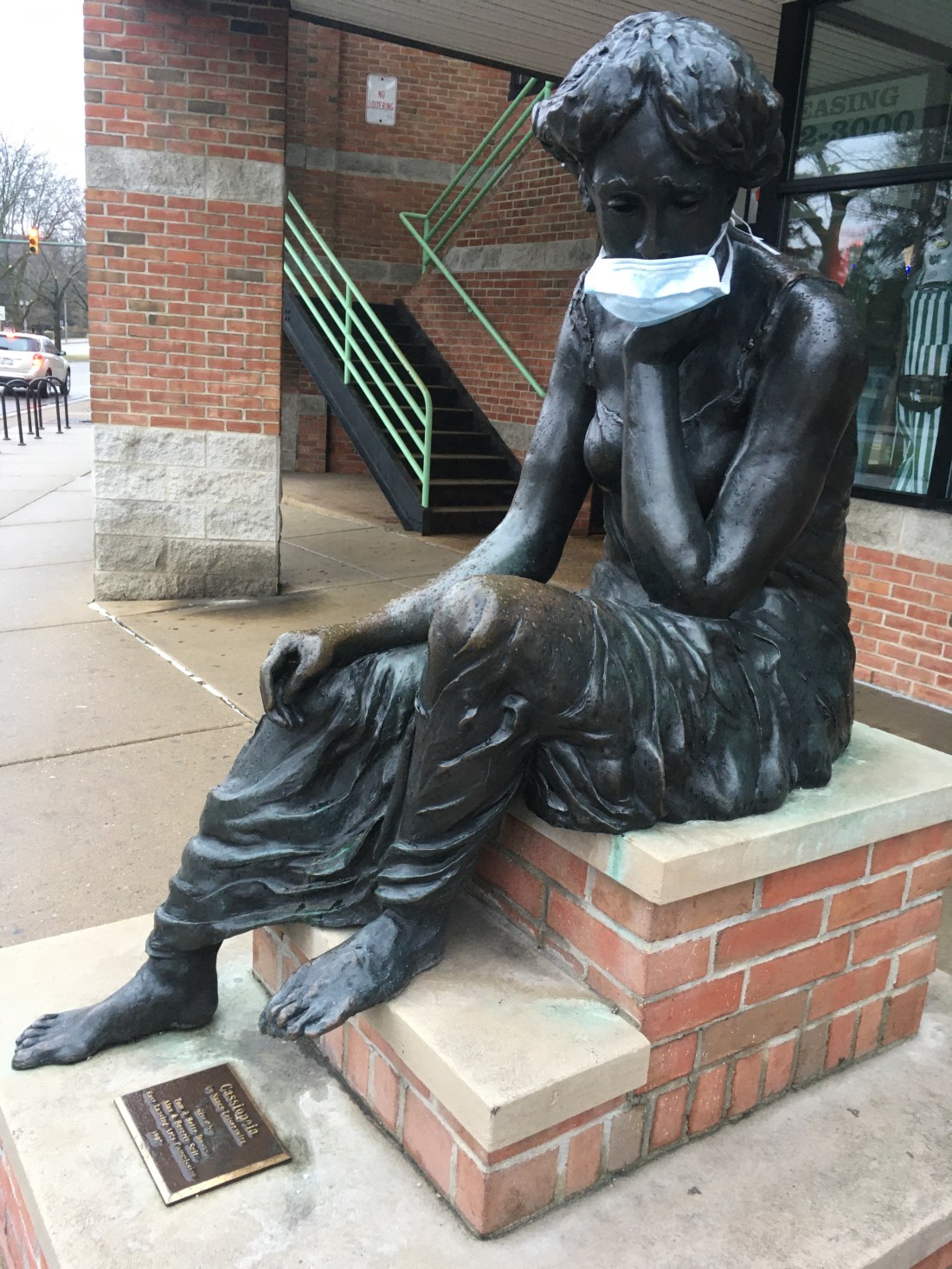
A statue of Cassiopeia, the vain queen of Greek mythology, unashamed to wear a mask during a global pandemic.

One could be forgiven to resorting to mythology and escapist literature in these trying times. But, by mere coincidence at first, my reading took me to realities far worse than our current coronavirus circumstances. For example:

To Erik Larson’s latest gem, The Splendid and the Vile, which conveys the destruction, death and other extreme hardships which the citizens of England endured during 1940 and 1941 under Nazi Germany’s bombing barrage.

Then to the best selling novel,  The Tattooist of Auschwitz, in which Heather Morris conveys the horrors of concentration camps that extinguished the dignity, hope and last breath of millions of Jews, Gypsies and dissidents from 1942 to 1945.

And then to Evicted, by Matthew Desmond, who reports of the less dramatic but nevertheless profound suffering of millions of Americans every year who lack housing security.

All of which puts our present predicament — a global pandemic — in  proper perspective: terribly bad for very many people but merely an annoying inconvenience for many of their neighbors. . .which takes me to a passage from The Tattooist: “To save one is to save the world.” 

In these times when people are suffering — not just from the global pandemic but from war, poverty and myriad injustices which existed before the pandemic and will persist after — problems seem so large that they overwhelm and paralyze people. The antidote could be to begin by helping just one: one person, or one family, or one non-profit or place of business. Everyday, media reports about people helping people in little ways; but the whole truth is that most acts of such kindness and compassion go unreported.

Our little neighborhoods and the world at large need us now more than ever to be the stars of these unreported stories.

JER


Crisis As Opportunity


53ACF632-919E-44FB-AD53-C27757B4879F_4_5005_c

It is ironic that Chinese culture gave us the coronavirus crisis, because the Chinese also gave us a graphic word for “crisis”: it consists of one character which represents “danger” and a second which means “opportunity,” which is precisely how to be thinking about our current situation. Long ago I heard this Chinese symbol described, literally, as “opportunity riding on a dangerous wind.” This is precisely our present circumstance.

Yes, there is danger today, especially to the elderly and to any person whose health is already weakened. Yes, there is hardship ahead, especially to those who depend on schools to provide more than classroom education, and to anyone whose employment depends on a society that is in constant motion rather than staying at home.

But there is also opportunity.  For example:

Deficiencies have been exposed in this and other countries’ preparedness for health crises. We have been taught important lessons. As a result, the world — and each community within it — should be better prepared the next time we face such a threat.

People have learned that what our mothers told us about hand-washing was wise: do it frequently and thoroughly. We’ve learned it is foolish and selfish — not heroic — to go to our places of employment when we have symptoms of illness. The result of increase observance of these and other common sense health habits could lead to  significant less infection in future flu seasons.

The long-overheated US stock market has shed its over-priced issues, and investors who have not bailed out of the market in fear following a jagged cascade of down days may have the unusual opportunity now to not only watch their retirement accounts be restored, but also to expand them with bargain buying.

Around the world — but perhaps most measurably in China — slowing or closing commerce has resulted in cities with noticeably cleaner air.

Aside for cybercrime, selective price-gauging and toilet paper pilfering, crime statistics are way down.

I look forward to seeing research about how people are spending March and April of 2020 in comparison to previous years. With most public buildings closed, many people have been forced to find new things to do.  In our case — with our international and domestic air travel and hotel accommodations of the next few months postponed or canceled, and our fitness center closed, and wanting to avoid enclosed  or crowded public places — we’re taking day trips. We’ve packed maps, lunches and hiking boots and driven to look for new outdoor sites to see and venues to hike. . .in fresh air, far removed from other people. We are stretching our legs and our “social distancing” simultaneously.

Certainly, negative effects will accumulate as the pandemic persists, or if it returns in second or third waves; and it will become more difficult to point to anything positive except to the resilient human spirit that will survive this crisis.

JER


Lost Treasures


4366DDAF-14D6-4B6F-B129-8A5DACBEF45D

Many years ago I came home from college for a holiday or summer vacation — I don’t remember which — and discovered that my energetic mother, during one of her frequent episodes of extravagant house cleaning, had disposed entirely of my collection of baseball cards. Kids stuff, she must have thought. Clutter. Not something a college man should continue to care about.

This was not just any collection of a child or casual collector, but one painstakingly organized by league, team and “star quality,” in such pristine condition you could still smell the bubble gum that came with the purchase of each packet of cards. The complete 1955 Brooklyn Dodgers team  — World Series Champions (beat the damn Yankees in seven games) — was encased in protective plastic.

It is hard to place a dollar figure on the value of that collection today, but it probably would represent the greatest portion of my retirement portfolio.  It would be like holding 1000 shares of the first Apple stock ever issued.  Thrown in the trash.

Far less valuable and traumatic are the books that have been removed from my houses over the years to make room for newer books, family photographs and yarn for my wife’s weaving projects. There were no signed first editions discarded, so the value was nothing like the loss of my rookie cards of Duke Snyder or Roy Campanella or Jackie Robinson. . .even now, I get weak in the knees just thinking about this.

While a mint-condition complete set of the 1957 World Series winning Milwaukee Braves baseball cards has much more value now than a complete set of John Grisham novels, I still miss the satisfaction of being able to stare at the full body of that author’s work.  Rather than rejoice in what I still have, I tend to focus on the holes in my collections of  Hemingway and Fitzgerald.  I weep over my losses from lending Pat Conroy’s The Prince of Tides, Barbara Kingsolver’s Poisonwood Bible and Simon Mawer’s Prague Spring.  Wanting to share these authors with others, I lost forever my own annotated copies of their masterpieces.

I once had a colleague who was a collector of all kinds of books. He built a new house around his eclectic collection: a wall-to-wall and floor-to-vaulted ceiling display.  To access the far reaches of his collection, he used a 20-foot ladder mounted on tracks. It was the showpiece of his country home.

At the time of his death, author Pat Conroy owned 8,000 books and not a single Kindle.  He said he wanted to feel and smell what he was reading. Conroy wrote about a friend of his who had a lovely mountain home in North Carolina “made holy by well selected books.”

I know it would make practical sense to keep donating my used books to my former employer, our local public library, a local church and a struggling commercial bookstore. But it’s an emotional battle for me. I like to look back at what I’ve read to see notes I made in the margins and words I underscored in an earlier reading, and to think about why that was important to me. I like to re-read passages and re-think what the author was trying to accomplish.

Fearing lost treasures, the redistribution of books will be the toughest part of downsizing during the downslope of my life.

JER

Going Viral


032877D6-9661-444E-BB2A-E1AFDF64D76E
For better or worse, Chinese President XI Jinping took a “hands on” approach to managing the coronavirus response of his nation.

If you had seen our travel itinerary for the spring of 2020, you would have had an early warning about where the coronavirus (aka “Covid 19”) was headed after its initial outbreak in China.

South Korea, the location of our connecting flight to Phnom Penh, Cambodia in March as well as our return from Hanoi, Vietnam in April, was an early hotspot for the coronavirus.

Italy, our intended destination in May, became the first country in Europe to  quarantine communities after a high number of people tested positive for the virus.

Delta Airlines and a host of hotels have been accommodating in rescheduling our reservations, but I can tell that the owner of the apartment we are renting in Florence is frustrated with the disruption in her income as travelers cancel their plans. “It’s absurd,” she says.

These are minor inconveniences compared to those experienced by our son who is an educator living in Beijing, and whose existence since late January has been confined to his small high-rise apartment. He’s ventured out a few times for groceries, when he has his temperature taken before entering the shop and again before re-entering his apartment building, no matter how brief his time away. Otherwise, his connection to the outside world has been entirely through the internet. And more frequently than in normal times, his contact has been with us, which is a pleasant by-product of this global health crisis.

Our son reports that China is engaged in the world’s largest experiment ever in online teaching and learning. Millions of students from primary grades through post-graduate studies are engaged.

China’s culture  — in which large numbers of people gather at markets where live animals are sold and slaughtered and then consumed as remedies for humans’ physical, mental and spiritual maladies — made China especially susceptible to this outbreak. But another aspect of that culture — the unlimited authority of the central government to dictate the behavior of its subjects — may have allowed China to arrest the spread of the virus faster than such may be accomplished in more open and democratic societies.

Those who used this crisis to take condescending and even racist shots at the Chinese people in early February may be marveling at the effectiveness of China’s response by late March. This does not excuse China’s ongoing, unchecked damage to its natural environment and disregard for human rights; it’s merely giving credit where credit might be due.

JER

8C0A57E3-92AC-44DB-ADB0-A6DFC644BDE4
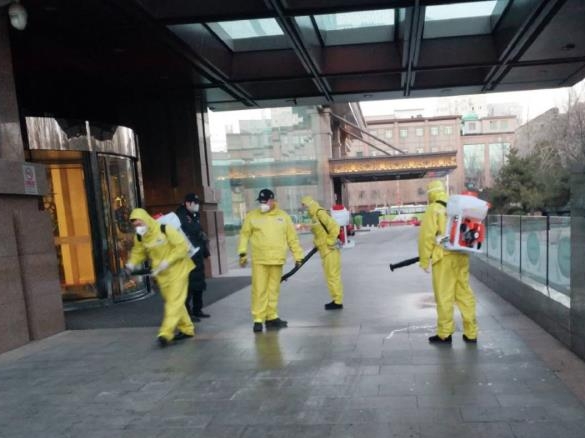
While residents were confined to quarters, the Chinese government orchestrated a massive ground game to fight the virus both indoors and out.