
The criteria for the destination of our January escape were several. Warmer than our home state. Fewer Covid cases and higher vaccine rate than our home state. Where service staff were required to wear masks. Where we could travel on our own and away from crowds. Located no more than one time zone away from our home state.
Costa Rica checked all the boxes. This was our fourth visit to the Central American nation splitting the Caribbean and the Pacific between Nicaragua and Panama.
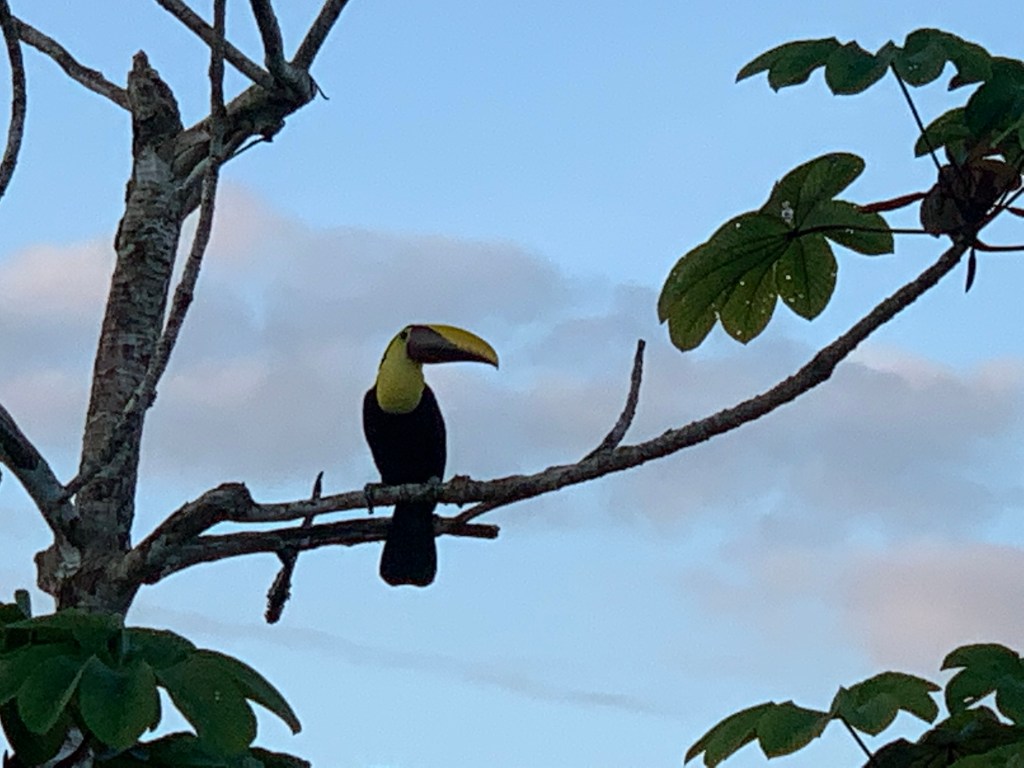
Among countries of the Western Hemisphere, Costa Rica trails only its Central American neighbor Belize in the percentage of land which is at least partially protected from development, and the payoff is rich biodiversity and a birder’s paradise. Even amateurs like us found toucans, trogons and hummingbirds of several colorful varieties…while overhead, flocks of pelicans flew in tight formation…what the locals call the “Costa Rican Air Force,” since the country has no military.
Our driving route took us down the Central Pacific region of Costa Rica to the Osa Peninsula, and then back through the nation’s high spine to San Jose. While the national highways were much smoother than those of our home state, we needed our 4 x 4 rental to reach some of our accommodations, and a 60-minute boat ride to reach a four-unit lodge on the jungle slopes above Drake Bay where we were the only guests, and dined el fresco under a full moon each evening.
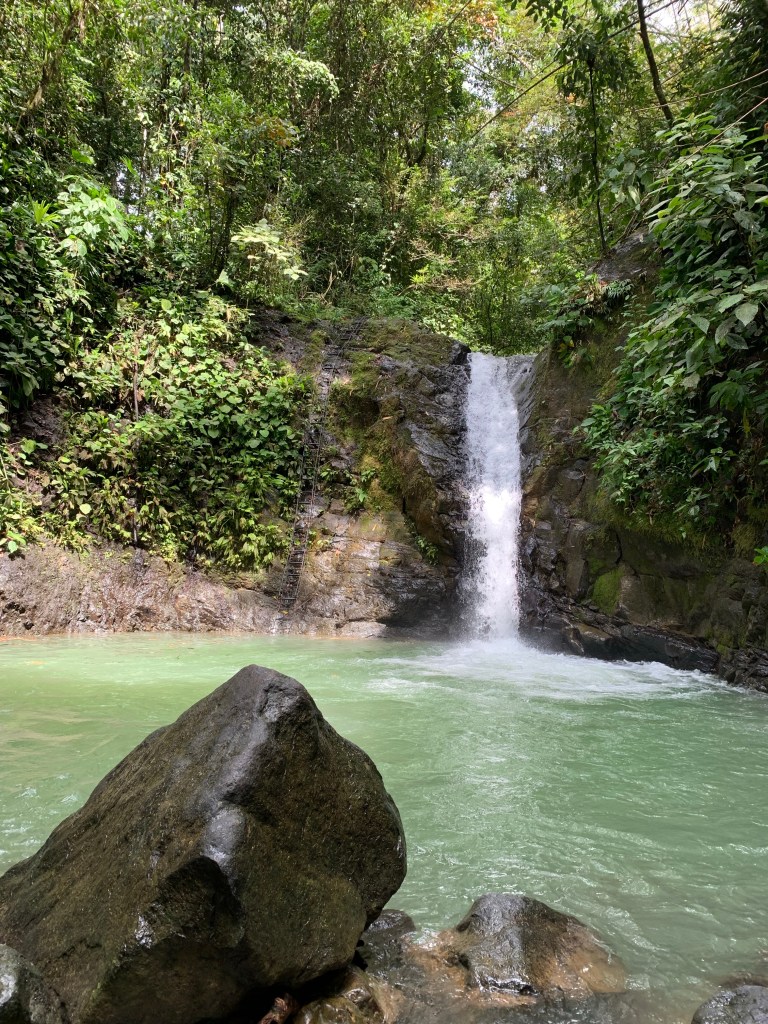
Swimming in mountain waterfalls was magical — they are everywhere — but snorkeling at protected Cano Island was a letdown. Like so many places around the world the coral is crumbling and colorless from warming oceans. But the boat ride from Drake Bay to Cano Island did provide us close looks at humpback whales and dolphins.
We walked among blue morpho butterflies and magnificent owl butterflies which at rest look like tropical fish. We observed squirrel monkeys and spider monkeys, and every morning and evening we listened to howler monkeys. We tracked a tapir until we finally found it, and then stood motionless for many minutes while it rooted through the underbrush for a snack; and then we left it as silently as we approached.
But the most impressive creatures we observed in Costa Rica were the littlest: its famed leaf-cutter ants. They were always at work — always on the march — stripping leaves and transporting pieces that were two or three times the ant’s body weight and delivering them even hundreds of yards away to contribute to a communal structure where millions of ants were housed. We watched this phenomenon at several different locations, always in awe of the organization, industriousness and silent communication. We noticed that the ants never stripped a single plant of so many leaves that it endangered that living organism’s health.
We couldn’t help but wonder what mission might be accomplished on a human level with cooperation like this, and with similar concern for the welfare of the environment.
JER
 ALL OVER THE MAP
Outstanding description of your Costa Rica adventure!
LikeLike