
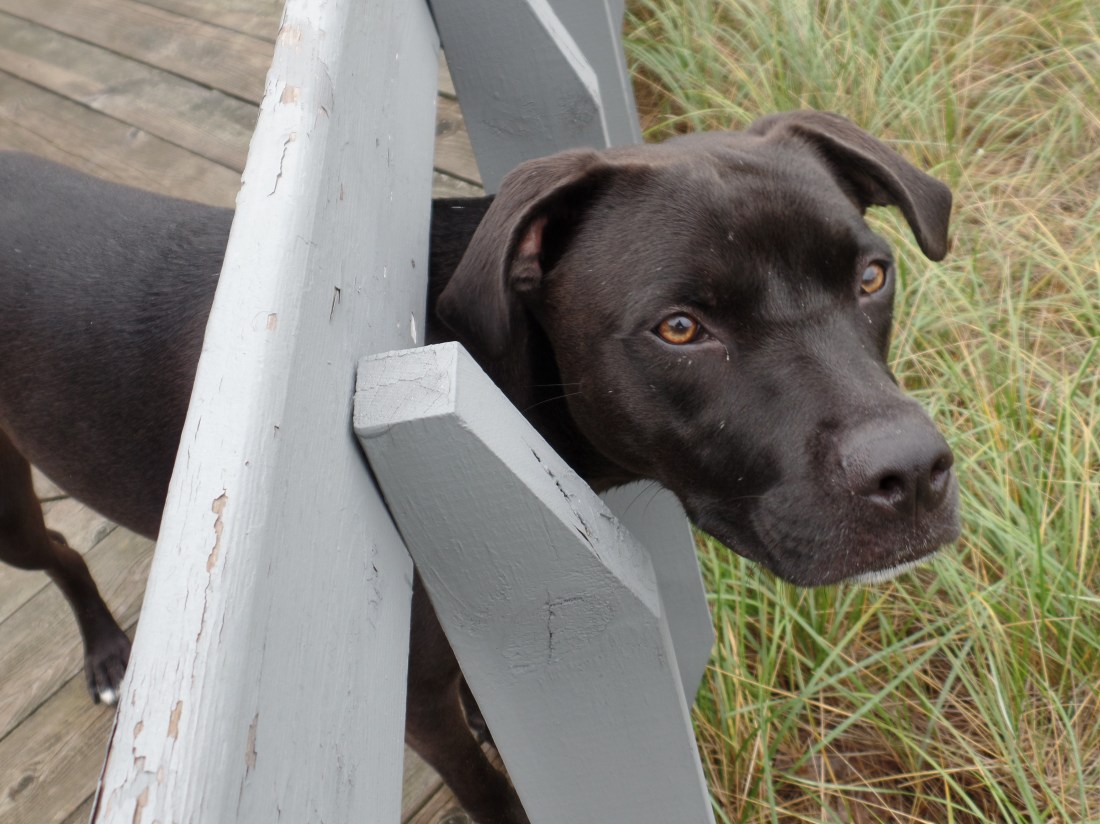
My heart has a soft spot for many breeds of dogs, and for one particular mixed-breed black rescue dog who now resides in Texas. He blends the speed and power of a Pit Bull Terrier with the sweetness and patience of a Labrador Retriever. He demonstrates intuition that exceeds his excellent training. He dreams.
For a half-dozen years he was the center of his household, basking in the attention of two adults who were attentive to his every need, and he to theirs it seemed. But a year ago, when they brought a newborn baby home, things began to change.
For awhile, he continued to tune into us during our video chats; but he gradually surmised that he was getting in the way of the main attraction, that little being of strange smells and sounds. A helpless little thing who couldn’t even crawl on all fours had effectively turned everything upside down. Now my favorite dog hardly notices when we video chat…..barely raises his head from the floor under the kitchen counter.
Life has changed for him. Fewer walks, almost no “rough-housing” and no rides to the creek to swim. And I’ve been wondering about his feelings. How’s his emotional health these days?
And then I read this from Brian Doyle’s novel Martin Marten:
“We don’t have good words yet for what animals feel; we hardly have more than wholly inadequate labels for our own tumultuous and complex emotions and senses. It’s wrong to say that animals do not feel what we feel; indeed, they may feel far more than we feel and in far different emotional shades. Given their senses are often a hundred times more perceptive than ours, could not their emotional equipment be similarly vast?”
JER
 ALL OVER THE MAP