
I have written before about the problem any person can have when describing where he or she has traveled: generalizing from too small a survey sample. There is probably no place I’ve visited where this is more apt to happen than South Africa.
The books I read before I departed for South Africa instilled some fear and a sense of hopelessness which I see from three weeks of experiences in both big cities and countrysides were not entirely unjustified, but probably overcooked. What I’m most surprised about now is the number of times I want to use superlative descriptors in writing about our experiences. For example….
Johannesburg, South Africa’s largest city, is said to have the nicest year-around weather of any of the world’s 50 largest cities, due to its altitude: highest of any major city of the world. I cannot dispute that the January (summertime) temperatures we experienced in Johannesburg were perfect: warm days and cool nights, with a brief afternoon rain.
At the same time of year, more charming Cape Town, a 150-minute flight toward Antarctica, may be one of the windiest cities in the world. Winds calmed during our visit, but we heard stories from a week earlier when tourists were roped together so they wouldn’t get blown away between their tour buses and hotels. That’s really embarrassing to think about so near to where gale-force winds around the Cape of Good Hope sank many ships traveling between Europe and Asia prior to the opening of the Suez Canal just 150 years ago.
Driving further down the country’s cape, while we passed many miles of gorgeous cliffs, dunes, beaches and ocean on the right side of the road, on our left, we passed the most extreme poverty we had ever seen on this planet. . . until we saw such pockets of poverty again, and still again, outside other cities and towns across South Africa
The next two days took us to the most expansive and least expensive wine region we’ve ever visited, where we found an unheralded winery (Jordan) to be a better experience than another which was more publicized and pretentious. Even in these lovely environs, a highway blockade reminded us of the divide between rich and poor as locals protested the arrest by government authorities of one of their own who was suspected of possessing drugs.
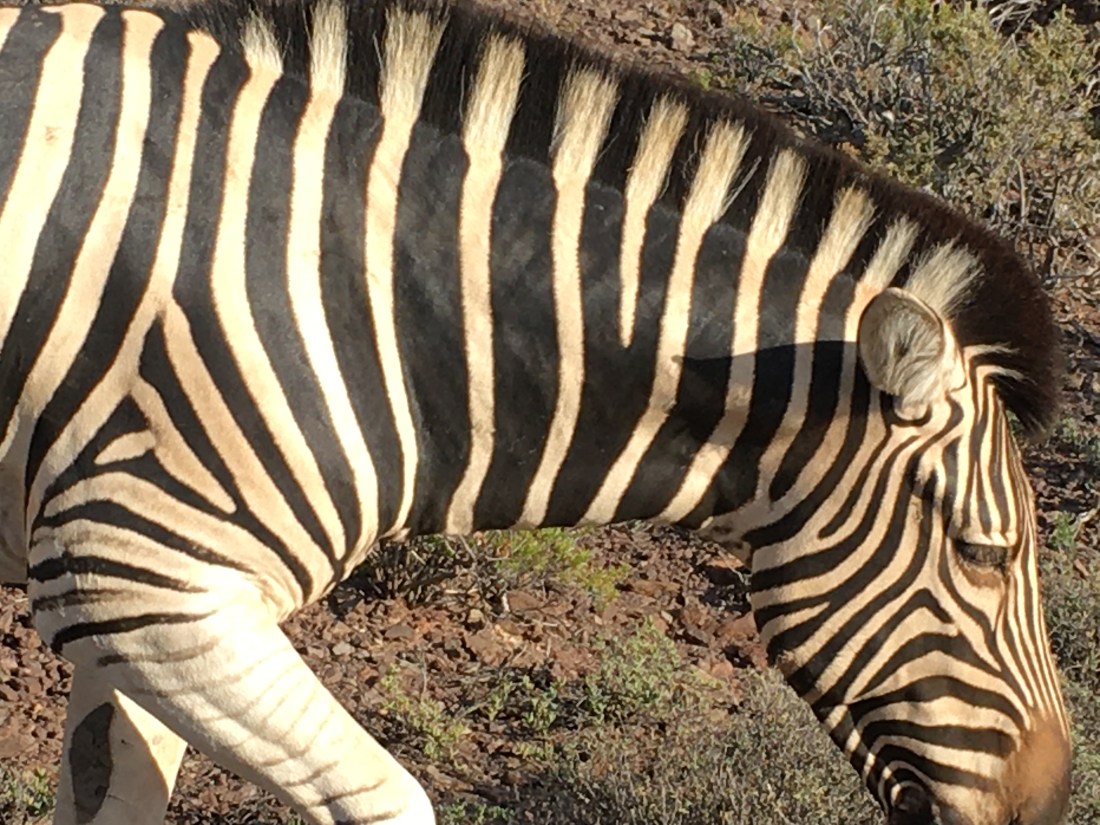
The following two days found us further inland where several years of drought have fried the Little Karoo to the driest it’s been in anyone’s memory. At the private Sanbona Wildlife Reserve, whose research is important at any time but especially critical during this period of unprecedented manmade and natural threats, we had the closest experiences of our lives with elephants, white rhinos and a cheetah, saw the rare Cape Zebra and glimpsed two of only ten white lions known to be in the wild anywhere in the world.
Eventually, we turned south again, and saw a fog bank descending like a down cover from the mountain tops that divide the Karoo from the Indian Ocean. It’s like two different worlds: sunny, hot, brown and rocky on one side; foggy, cool, green and wooded on the other. Those South Africa extremes, again, making this perhaps the most impossible country to generalize we’ve ever visited.
The southern coast of this country and continent is unmatched for sand dunes and soft beaches. They extend hundreds of yards inland from the edge of the Indian Ocean; they continue along the shore line — with only few and brief interruptions — for hundreds of miles. These pristine beaches are so massive and marvelous a person can almost forget about blemishes in other parts of South Africa.
JER
 ALL OVER THE MAP