
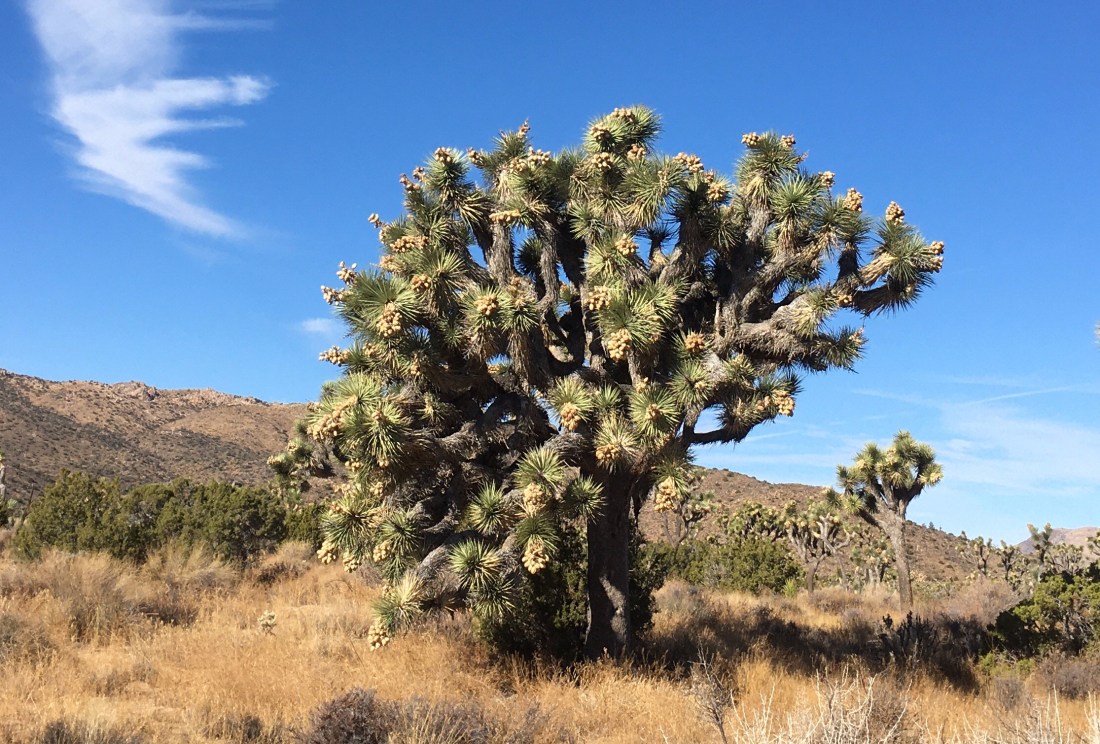
Ten months after our visit as tourists was thwarted by some trashing of Joshua Tree National Park during the partial shut down of the federal government, we finally arrived at this precious park as volunteers with the Earthwatch Institute. We counted lizards, Junipers and Joshua Trees to assist data collection by the University of California – Riverside and the National Park Service for research into the effects of climate change and other aspects of environmental management.
Designated a national monument in 1936 and secured as a national park in 1994, Joshua Tree stretches over nearly 800,000 acres between the higher elevated Mojave Desert to the north and the Colorado Desert to the south. Boulder formations characterize the northeast; but brazen Joshua trees, found nowhere else in the world, are the feature here….. sometimes in solo but more often in random, loose ensemble across the vast desert floors. Almost every living thing in the Park appears to be migrating very slowly to higher and cooler elevations.
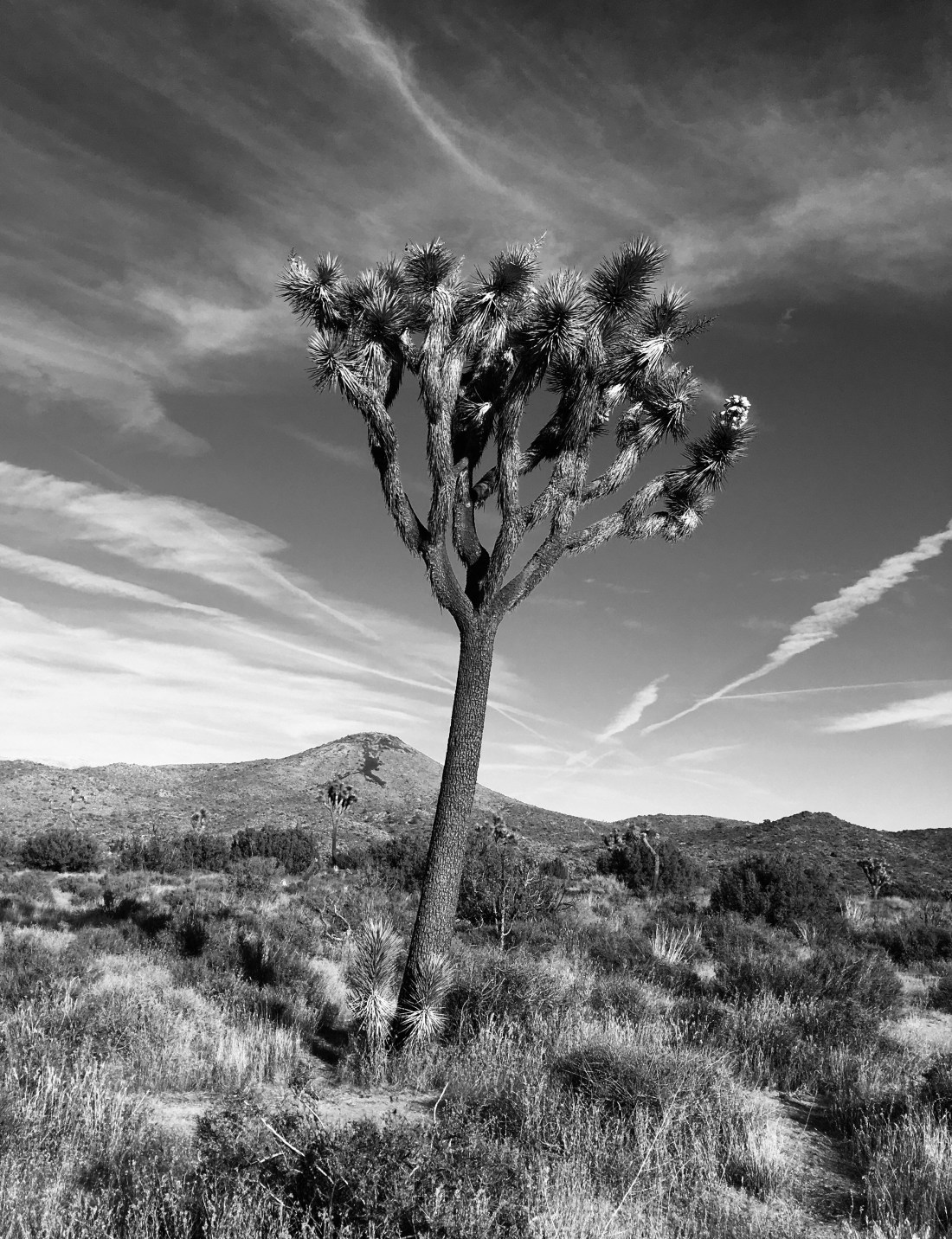
While closely related to the lily, the Joshua is a type of tenacious yucca plant — a fierce survivor of the harshest natural conditions and the most foolish human behavior. The slow-growing tree (a little over an inch per year) is said to have been named by Mormon settlers after the Old Testament prophet Joshua, with arms raised to the heavens in prayer. Some of the park’s trees have reached 400 years old, and the species needs more than our prayers to help it survive the so-called modern age.
The park is renowned for birding (250 species), rock climbing, and sunsets, followed by star-gazing. It has been designated as one of the 66 International Dark Sky Parks in the USA, and it hosts a Night Sky Festival each fall.
JER
 ALL OVER THE MAP