
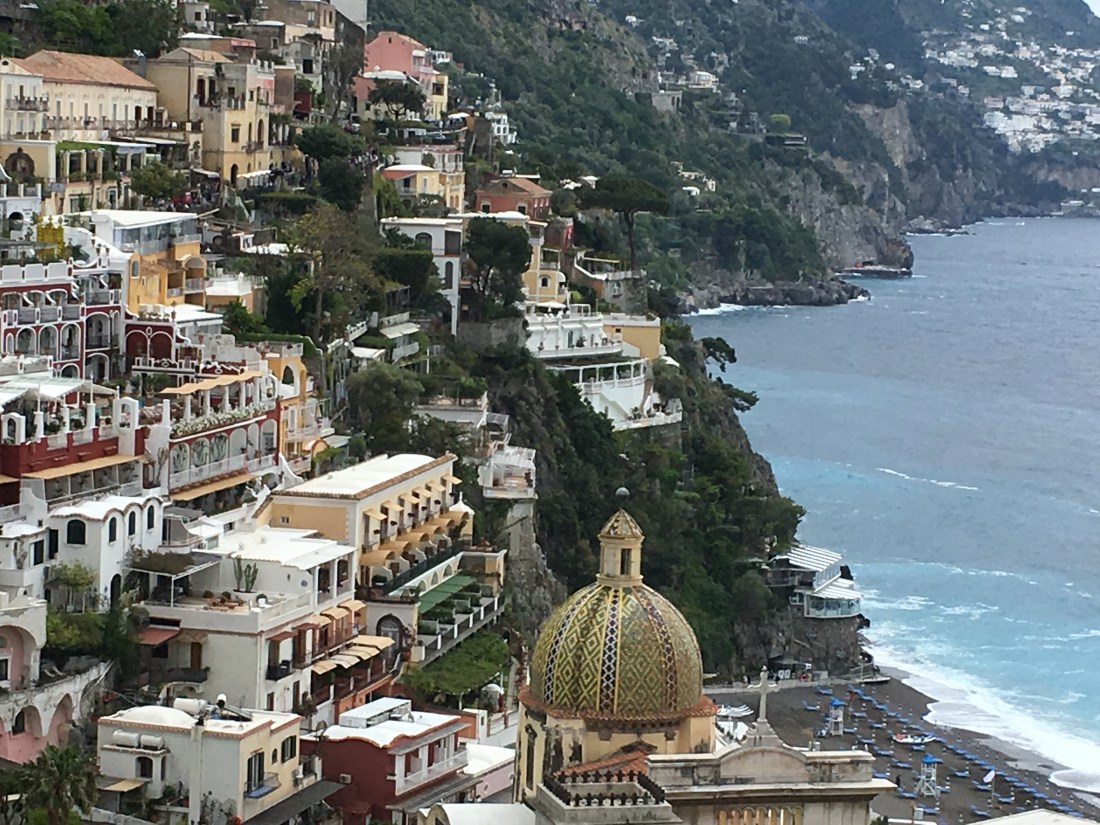
Why is it that “quaint” has such a strong pull…..so much more attractive to me than ancient, more magnetic than either modern or massive? Why does cobblestone calm me the way the smoothest asphalt does not? Why does scaling and discolored stucco draw my attention, and affection, more than shiny steel and gleaming glass? Why will I drive past 2,000 year old antiquities in favor of more time with “Old World” charm? What is it about imperfections and small dimensions that attracts me when I travel to small towns and countrysides?
Quaint is not quirky, and neither weird nor whacky; it’s too substantial for that. Old, but not necessarily old fashioned. In style, but without a hint of being trendy. Without trying.
Parts of the Almalfi Coast south of Naples — in its smaller villages which cruise ships and tour buses mostly ignore — and some areas further south to the “shin” of Italy — still disregarded by popular guide books — qualify as quaint.
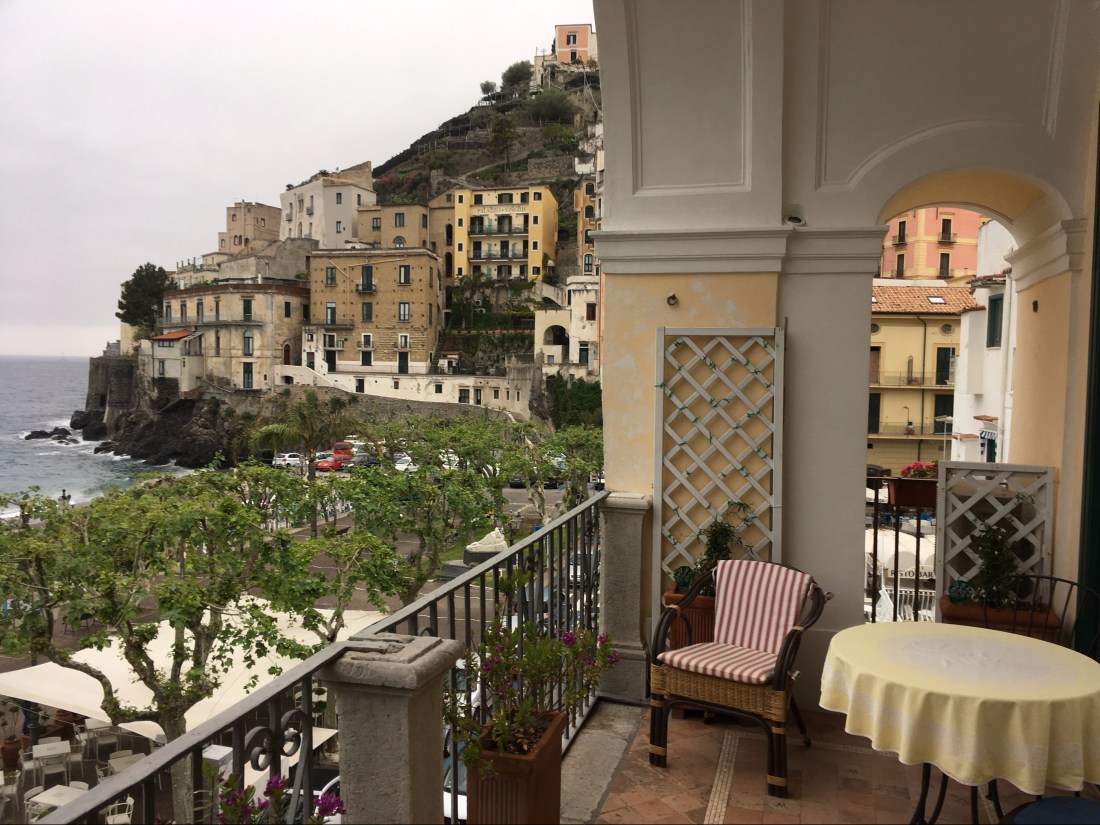
For example, it required three separate keys to open three different doors to enter our apartment up three flights of worn stone steps of the oldest building in unheralded Minori. Busy Amalfi coastal road traffic passed directly below the balcony which faced south across a promenade to the Tyrrhenian Sea. Windows without glass or screens, but no bugs. And at night, with solid floor-to-ceiling doors hiding the windows, no sounds of traffic, yet the soft roll of the ocean somehow seeped in. This is quaint.
From a distance the roads carved in the rock along the Amalfi Coast appear to be among the thousands of terraced gardens and vineyards which have been clinging to the mountain sides for centuries. Up close the roads are an engineer’s marvel and a driver’s nightmare. Quaint…..and yet thrilling…..proof that quaint need not be boring.
We wound our way through village after village of the Amalfi Coast, with stops down a deep-cut harbor near the old fishing village of Praiana and at popular, photogenic and pricey Positano. We ascended the cliff-clinging road to refined Ravello, the hill-top village which has been made famous, but less quaint, by its annual music festival and international celebrity visitors.
Later, along the shin of Italy, we drove a coastal road through villages missed by the expressway, where quaint was more likely to be found. In fact, we discovered that the twisting roads and tiny villages of the Maratea region were understatedly as wonderful as the Almalfi Coast, but far less crowded.
On the island of Sardinia we found another Amalfi Coast-like drive — in fact, more beautiful and less crowded — along the southern shore’s “Golfo di Teulada;” and we found that quaint feeling we relish at a rural home on the much smaller island of Sant’ Antioco — a small rustic villa, which is now booked through Airbnb.
Back on Italy’s mainland, along the Gulf of Genoa, we traveled the small coastal road along the Italian Riviera where too-magnificent-to-be-quaint homes distract drivers during dangerous turns. Then we visited the five celebrated villages of Cinque Terre which are spectacular in their setting but, like towns on the Amalfi Coast, may be losing some of their charm to the tsunami of tourists and trekkers.
Quaintness is a hard characteristic to have, and perhaps even harder to hold on to.
JER
 ALL OVER THE MAP