
For generations of students, the history books they read in US schools to teach events of the 15th to 17th Centuries focused on the seafaring nations of Europe and their conquests of the “America’s.” They portrayed these brave people as discoverers of a new world — as explorers, not exploiters. The texts and teachers ignored the rich cultures that already were entrenched in what is now South, Central and North America. They ignored the Norse and the seafaring cultures of Asia and of the southern hemisphere who had been wandering the world under sail hundreds of years earlier.
A more complete and fair reading of this slice of world history is that people from European coastal countries were merely among the first to terrorize and colonize distant indigenous populations, and among the first to steal the resources of foreign lands while spreading the religions and diseases of their far-away homelands.
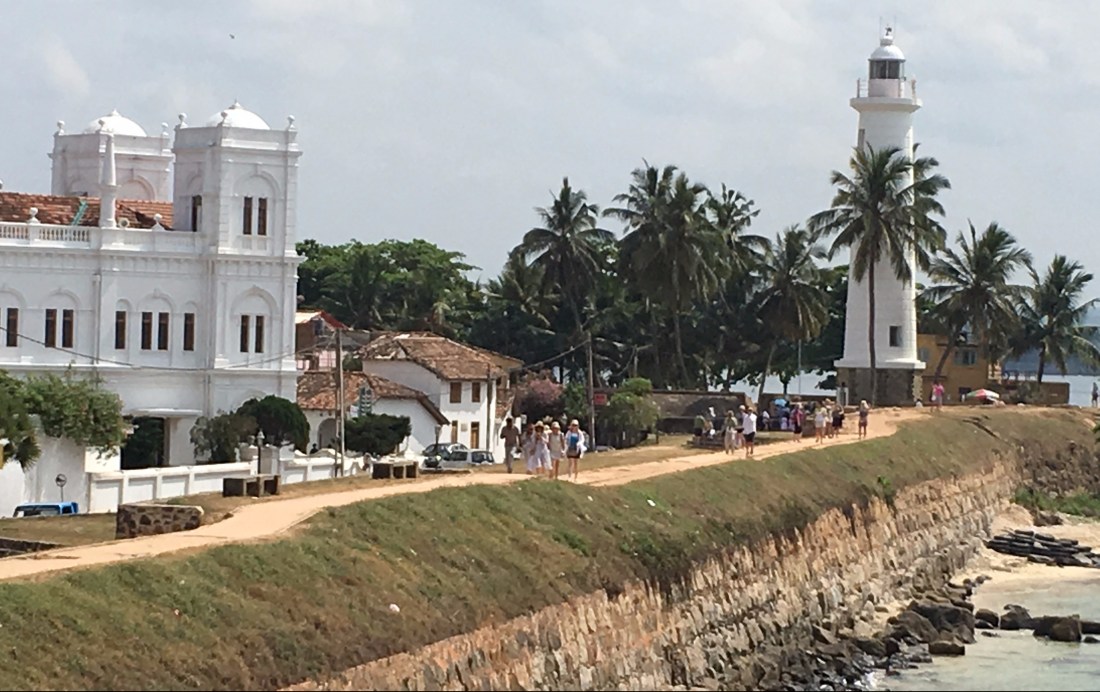
A traveler today sees this story repeated all over the world……the British, Dutch, Portuguese and Spanish, especially, overwhelming indigenous populations and then fighting with each over the control of these lands. One can see these themes today in architecture, language, laws, museums and customs across the globe….including in Singapore and Sri Lanka from which we have recently returned, as well as the many Central and South American countries we’ve visited previously.
A more complete and fair reading of a later slice of world history — the 19th and 20th Centuries — would expose these same European nations, aided and abetted by others (including the USA) — as the exploiters of natural resources on the African continent. It would reveal their audacity to draw borders for African countries based on their needs, not those of the African people. These nations settled their disputes with others by dividing up lands for which they had no authority or affinity. These themes are apparent in the tensions and bigotry that still simmer across Africa, and sometimes boil over.
These history lessons — which travel has taught me more than school texts — horrify and humble me. I’m humiliated by the role the USA has played. But I also realize how difficult it is to chart the course for US diplomacy in the world.
I don’t want America to create colonies…..or to act with imperialist impression, even if not intent. On the other hand, the USA cannot withdraw from the world stage and leave weak nations to be colonized by their mounting monetary debt to China or to be conquered by the unchecked military might of Russia.
I don’t want America’s role to be that of the world’s police force or rescue squad; but I do not want our country to be known as a nation which turns a blind eye to inhuman cruelties or often-times human-assisted natural disasters which cause millions of people around the world to suffer every day.
I want the text books for future generations of school children to be honest. And I want them to describe America as a country which learned from its mistakes and then struggled to find, promote and defend the high moral ground in all diplomatic, scientific, economic and military pursuits. I want that to be our story, and the accurate portrayal of America in history books of the future.
JER
 ALL OVER THE MAP