
For more than 100 years ending early in the current century, private and public interests sought to unite the Western Hemisphere through an overland route — first by rail, and then by roadway. Rarely were all the key players in both government and business in all the involved nations of North, Central and South America of one mind and purpose; and as a result, never was either of these “Pan-American” projects fully completed. The story of vision and vice is chronicled in Eric Rutkow’s new book, The Longest Line on the Map — The United States, the Pan-American Highway, and the Quest to Link the America’s.
Ultimately it was daunting natural barriers, a justifiably suspicious and stubborn indigenous population in the region and a government in the capital city of Panama which was fearful of problems that traffic from more southern nations could bring to Panama, that combined to obstruct completion of the highway at what is called the Darien Gap in southeasternmost Panama.
It was a completed portion of the highway in northwestern Panama that provided one of our most unusual and unscripted travel adventures…..in the winter of 2012.
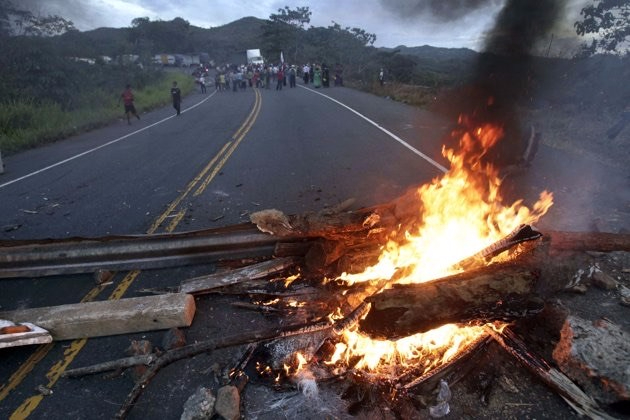
We were attempting to return to Panama City by rental car from a peaceful and pampered stay at a small island resort. When we joined the Pan-American Highway we found it barricaded by trucks whose drivers were sympathetic to the plight of the indigenous people who were blocking the highway with their bodies and brush fires to protest the taking of mineral rights of their land by the federal government. They chose strategic spots where there were no alternative routes accessible for cars, and they signaled intentions to continue the blockade for many days or weeks.
The short version of the story is that we spent the night arranging for an outboard motor boat with the help of a close knit local expat community and, at dawn the next day, abandoned our rental car and traveled among the mangroves for 90 minutes in the opposite direction of Panama City. We docked just west of the airport at David in northwest Panama, arranged a taxi for a short and un-barricaded back-roads route to the overcrowded local airport, and secured two seats on a flight over the continuing chaos on the higway below, arriving in Panama City in time to connect with our scheduled flights back to the USA.
For several weeks after our return we followed the limited news coverage US media devoted to these events in Panama. There was some destruction and three deaths attributed to the protests during those weeks, but there were no fundamental changes in government policy. More recently, the number of issues over which Panamanians are protesting has expanded, protest events have spread across the country and into Panama’s towns and cities, and the toll of property damage and deaths has gradually increased.
JER
 ALL OVER THE MAP