
Hawaii is said to be the most remote land on the planet…..that is, farthest from any continent. It is, indeed, a real “get-away.”
The last to the union of 50 states in 1959, Hawaii also has the latest date of US states for the introduction of human inhabitants, commencing in the early fifth century A.D.
It is believed the first visitors to this paradise traveled from the Marquesas Islands, located 2500 miles south, at the remote northeast tip of what is now French Polynesia. Why these intrepid souls were compelled to wander so far north is unknown. Theories include war, drought and overpopulation….some of the same forces which are driving millions of people from their homelands across the globe today.
It was the Big Island of Hawaii — the youngest island and, we know from continuing volcanic activity, a still forming island — which received the first settlers. Being largest and southernmost of the island chain, odds were on its side that the double-hulled canoes which ventured from far south would be more likely to bump into this island than another island of the chain we now call Hawaii, some of which are 1500 miles farther north and so tiny they are not shown on most maps of the USA. Some of these islands still have no year-round inhabitants.
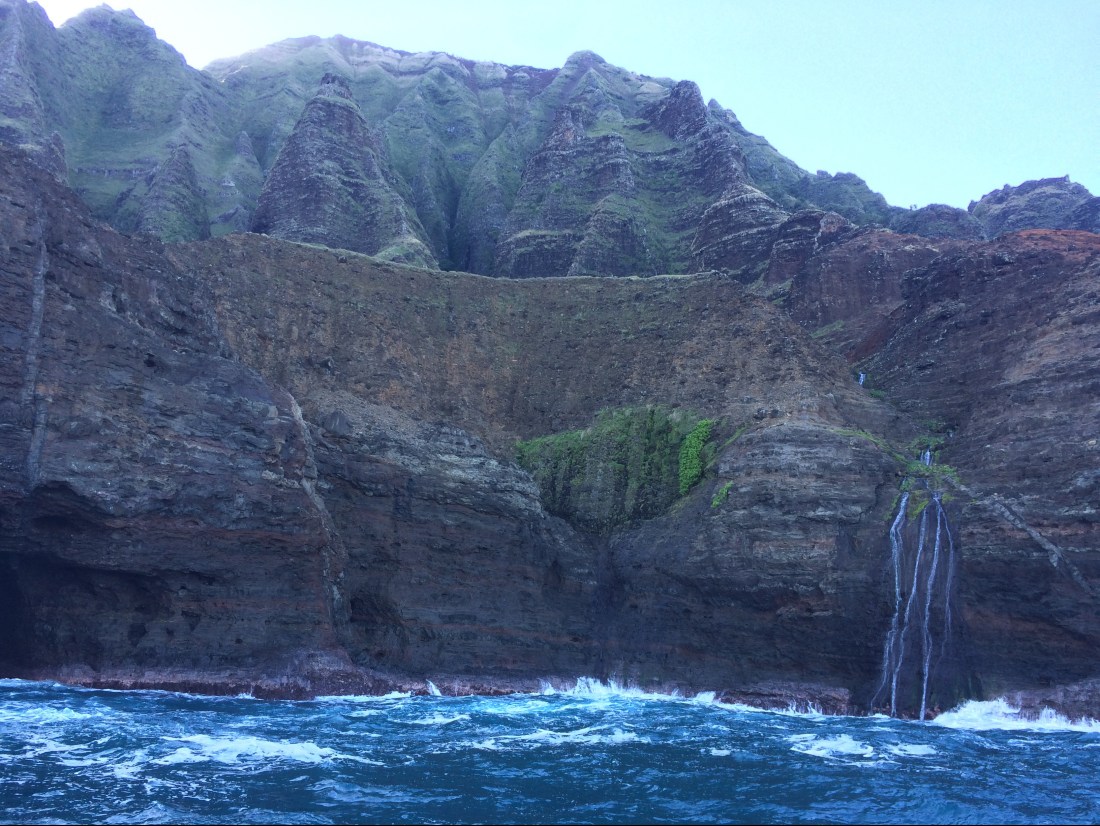
Hawaii has both the fastest growing and the most rapidly eroding shorelines in the world…..increasing as a result of lava flows on the southeast shore of the Big Island of Hawaii, the newest island…..diminishing as the result of wind, waves and rain along the northwest coast of Kauai, the oldest island…..one island dramatically ascending from the earth’s molten core as another island subtly descends into the sea.
JER
 ALL OVER THE MAP