
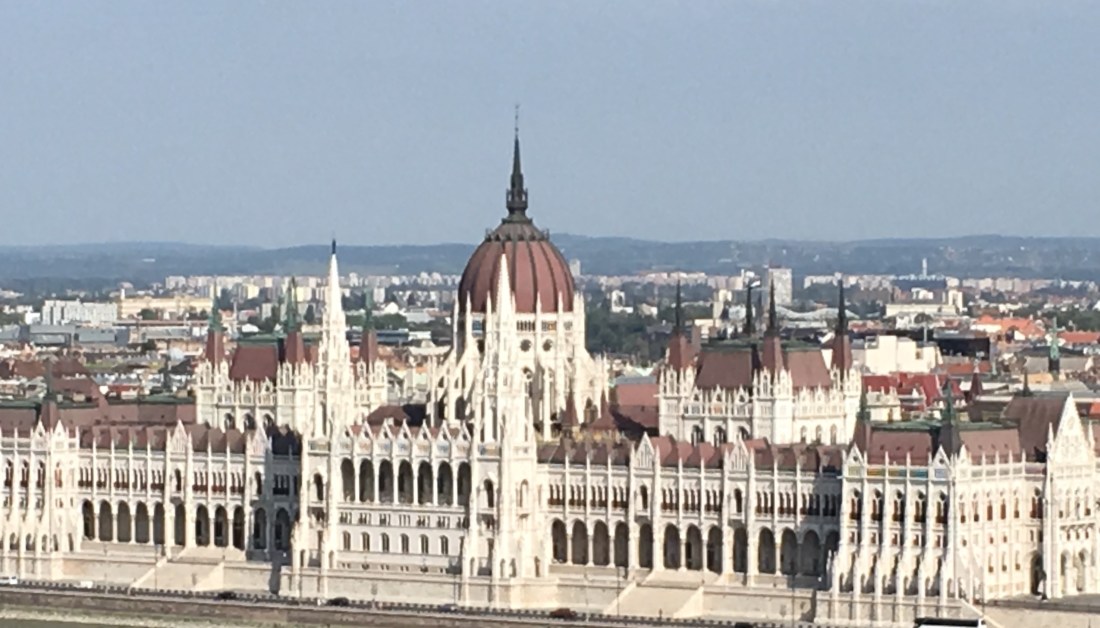
Years ago I enjoyed a broad-minded colleague who could complicate any topic and was fond of starting most discussions by saying, “I’m like a mosquito in a nudist colony…..I hardly know where to begin.”
That’s the dilemma a thoughtful traveler faces when attempting to describe in brief almost any aspect of any foreign country visited. Where to start? What to emphasize? What can be generalized? What is merely an isolated occurrence; what is really an insightful anecdote?
While American travelers abroad may be having an identity crisis and worry about what citizens of other nations may be thinking of us, that’s more a symptom of American self-centeredness and arrogance — our thinking that the world revolves around the USA — when, in fact, most Europeans we engaged this summer and fall were more concerned with and apt to talk about the dis-functions within their own countries…..stagnant economies, polarizing political parties, alienated youth, crooked judiciaries and a discernible tilt in the electorate from left to right and from global to national.
In my limited experience, it is rare to talk with a resident of any European nation who does not criticize his or her own government, who does not think that nation’s lawmakers are corrupt and more concerned with lining their own pockets than performing a public service, and who does not distrust the media. While no person with whom we conversed was complimentary of the current US president, they all seemed to admire the American people and conveyed the clear impression that they still think the USA is a special place, perhaps THE special place on the planet. But the problems of their own countries, not of America, were the preferred topics of discussion.
All across Europe, including the Czech Republic, France, Germany, Hungary, Poland, Slovakia, and even in Denmark, Norway and Sweden — the news is often about extreme nationalism within those nations, and the rhetoric of both common folk and public figures is routinely as inflammatory as anything we hear or read in the USA. And their legislators and leaders are adopting laws as reactionary as anything happening in America.
It is the WORLD that is changing, not just the USA. Acknowledging this makes us no safer, but may briefly allow us to feel less guilty. In any event, turning inward — advancing an “America First” agenda — is not the place to begin to repair the roads of reconciliation within America and build bridges of bi-partisanship around the world. The possible solutions to the current mess here and abroad may be so many and complex and interconnected as to create a kind of paralysis that comes with having too many options for action, but advancing protectionism and extreme nationalism is not the place to begin.
JER
 ALL OVER THE MAP